


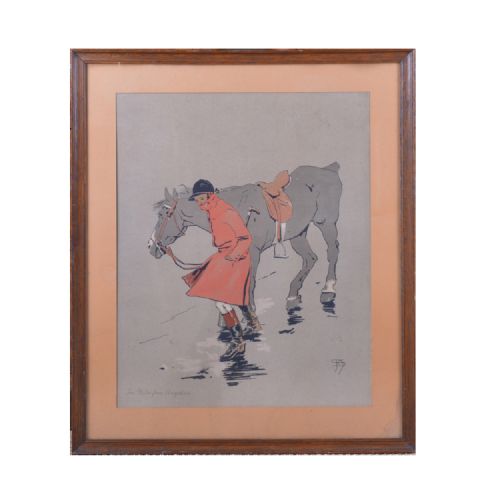
Vintage Horse Rider Art
Vintage horse rider art brings the motion and tradition of equestrian life into a room through oil, bronze, and watercolour.
Vintage Horse Rider Art
Vintage horse rider art encompasses paintings, watercolours, bronzes, and prints capturing equestrian subjects across various historical periods.
The pieces on this page span from Georgian silhouettes and nineteenth-century oils to mid-century modern interpretations and twentieth-century prints.
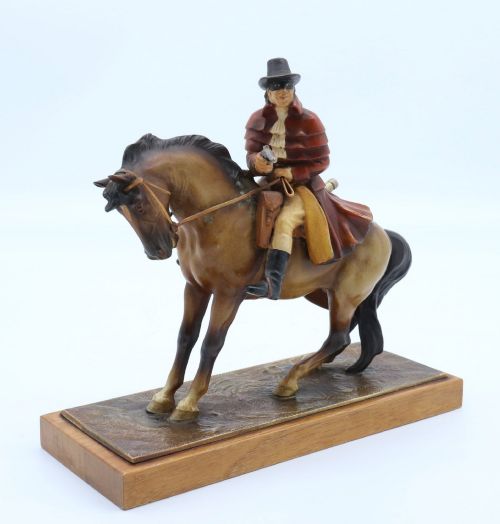
Buyers will find traditional British sporting scenes, French school compositions, Spanish realism, and Western American bronzes among the available forms.
How they were made
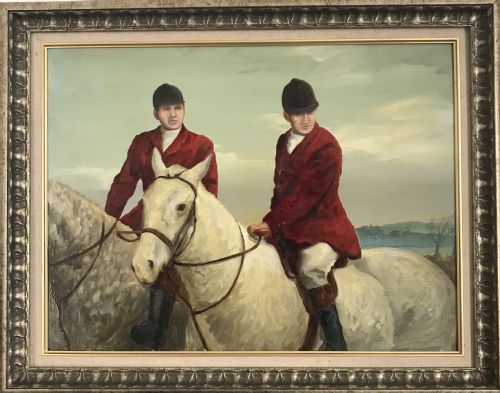
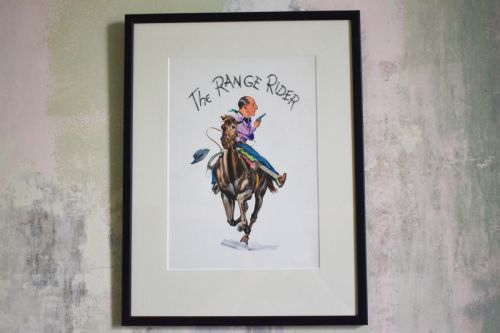
Artists employed oil on canvas and delicate watercolour on paper to capture the musculature of horses and the posture of riders.
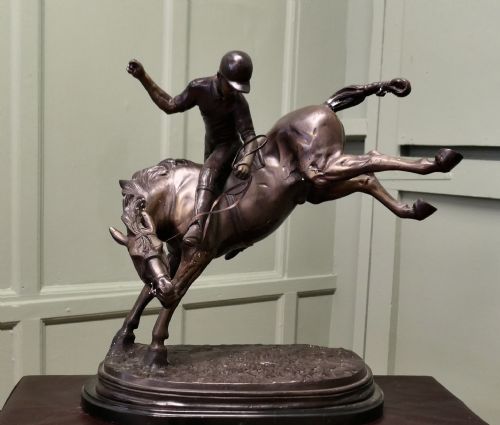
Sculptors utilised bronze casting techniques to render dynamic figures in motion, from polo players to bucking broncos.
Makers also turned to paper for prints and chromolithographs, while folk art examples utilised wood and metal for weathervanes and branch figures.
Even a branch can become a horse rider when a nineteenth-century folk artist looks closely enough at the wood.
What varies in quality
Quality rests in the artist's ability to render the anatomy and movement of the horse convincingly rather than relying on stiff convention.
The distinction between a standard print and an original oil painting or bronze sculpture marks a clear step in execution and material substance.
Provenance and attribution to documented artists elevate individual pieces above anonymous workshop or folk art productions.
John Rattenbury Skeaping·Anne Goldthwaite·Arthur Longley Vernon·Henry Charles Fox·Frank Algernon Stewart·Frank Dadd·Snaffles
The Vintage Horse Rider Art Glossary
- Chromolithograph
- A multicoloured print produced through a planographic lithographic process. This technique allows for rich hues that closely approximate original paintings.
- Bronze
- An alloy of copper and traditional metals used in sculpture. It permits the casting of intricate musculature and fine anatomical detail.
- Watercolour
- A painting method where pigment is suspended in a water-based solution on paper. It offers transparency and delicate handling of light.
- Folk art
- Art produced by self-taught or untrained makers working within a regional tradition. These pieces often utilise accessible materials like wood and metal.
- Equestrian
- Pertaining to horseback riding and horses. It serves as the primary subject matter across these paintings, prints, and sculptures.
Vintage Horse Rider Art: Frequently Asked Questions
What periods do these pieces cover?
The selection spans several centuries, starting from Georgian silhouettes and nineteenth-century works through to twentieth-century pieces from the 1920s, 1930s, and 1960s.
This broad timeline incorporates traditional British sporting art, French school watercolours, and American western bronzes.
Are these works original art?
The inventory includes original oil paintings, unique watercolours, bronze sculptures, and folk art alongside period prints and chromolithographs.
Each listing specifies the exact medium used by the artist or maker.
How do I display equestrian art?
Framed watercolours and oil paintings suit traditional wall display in studies or living spaces, while bronze sculptures require a sturdy surface like a mantelpiece.
Folk art weathervanes offer sculptural display opportunities for interiors seeking a distinct regional aesthetic.
How can I tell the style of a piece?
Styles range from the detailed realism of nineteenth-century British sporting art to the looser brushwork of the French school and mid-century modern interpretations.
Subject matter also guides identification, distinguishing between fox hunting scenes, polo matches, and Western cowboy art.