
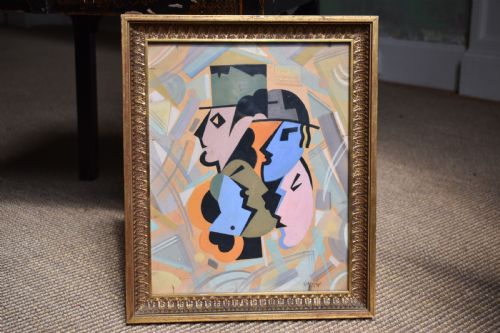


1920s Watercolour Artwork
1920s watercolour artwork brings home vibrant scenes and delicate miniatures that define early twentieth century British and European visual culture.
1920s Watercolour Artwork
When you search for 1920s watercolour artwork, you encounter a diverse selection of paintings, framed works, and portrait miniatures that capture the artistic spirit of the interwar period. The pieces range from town landscapes and architectural studies to theatrical scenes and intimate character portraits created across the first half of the twentieth century.
Buyers are most likely to meet works executed on paper using watercolour pigments, frequently supplemented by ink, pencil, or gouache. These works often reflect contemporary styles such as Art Deco, English Impressionism, Interwar Realism, and Post-Impressionism, offering a tangible connection to the aesthetic movements of the era.
Materials and construction
These works rely primarily upon watercolour applied to paper sheets, sometimes supported by preparatory pencil sketching or highlighted with opaque gouache and dark ink to build depth and contrast. Artists utilised these fluid media to achieve both atmospheric washes in landscape scenes and meticulous detail in small-scale portrait miniatures.
Framed examples typically incorporate protective glass and wooden framing mounts to preserve the delicate paper surfaces from atmospheric moisture and handling damage over the decades. Brass hanging hardware and aged backing materials frequently accompany these framed works, marking their period origins.
The listings feature works spanning from the Victorian era through the 1950s, executed primarily in watercolour, ink, pencil, and gouache on paper.
Distinguishing quality in period watercolours
Quality rests upon the sureness of the brushwork and the artist's command of light and shadow across the paper substrate. Superior examples demonstrate confident composition and expressive pigment handling, whether capturing the complex geometry of a town landscape or the subtle contours of a portrait miniature.
The preservation of the paper and the vibrancy of the fugitive watercolours determine the visual impact of the piece. Works that retain their original tones without excessive fading or discoloration represent the higher tier of surviving examples from this era.
Owen Bowen·Susie Lassam·Edward Horace Thompson·Edith E Caswall·Usabal y Hernandez·Fred Lawson·Jane Utley·Maurice Asselin·Robin Watt·J.TIM MACDONALD·Montagu Barstow·Kees van Dongen·Dame Laura Knight·George Graham·M.K Rhodes·Leo Klin
The 1920s Watercolour Artwork Glossary
- Watercolour
- A painting method in which the paints are made of pigments suspended in a water-based solution. This medium allows for translucent washes of colour that let the texture of the underlying paper show through.
- Gouache
- An opaque water-based paint consisting of pigment massed with water, a binding agent, and additional inert material. Artists use it alongside watercolour to create bright highlights and solid areas of colour.
- Portrait miniature
- A very detailed painting on a small scale, often depicting a specific person. These delicate works were frequently executed on paper or card and housed behind protective glass.
- Post-Impressionism
- A predominantly French art movement that developed roughly between 1886 and 1905, extending Impressionism while rejecting its limitations. Artists prioritised symbolic content and expressive use of paint.
1920s Watercolour Artwork: Frequently Asked Questions
How should I hang 1920s watercolour artwork?
Position these works away from direct sunlight to prevent the watercolour pigments from fading over time. Maintain stable indoor humidity levels to protect the paper substrate and wooden frames.
Ensure secure wall fixings are used for framed and glazed pieces to support their weight safely. Professional framing with acid-free backing materials further safeguards the longevity of the artwork.
What subjects appear in 1920s watercolour artwork?
The selections encompass diverse subject matter including architectural townscapes, coastal views, equestrian scenes, and theatrical performances. Portrait miniatures depicting named sitters and anonymous flapper figures also feature prominently.
Landscape themes range from English country gardens and lake districts to French village scenes and Mediterranean locations like Corfu. This variety reflects the travel and artistic interests of the interwar period.
How do I identify Art Deco watercolours?
Look for stylised depictions of human figures, such as nudes and dancers, rendered with clean geometric lines and characteristic period fashion. The lettering and overall composition often reflect modern industrial influences of the 1920s.
Pictorial elements tend to emphasise sleek elegance and dramatic theatricality rather than traditional Victorian sentimentality. Signatures and dates from the mid-1920s frequently confirm the specific stylistic window.
Are portrait miniatures original paintings?
Yes, portrait miniatures from this era are entirely hand painted original artworks rather than printed reproductions. Artists used fine brushes and magnifying lenses to achieve remarkable detail on small pieces of paper or card.
Many of these miniature paintings bear the artist signature and precise execution dates from the 1920s or 1940s. They represent intimate personal commissions or exhibition pieces created by specialist miniaturists.