



British Architectural Painting
British architectural painting captures townscapes, cathedrals and historic facades through the specific lens of British artists working across various periods.
British Architectural Painting
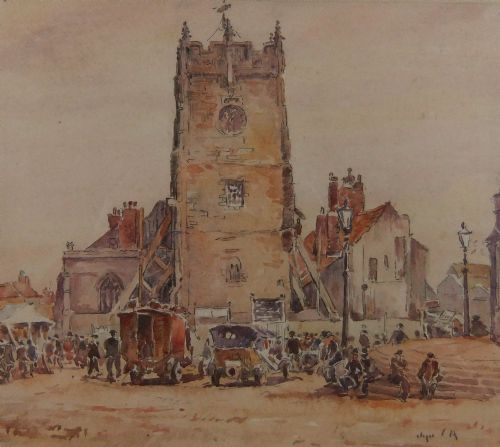
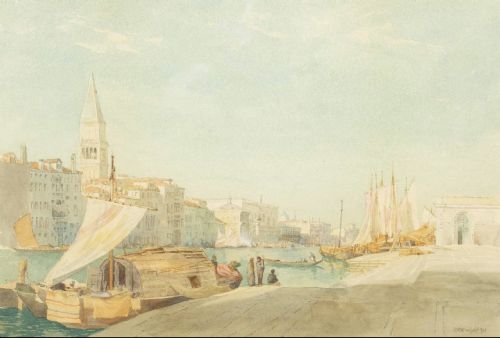
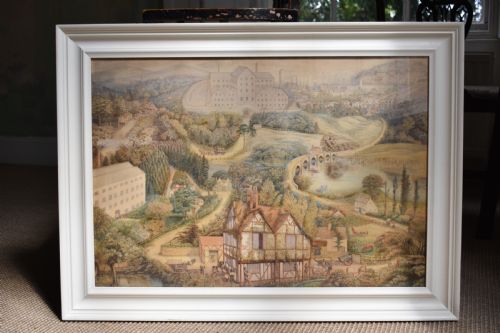
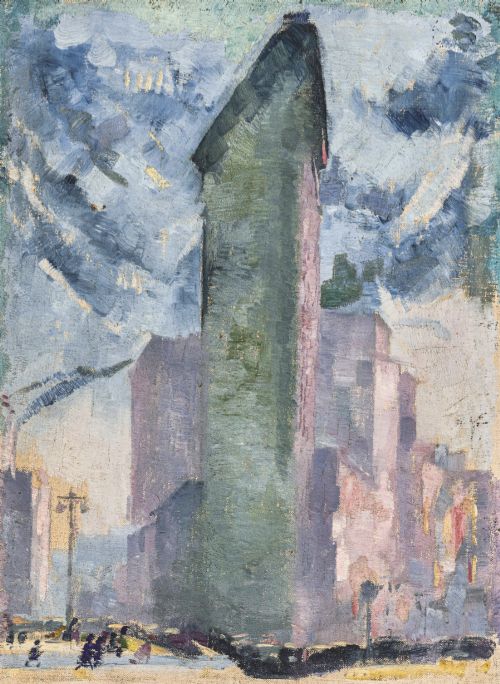
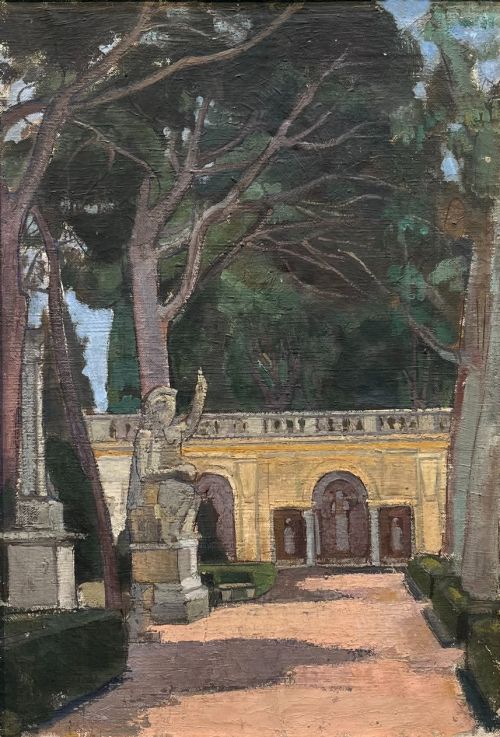
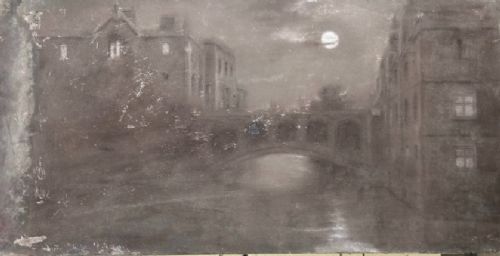
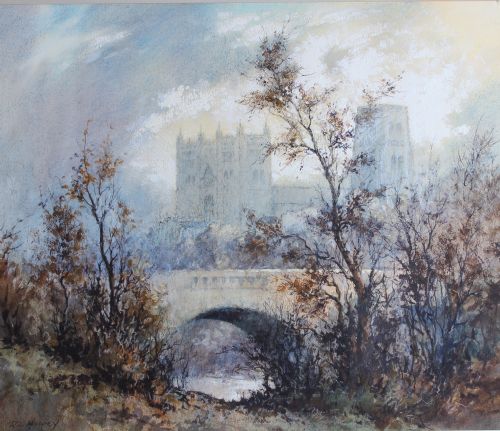
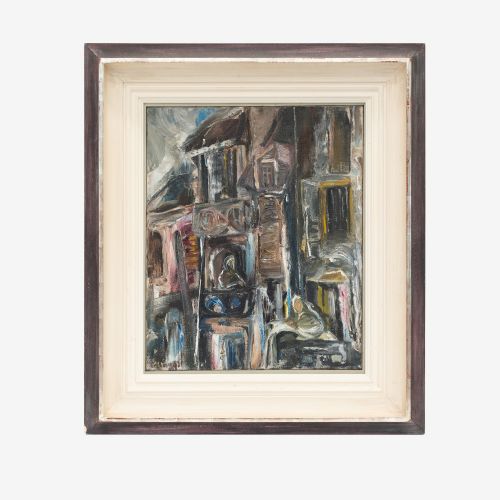
When you examine British architectural painting, you encounter depictions of recognisable urban scenes, ancient abbeys, street views and grand public monuments. The selection spans centuries from the eighteenth through to the mid-twentieth century, showcasing how artists recorded built environments.
You are most likely to meet works executed on paper using watercolour pigments, alongside oil paintings on canvas and board. These depictions range from detailed townscapes in Yorkshire and London to continental views of Venice and Paris created by British hands.
Materials and methods
Artists relied primarily on watercolour paint applied to paper, or oil paint worked onto canvas, wood panels and board. These traditional mediums allowed painters to capture both the delicate stonework of historic structures and the shifting light upon urban thoroughfares.
Support materials varied from fine paper sheets mounted for watercolours to heavier oil on canvas and cast iron items like royal coats of arms. Hand-mixed watercolour pigments and oil paints provided the pigment depth necessary for architectural rendering.
Artists occasionally painted famous Italian canals while standing right next to busy British breweries.
Distinctions in standard
The standard of a British architectural painting rests upon the sureness of the draughtsmanship and the artist's ability to balance structural perspective with atmospheric colour. Stronger examples demonstrate confident handling of light and shade across complex masonry and street geometry.
Works by recognised regional or school-associated painters often reveal superior command over composition compared to anonymous school pieces. The precision in rendering architectural details like arches, towers and bridges dictates the overall success of the piece.
Thomas Ellison·John Smith Atherton·Richard Henry Wright·Alfred Wolmark·Robert Leslie Howey·Lilian Colbourn·Alfred George Morgan·Fred Lawson·Anne Dorrien Smith·Charles James Lauder·Rowland Henry Hill·Stanley Orchart·Louie Stanley Maurice Prince·George Whyatt·Florence Hess·Edith E Caswall·Hercules Brabazon Brabazon·David Small·John Sowden·Jack Merriott·Tom Dudley·George Lambert·David Law·Ernest Cox·Noel Harry Leaver
The British Architectural Painting Glossary
- Watercolour pigment
- Finely ground colour particles mixed with a water-soluble binder, used extensively on paper for topographical and architectural studies.
- Oil on canvas
- A painting medium utilising pigments suspended in a drying oil, stretched across a woven fabric support to create durable artworks.
- Topographical art
- Accurate visual representation of specific real-world locations, buildings and landscapes, forming the backbone of architectural painting.
- British Impressionism
- A stylistic approach focusing on light and spontaneous brushwork applied to domestic and urban scenes by British painters.
British Architectural Painting: Frequently Asked Questions
What subjects feature in British architectural painting?
These works depict a wide array of built structures including cathedrals, castles, abbeys, bridges, street scenes and domestic cottages. Artists recorded both domestic British landmarks in places like Yorkshire and London alongside international cityscapes.
The focus remains firmly on the relationship between human-made architecture and its surrounding environment, often capturing specific historical buildings that have since altered or vanished.
How do watercolours differ from oils here?
Watercolour paintings on paper offer a translucent quality that captures bright daylight and subtle atmospheric washes across stone facades. They were frequently produced on location or worked up from field sketches.
Oil paintings on canvas or board provide richer texture and deeper colour saturation, allowing artists to build up heavy layers of pigment that emphasise the robust mass of fortifications and industrial structures.
Which periods are represented?
The selection encompasses works from the eighteenth century through the Victorian and Edwardian eras into the mid-twentieth century. Styles shift from traditional topographical recording toward early twentieth-century British modernism and impressionistic interpretations.
Each period brings distinct stylistic conventions regarding palette choice, perspective handling and the romanticisation of historic monuments.
How should these artworks be framed?
Watercolours on paper require professional framing behind glass with acid-free mounts to protect the delicate pigments from ultraviolet light and humidity damage. Proper spacing prevents the paper surface from touching the glazing.
Oil paintings on canvas or panel typically sit within traditional wooden frames suited to their period, allowing the canvas to breathe without the need for glass protection.