




Vintage Horse Pistol
These vintage horse pistol examples are functional firearms of earlier centuries, desired by collectors for their historical presence and mechanics.
Vintage Horse Pistol
A vintage horse pistol encompasses larger handguns designed to be carried on horseback by military officers and gentlemen during the eighteenth and nineteenth centuries. These arms span the Georgian and Victorian military periods, reflecting active service and personal defence needs.
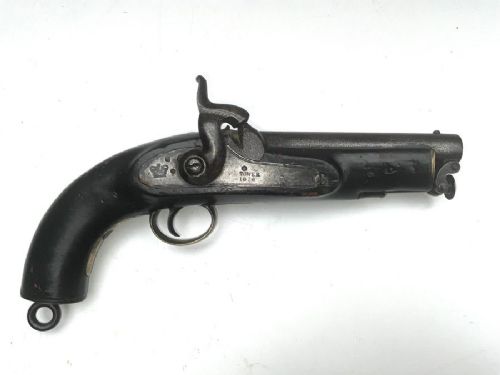
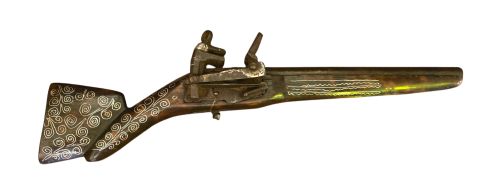
The selection here ranges from British flintlock and percussion service models stamped by Tower or makers such as Wilson and Dutton to Ottoman and Afghan snaphaunce variants. Buyers will encounter both military issue arms and refined private purchase officer models.
Forms include belt pistols, cavalry percussion pieces, and light dragoon service firearms. Each type showcases the specific mechanical evolution required for mounted warfare across different theatres and eras.
Materials and construction methods
Construction relies upon robust hardwoods such as walnut and general wood stocks shaped to house steel barrels, iron mechanisms, and brass furniture. Metal components include cast brass trigger guards and butt caps designed to endure field use.
Mechanisms utilise traditional flintlock ignition systems alongside later nineteenth-century percussion caps. Certain regional examples incorporate intricate silver inlay work upon the stock to ornament the firearm.
Origin locations represented span British military depots, London gunmakers, and Ottoman Empire workshops.
Distinguishing quality in service arms
Quality separates standard military issue arms from bespoke officers' pieces through the crispness of lock engraving, the precision of maker signatures such as Thomas Anelli or Dutton, and the refinement of brass or silver mounts. Superior examples retain legible proof marks and sharp wood contours.
The overall integrity of the walnut stock and the mechanical snap of the lock mechanism dictate the desirability of an individual piece. Retained original surface patination on the steel and wood further elevates the standing of an arm.
Thomas Anelli·Dutton·Wilson·Tower
The Vintage Horse Pistol Glossary
- Flintlock
- An ignition mechanism utilising a piece of flint held in a cock to strike a steel frizzen, creating sparks to ignite priming powder. This system dominated military and civilian firearms throughout the eighteenth century.
- Percussion cap
- A small detonating cap placed on a nipple which is struck by the hammer to fire the charge. This method replaced the flintlock system during the nineteenth century.
- Snaphaunce
- An early type of flintlock mechanism featuring a separately opening frizzen and pan cover. It represents an important developmental stage in firearm history.
- Frizzen
- The vertical steel plate struck by the flint in a flintlock mechanism. Grooved versions assist in generating reliable sparks.
- Bore
- The interior diameter of the barrel. Historical service pistols often measure by bore size rather than exact caliber.
Vintage Horse Pistol: Frequently Asked Questions
What is a vintage horse pistol?
A vintage horse pistol is a large firearm historically carried by cavalrymen and travellers on horseback for close-range defence. These pieces date primarily from the eighteenth and nineteenth centuries.
They encompass both flintlock and percussion ignition systems, serving military forces or private gentlemen.
How do flintlock and percussion differ?
Flintlock pistols use a piece of flint striking steel to create sparks that ignite gunpowder in a pan. This represents the older technology seen on eighteenth-century pieces.
Percussion pistols use a hammer striking a cap placed on a nipple to ignite the powder inside. This later nineteenth-century system offered greater reliability in damp weather.
Who used these pistols?
Military officers, cavalry troopers, and private gentlemen carried these arms for personal protection and service duty. Light dragoons and officers purchased or were issued specific service models.
Makers stamped their names or military depots marked the brass and steel to indicate ownership and origin.
How should I display one?
Displaying a vintage horse pistol requires a stable environment away from direct sunlight and excessive humidity. Wall mounting brackets or specialised display cabinets protect the wood and metal.
Ensure the piece is safely secured while allowing the craftsmanship of the lock and stock to remain visible.
Are these pistols functional?
Most antique firearms of this age are collected as historical artefacts rather than for modern shooting use. The mechanics serve as examples of historical gunsmithing technology.
Consult a specialist before attempting any mechanical operation on antique locks.