





Vintage High Back Rocker
These vintage high back rocker examples offer supportive seating and traditional country charm, spanning several centuries of craftsmanship.
Vintage High Back Rocker
When you search for a vintage high back rocker, you are looking at substantial timber seating designed for gentle motion and tall support. The pieces on this page span the Victorian, Edwardian, and Regency periods, alongside late eighteenth century examples.
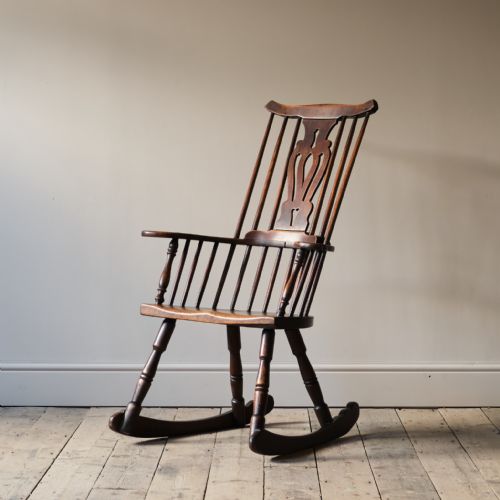
Most items you will encounter here belong to the Windsor and country farmhouse traditions. These embrace regional British styles including Thames Valley and Yorkshire forms, constructed with high backs for comfort.
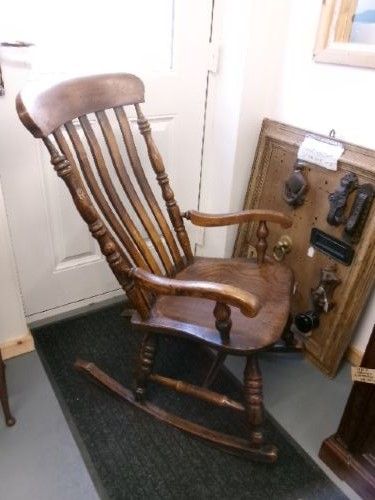
Makers utilised local timbers to build sturdy frames intended for daily domestic use. The common versions feature spindles, curved armrests, and mounted rocker rails beneath.
How they were made
The construction relies on traditional timber framing using woods such as elm, beech, oak, and mahogany. Carpenters shaped solid seats and turned spindles to support the tall backs.
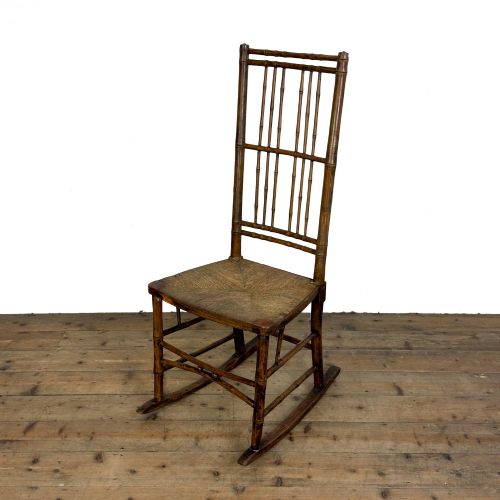
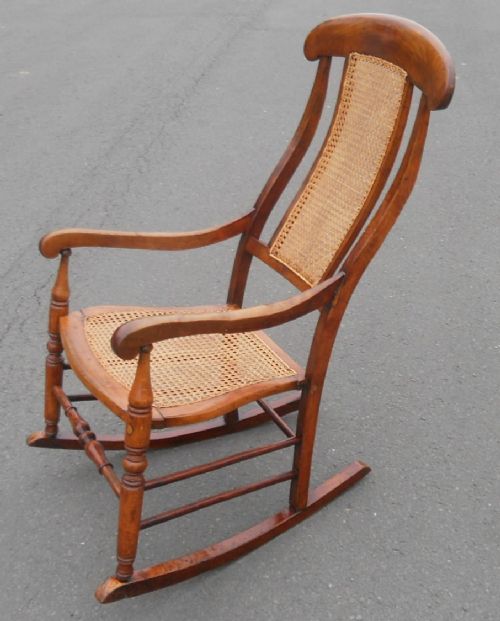
Seating areas often incorporate woven materials like cane, rush, or sea grass, whilst other models feature plain wooden saddles or upholstered fabric pads. Individual components were joined securely to withstand the continuous movement of rocking.
Listings feature periods from Regency through to Edwardian, utilising materials such as elm, beech, oak, cane, rush, and mahogany.
What varies in quality
Quality rests upon the choice of timber and the sophistication of the turning work on the spindles and legs. Finer examples display balanced proportions in the high back and well-sculpted armrests.
The integrity of the woven seat panels or the preservation of the original wooden finish distinguishes standard utility chairs from more refined regional pieces.
The Vintage High Back Rocker Glossary
- Windsor chair
- A wooden chair built with a heavy solid wooden seat into which the back and legs are dowelled directly. This form is common among country rocking chairs.
- Spindle back
- A chair back constructed with numerous thin, turned vertical wooden rods. These provide lightweight structural support.
- Thames Valley
- A regional English style known for distinctive Windsor chair production during the eighteenth and nineteenth centuries. Pieces from this area display particular refinements in wood selection.
- Cane
- Thin strips of peeled rattan woven into patterned panels for seats or backrests. It provides a flexible yet resilient surface.
Vintage High Back Rocker: Frequently Asked Questions
What is a vintage high back rocker?
A vintage high back rocker is a traditional wooden chair mounted on curved wooden rockers, featuring an extended backrest for additional head and shoulder support. These chairs date across the Victorian and Edwardian eras as well as the nineteenth century.
They combine functional domestic seating with traditional craftsmanship, often utilising regional British designs like the Windsor chair format.
How were these rocking chairs used?
These chairs served primarily as comfortable household seating for resting, nursing, or relaxing by the fireplace. The curved rails allowed for a soothing rocking motion.
Their sturdy timber construction ensured they endured generations of daily use in farmhouse kitchens and country house drawing rooms alike.
How do I live with a wooden rocker?
Living with a vintage rocker involves placing it in a space with adequate clearance behind the chair for the rocking action. Pairing it with a soft rug protects wooden floors from the rails.
Routine care requires dusting the turned spindles and conditioning any exposed timber surfaces to maintain the natural grain and finish.
How do I identify different periods?
Identifying periods relies on observing the timber types, turning details, and stylistic influences such as Aesthetic Movement or Regency design. Victorian and Edwardian examples often feature specific decorative inlays or machine-turned components.
Earlier eighteenth century pieces display heavier regional characteristics, such as Thames Valley or Yorkshire framing traditions, without later industrial additions.