

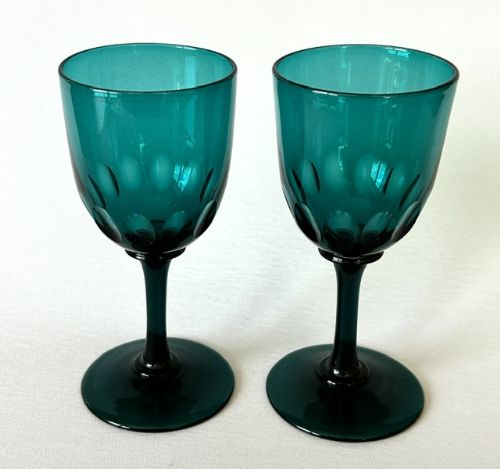


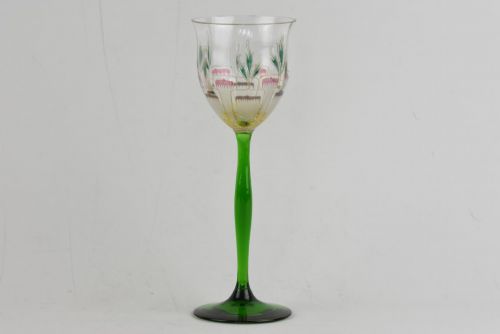
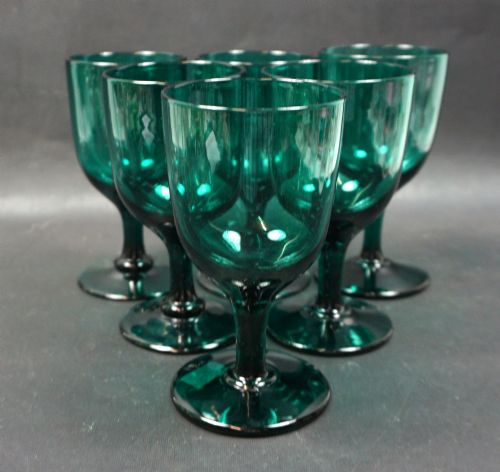


Vintage Green Wine Goblets
These vintage green wine goblets bring rich colour and historic weight to the table, and collectors prize them for their striking presence.
Vintage Green Wine Goblets
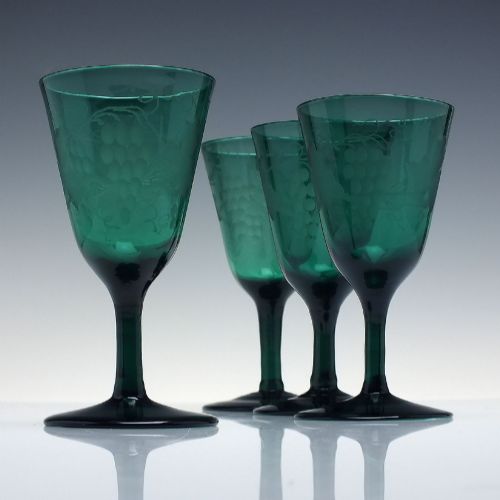
When you search for vintage green wine goblets, you encounter a range of drinking vessels spanning the Georgian, Victorian, and Edwardian eras through to the 1930s. The selection includes items catalogued variously as wine glasses, rummers, hock glasses, roemers, and chalices.
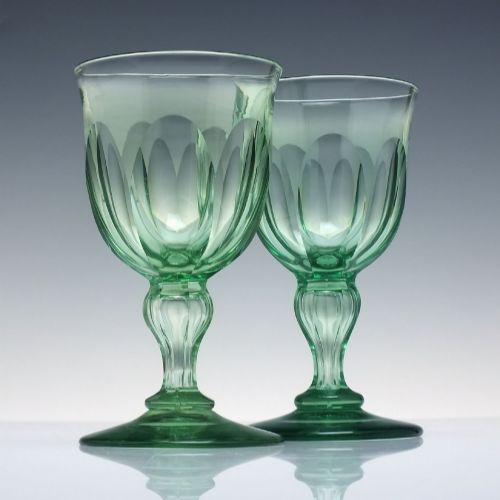
The most common examples on this page are Victorian and Georgian pieces, often featuring rich shades of green, aqua, and turquoise. These stemware items reflect traditional forms used for wine, dessert wine, and liquor across British and continental European origins.
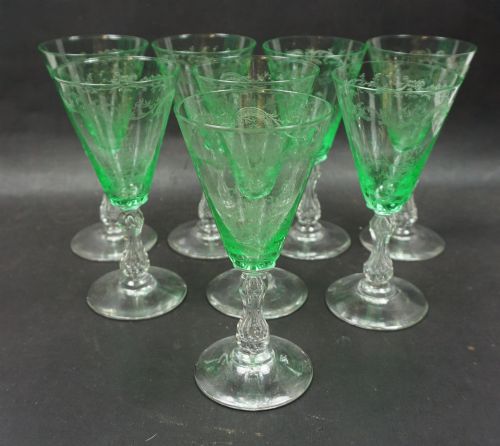
Pieces from later decades also appear, showing influences from Art Deco, Art Nouveau, and the Arts and Crafts movement. Collectors find everything from matched sets of six to individual statement goblets.
Materials and construction
The objects are formed from glass, coloured glass, lead glass, lead crystal, and cased glass. Artisans achieved the characteristic green tones through traditional glass colouring methods.
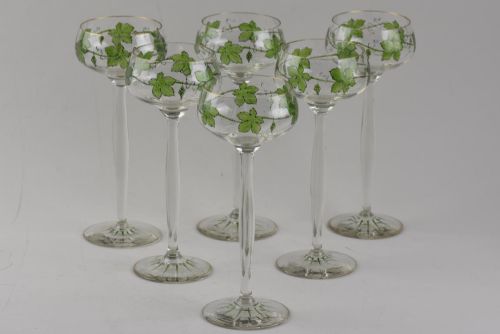
Many pieces receive surface embellishment, incorporating enamel, polychrome enamel decoration, and gold leaf. Some items utilise cut glass techniques or pewter mountings to build the final form.
Vintage Green Wine Goblets Retail Price Guide 2026
Typical asking prices for vintage green wine goblets among the pieces listed under this phrase on Sellingantiques today, from the lower quarter to the upper quarter. They describe what is for sale here now, not the wider market.
Vaseline glass goblets contain trace uranium, causing them to glow a vivid green under ultraviolet light.
Factors of quality
The distinction between standard items and superior examples lies in the execution of the glasswork and the precision of any surface decoration. Hand-painted enamel and gold leaf detailing require steady craftsmanship.
The clarity and weight of the glass, whether standard glass, lead glass, or lead crystal, affect the overall substance of the goblet. Sets that remain complete and matched across multiple pieces command greater attention.
Baccarat·Theresienthal·St Louis Massenet·Frits Hechert
The Vintage Green Wine Goblets Glossary
- Roemer
- A traditional Germanic drinking vessel with a large bowl and a wide, raspberry-prunt stem. It typically appears in green glass.
- Hock glass
- A tall-stemmed wine glass traditionally used for white wine. These frequently feature coloured or cased bowls.
- Rummer
- A heavy, short-stemmed drinking glass popular in the eighteenth and nineteenth centuries. They hold larger quantities than standard wine glasses.
- Cased glass
- Glass made in two or more distinct layers of different colours. Artisans cut through the outer layer to reveal the contrasting colour beneath.
- Enamel
- Opaque vitreous material fused to the glass surface for decoration. It is often found in polychrome floral patterns on continental European pieces.
Vintage Green Wine Goblets: Frequently Asked Questions
Are these goblets safe for drinking wine?
Most glass pieces from the Georgian and Victorian periods function adequately for serving beverages today. Inspect each item to ensure the rim and bowl remain sound.
Pieces with extensive enamel or gold leaf decoration are often better suited for display or careful occasional use.
How can I tell a Georgian goblet from a Victorian one?
Georgian glassware often exhibits heavier pontil marks and simpler, robust proportions suited to the eighteenth and early nineteenth centuries. The metal of the glass can show slight bubbles and irregularities.
Victorian pieces frequently display greater variety in bright chemical colours like vaseline and aqua, alongside more elaborate moulding and cut designs.
Why do some green goblets have enamel decoration?
Enamel decoration was utilised by continental European makers, particularly in regions like Bohemia, to add floral and patterned motifs. This technique created contrast against the coloured glass background.
Such pieces reflect the decorative tastes of the late nineteenth and early twentieth centuries.