

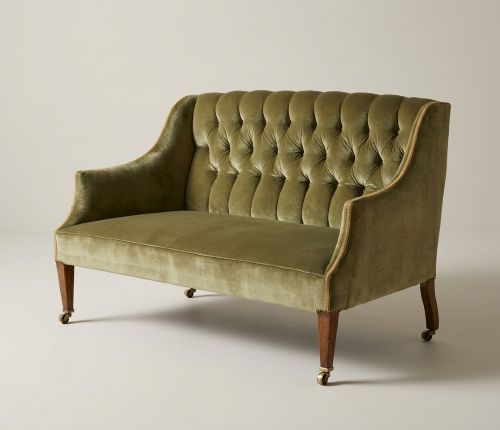
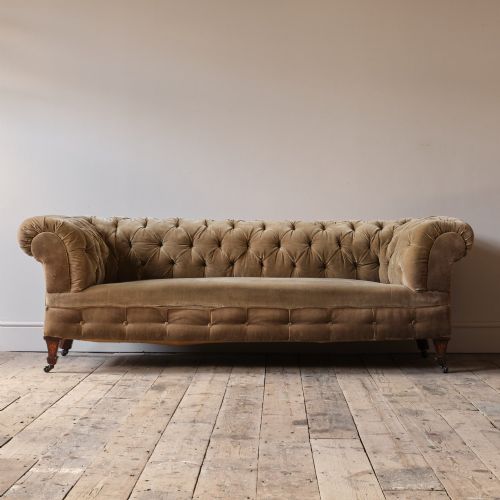


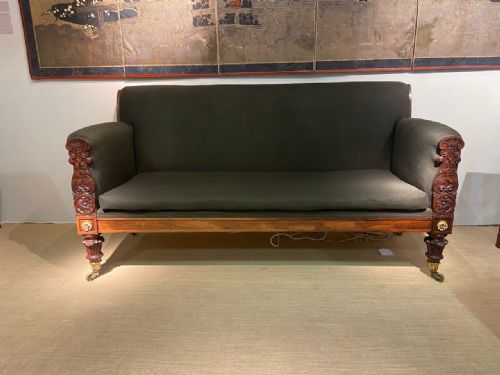

Vintage Green Velvet Settee
A vintage green velvet settee brings rich texture and enduring comfort to a room, offering deep seating wrapped in tactile pile.
Vintage Green Velvet Settee
A vintage green velvet settee encompasses a range of upholstered seating forms originating from the nineteenth and early twentieth centuries, including substantial chesterfields and petite parlor pieces. These furnishings combine deep textile surfaces with sturdy wooden frames, capturing the distinct decorative character of periods spanning from the Regency era through the Edwardian years.
The variations on this page include country house settees, multi-seat sofas, and button-backed designs finished in rich upholstery. Buyers will encounter forms reflecting Victorian, Edwardian, Louis XV Revival, Queen Anne, and William IV styles, each presenting distinct proportions and structural details.
Materials recorded across these pieces pair plush velvet with hardwood frames of mahogany, walnut, and painted wood, occasionally accented with brass fittings or paired with tapestry fabric. The combination of dense pile and solid timber provides both visual warmth and substantial weight to each seating piece.
How they were made
Makers constructed the foundational frames of these settees using dense hardwoods such as mahogany and walnut, ensuring structural integrity beneath the upholstery. Joinery relied on traditional methods to support the considerable weight of sprung seating and deep padding.
Vintage Green Velvet Settee Retail Price Guide 2026
Typical asking prices for vintage green velvet settee among the pieces listed under this phrase on Sellingantiques today, from the lower quarter to the upper quarter. They describe what is for sale here now, not the wider market.
One settee comes complete with rural estate provenance from Wiltshire, ready for tea by the library fire.
What varies in quality
Quality rests in the precision of the frame timber and the execution of the upholstery work, where denser hardwoods and careful button-backing distinguish finer examples. The handling of revival styles, from Queen Anne curves to Regency lines, reveals the maker's command of period proportions.
The integrity of the velvet pile and the robustness of the underlying wooden structure dictate the overall standard of each settee. Pieces that retain harmonious proportions across their woodwork and upholstery demonstrate superior craftsmanship.
Howard and Sons
The Vintage Green Velvet Settee Glossary
- Chesterfield
- A large upholstered sofa traditionally characterised by deep button-backing and rolled arms of equal height to the back. This form is frequently associated with country house interiors.
- Button back
- An upholstery method where tufts are pulled tight and secured with buttons at regular intervals across the backrest, creating a series of diamond-shaped soft cushions. This technique adds both structural tension and decorative depth to the textile.
- Edwardian
- Pertaining to the period of the British monarchy from 1901 to 1910, characterised by lighter proportions and eclectic revivals of earlier eighteenth-century designs. Settees from this era tend towards domestic comfort and refined detailing.
- William IV
- A transitional stylistic period spanning the 1830s that favoured robust proportions, substantial scrollwork, and dark timbers such as rosewood and mahogany. Pieces from this time display heavy architectural influence.
Vintage Green Velvet Settee: Frequently Asked Questions
What defines a country house settee?
A country house settee typically exhibits generous proportions and robust construction suited to large domestic interiors. These pieces often feature deep seating and traditional upholstery that prioritize comfort alongside period character.
Examples on this page draw from nineteenth-century traditions, combining hardwood frames in walnut or mahogany with tactile velvet coverings.
How do I identify an Edwardian sofa?
Edwardian sofas generally display lighter proportions and more refined frames compared to their heavier Victorian predecessors. They reflect a period of domestic comfort that favoured adaptable seating for smaller drawing rooms.
Design cues often incorporate subtle stylistic revivals while maintaining a restrained overall silhouette.
What timbers were used for the frames?
Makers relied on durable hardwoods such as mahogany and walnut for the primary structural elements of these settees. Paint finishes were also applied to wooden frames during the nineteenth century to achieve specific decorative schemes.
These timbers provided the necessary strength to support deep upholstery and heavy sprung interiors.
How should I care for velvet upholstery?
Velvet requires gentle handling to preserve the direction and density of the pile over time. Regular brushing with a soft tool helps prevent dust accumulation within the fabric fibres.
Avoiding direct sunlight protects the green coloration from fading and maintains the textile's rich visual depth.