


Vintage Green Chesterfield
These vintage green chesterfield pieces offer deep buttoned leather and classic upholstery forms that bring rich colour and traditional character to any room.
Vintage Green Chesterfield
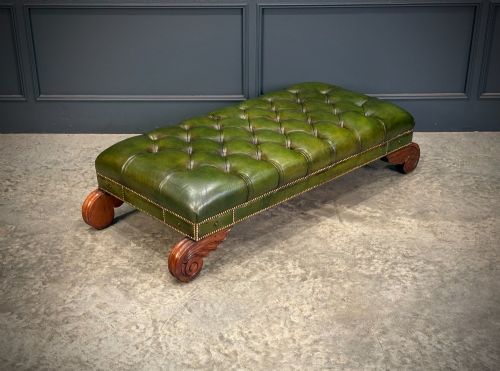
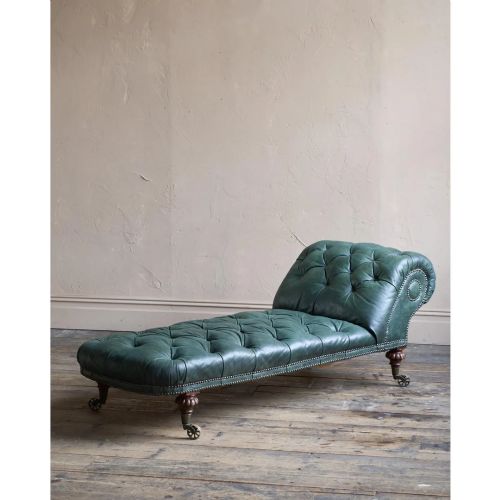
A vintage green chesterfield encompasses a range of seating from traditional sofas and library chairs to footstools and chaise longues. These items span periods from the eighteenth century through to the nineteen-thirties, reflecting diverse historical tastes in British seating.
The most common forms on this page are leather sofas and button-back armchairs finished in various shades of green, including dark bottle green and faded green. Buyers encounter pieces styled in the Victorian, Edwardian, and Regency traditions alongside Georgian style workshop creations.
How they were made
Construction relies heavily on traditional timber frames built from mahogany, hardwood, and general timber to provide sturdy structural support. Upholstery fabrics, velvet, and leather are stretched over these frames and secured with brass detailing.
Deep buttoning defines much of the seating surface, requiring skilled handwork to pull the upholstery tight against the internal padding. Leather is dyed in rich green tones and occasionally finished with subtle ageing or restoration.
One listed nineteenth-century chesterfield arrives freshly restored in striking British racing green leathers, ready for the next century of use.
What varies in quality
The depth of the colour and the patina of the leather dictate the visual impact of each piece, ranging from bright British racing green to soft faded tones. Frame timber quality also differs, with dense mahogany showing greater longevity than standard hardwood.
Upholstery execution separates standard seating from finer examples, particularly in the precision of button placement and the durability of the underlying support. Pieces retaining original frames and traditional materials hold distinct character compared to those with later restorations.
Howard and Sons
The Vintage Green Chesterfield Glossary
- Chesterfield
- A traditional style of upholstered sofa or chair characterised by deep buttoning and rolled arms of equal height to the back. This form has remained a staple of British seating design for centuries.
- Button-back
- An upholstery technique where buttons are pulled deep into the padding in a diamond pattern to secure the material and create a tufted texture. This method adds both firmness and distinct visual depth.
- Chaise Longue
- An elongated chair designed for reclining, featuring an upholstered backrest at one end. These pieces combine the comfort of a sofa with the lounging length of a daybed.
- Wing Back
- An armchair featuring protective side panels projecting from the upholstered back. These wings traditionally shielded the sitter from draughts near open fires.
- Patina
- The surface sheen and softening of tone developed through age, handling, and use on leather and wood. Collectors value this natural evidence of history.
Vintage Green Chesterfield: Frequently Asked Questions
How do I identify a true period chesterfield?
Examine the timber frame construction, the type of padding materials used beneath the upholstery, and the specific stitching methods. Period pieces display hand-turned wood and traditional fixings consistent with their era.
Compare the style of the arm roll and the depth of the buttoning against documented examples from the same century to confirm authenticity.
Where should I place a leather armchair?
These chairs suit studies, libraries, and living rooms where traditional seating adds depth and character. Position them away from direct heat sources to protect the leather from drying out.
Pair a wingback or library chair with a low mahogany desk or alongside a matching sofa to create a cohesive seating arrangement.
How do I care for vintage leather?
Apply appropriate leather balms periodically to maintain moisture and prevent the surface from cracking over time. Keep the material clean using a soft, dry cloth to remove dust from the button folds.
Avoid using harsh chemical cleaners or placing the furniture in direct sunlight, which can alter the green dye and fade the finish.
What is the difference between a sofa and a settee?
Historically, settees featured fully upholstered seats and backs with exposed wooden frames, often seating two people in a formal arrangement. Sofas generally offer larger, deeply cushioned proportions designed for relaxed lounging.
Both terms appear across different periods, though nineteenth-century listings frequently use them interchangeably for cushioned seating.