
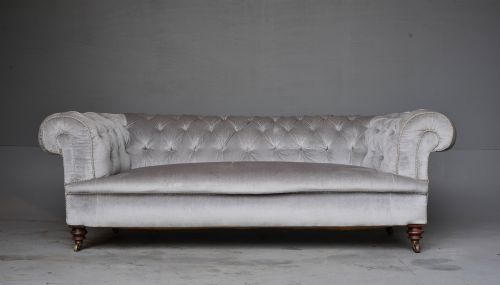


Classic Chesterfield Couch
A classic chesterfield couch is a deep buttoned seat built for formal rooms, combining sturdy timber frames with rolled arms.
Classic Chesterfield Couch
A classic chesterfield couch is a substantial seating form primarily originating from the Victorian era and the 19th century. These pieces appear as sofas and settees designed with deep buttoning and distinct traditional English proportions. Buyers frequently encounter examples finished in hand dyed leather or velvet upholstery.
The materials and styles span from traditional English forms to 1930s Art Deco and 1930s English pieces. Variations include horse hair filling and loose coil springing within robust hardwood frames. These configurations define the standard aesthetic of the upholstery found across the listings.
How they were made
Makers constructed the foundational frames using timber and hardwood, secured with brass and metal components where structural support was needed. Inside, traditional methods involved horse hair filling and coil springing to build the upholstered shape. Leather, velvet, and fabric then formed the external covering, often secured by deep buttoning.
Upholstery techniques required careful hand finishing, visible in the hand dyed leather treatments applied to the surface. Restorers later utilised specialised automotive hides, such as Alfa Romeo leather, during re-upholstering work whilst retaining the original frame architecture.
Listings feature pieces spanning the Victorian period, the 19th century, and the 1930s, constructed from hardwood, leather, brass, and velvet.
What varies in quality
The distinction between upper and lower tiers rests on the integrity of the internal stuffing and the condition of the leather. Pieces retaining original horse hair stuffing and sound coil springing hold greater integrity than those with altered internal materials. The depth of the buttoning and the finish of the hand dyed leather also establish the visual calibre of each couch.
Frame construction plays a decisive role, with solid hardwood skeletons offering superior longevity compared to altered timbers. Furthermore, pieces retaining original leathers sit differently in the market than those subjected to modern re-upholstering, though skilful restoration work maintains strong structural standards.
Howard and Sons
The Classic Chesterfield Couch Glossary
- Chesterfield
- A traditional sofa characterised by low seating and rolled arms of the same height, typically featuring deep button tufting. This form has remained a staple of British interior furnishing since the 19th century.
- Deep buttoned
- An upholstery technique where buttons are pulled tight through the padding to create a diamond pattern of indentations. This method secures the internal filling whilst providing a firm surface texture.
- Horse hair
- A traditional stuffing material utilised for its resilience and ability to hold shape over decades of use. It forms the dense internal padding beneath the leather or fabric cover.
- Coil springing
- A system of interconnected metal springs tied within the seat frame to distribute weight evenly. This construction supports the deep cushions and prevents sagging.
- Hand dyed
- A colouring process applied to leather hides to achieve rich, mottled tones such as whiskey brown or aubergine. It replicates the aged patina associated with period upholstery.
Classic Chesterfield Couch: Frequently Asked Questions
What is a classic chesterfield couch?
A classic chesterfield couch is a traditional British seating piece defined by low rolled arms and deep button tufting. These sofas date primarily from the Victorian era and the 19th century.
They were built using hardwood frames and traditional fillings like horse hair. Today, they serve as focal points in studies, libraries, and formal living spaces.
How do I date a chesterfield couch?
Dating relies on examining the frame timber, the style of the brass tacks, and the internal stuffing materials. Victorian pieces often feature heavy hardwood construction and dense horse hair packing.
Later 1930s examples introduce different styling cues such as Art Deco influences or distinct leather finishes. Comparing the upholstery method to known period techniques clarifies the age.
Is leather or fabric more authentic?
Leather is the traditional covering associated with the form, particularly hand dyed whiskey brown or aubergine hides. Victorian and 19th-century examples predominantly utilise heavy leather upholstery.
Velvet and alternative fabrics do appear, sometimes as a result of later re-upholstering work. Leather remains the material most closely linked to the heritage of the design.
How do I care for a leather chesterfield?
Leather upholstery requires regular conditioning to prevent the hide from drying out and cracking. Keeping the couch away from direct heat sources protects the natural surface.
Gentle cleaning maintains the hand dyed finish and preserves the patina. Proper maintenance ensures the leather remains supple over decades of use.