



Leather Chesterfield Settee
When you want a leather chesterfield settee, you are looking for deep buttoning, rolled arms, and substantial nineteenth or early twentieth-century proportions.
Leather Chesterfield Settee
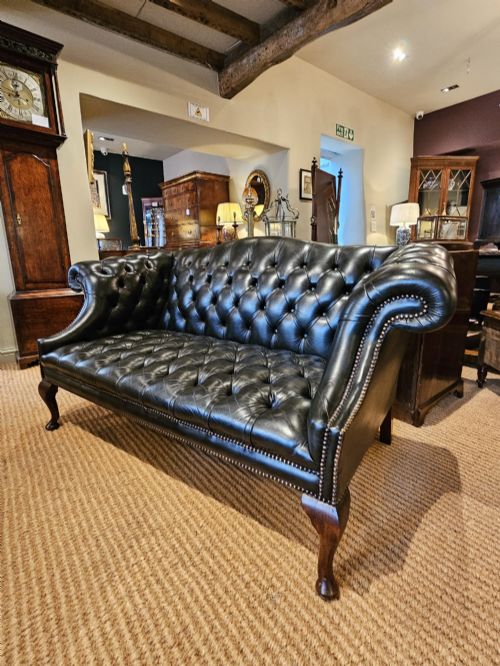
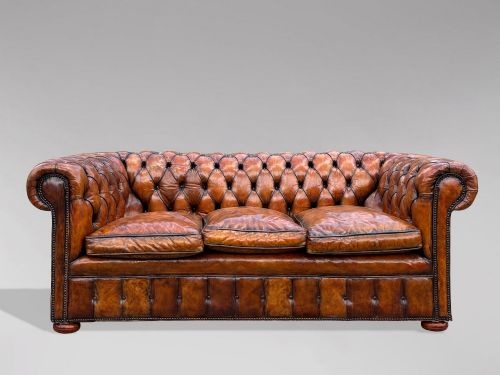
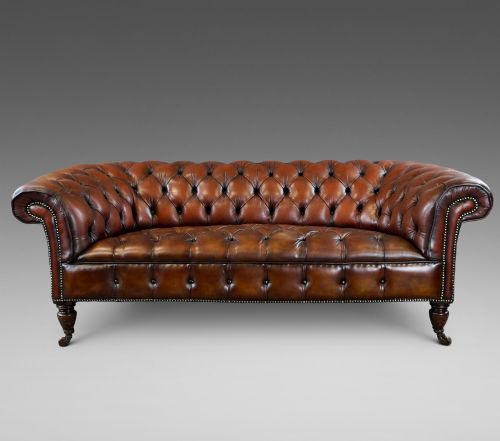
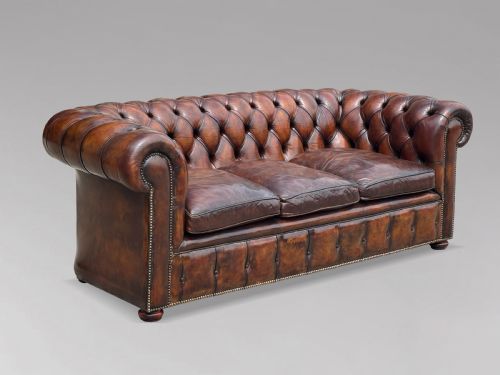
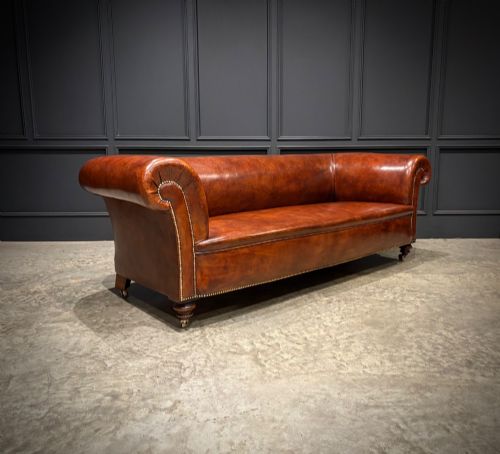
A leather chesterfield settee is a traditional upholstered sofa type defined by its low back, deep buttoning, and scrolling arms that sit at the same height as the back. These forms appear predominantly across Victorian and Edwardian periods, stretching from the mid-nineteenth century into the 1930s.
The selections on this page range from standard three-seater brown leather versions to large Victorian show-frame sofas with carved walnut or mahogany, alongside occasional twentieth-century examples in custom hand-dyed finishes.
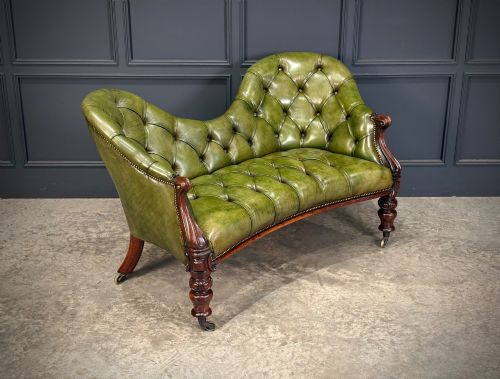
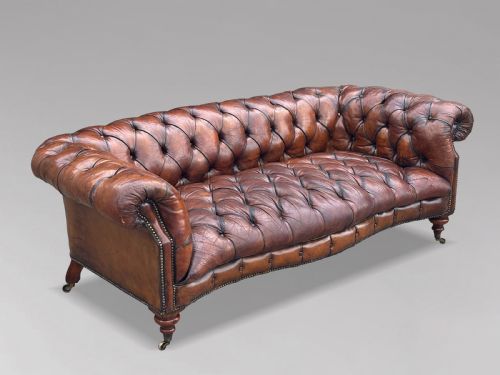
Buyers also encounter variations including serpentine fronts, chaise longue configurations, and occasional corner or club suite arrangements built on timber and hardwood foundations.
How they were made
Traditional construction relies on robust internal framing of timber, mahogany, walnut, or general hardwood, paired with traditional stuffing materials like horsehair and supported by coiled spring foundations.
Upholstery involves fitting leather over deep button-tufted panels, secured with individual brass tacks along the borders and arm facings.
Many historical pieces utilise raw or original leathers that receive hand-dyed finishes in shades ranging from whisky brown and olive green to dark bottle green and oxblood.
Leather Chesterfield Settee Retail Price Guide 2026
Typical asking prices for leather chesterfield settee among the pieces listed under this phrase on Sellingantiques today, from the lower quarter to the upper quarter. They describe what is for sale here now, not the wider market.
Several Victorian examples survived decades of service in English pubs and snooker halls before finding their way into domestic living rooms.
What varies in quality
The integrity of the internal wooden frame and the firmness of the coil springing dictate the structural standard of each settee.
The grade, thickness, and historical preservation of the leather upholstery separate standard commercial production from finer maker-attributed examples.
The intricacy of hand-carved wooden show frames, walnut cabriole elements, and precision tufting define the upper tiers of craftsmanship.
Howard And Sons·Hampton And Sons·Gillows Of Lancaster
The Leather Chesterfield Settee Glossary
- Chesterfield
- A traditional style of upholstered sofa characterised by arms and back of equal height and deep button tufting. It remains a staple of British seating history.
- Button-back
- An upholstery technique where buttons are pulled tight through the padding to create a diamond pattern of folds. This secures the internal stuffing and provides structural support.
- Show-frame
- A wooden structural frame exposed around the edges of the upholstery rather than completely covered in fabric or leather. Walnut and mahogany were frequently utilised for this purpose.
- Serpentine front
- A curved sofa front that undulates outward in the centre and inward toward the sides. This shape denotes higher-status nineteenth-century cabinet work.
- Coil sprung
- A seating system utilising vertical steel coil springs tied together with twine to distribute weight evenly. It ensures long-term comfort and resilience in older furniture.
Leather Chesterfield Settee: Frequently Asked Questions
What defines a genuine antique chesterfield?
A genuine antique chesterfield originates from the nineteenth or early twentieth century, constructed using period timber frames, traditional horsehair stuffing, and hand-tied coil springs.
These pieces show authentic wear patterns on the leather and traditional joinery methods that distinguish them from modern reproductions.
How do I care for antique leather upholstery?
Antique leather requires regular dusting with a soft dry cloth and occasional treatment with appropriate leather balms to prevent drying and cracking.
Keep these settees away from direct sunlight and strong heat sources to preserve the natural moisture and colour of the hide.
Were these sofas originally coloured?
Many nineteenth-century settees started in natural russet or brown tones, while others received deep finishes like oxblood or green over time.
Restorers frequently apply hand-dyed finishes to historical hides or newly upholstered surfaces to match traditional aesthetics.
How can I tell a Victorian chesterfield from a 1930s piece?
Victorian examples often feature heavier mahogany or walnut show-frames, deeper buttoning, and traditional horsehair stuffing within robust hardwood structures.
Twentieth-century pieces from the 1930s tend toward simpler enclosed upholstery lines, distinct club proportions, and different spring configurations.