



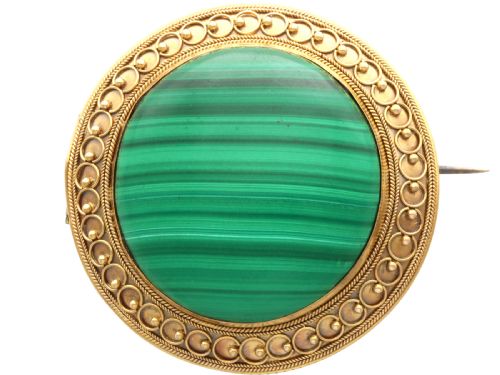


Vintage Green Brooch
A vintage green brooch brings together fine metals and vivid tones, offering a wearable piece of history that catches the eye.
Vintage Green Brooch
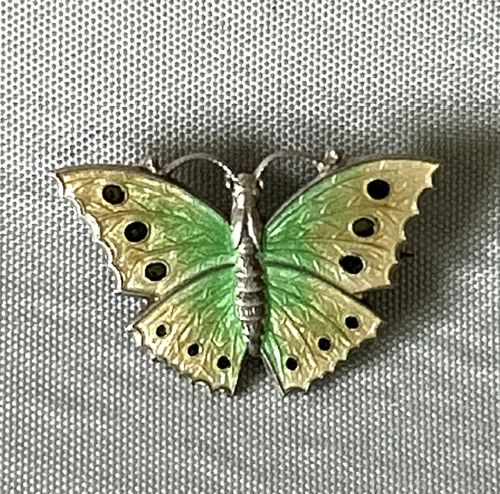
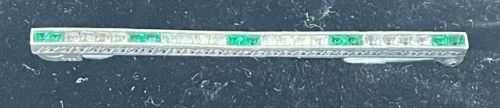
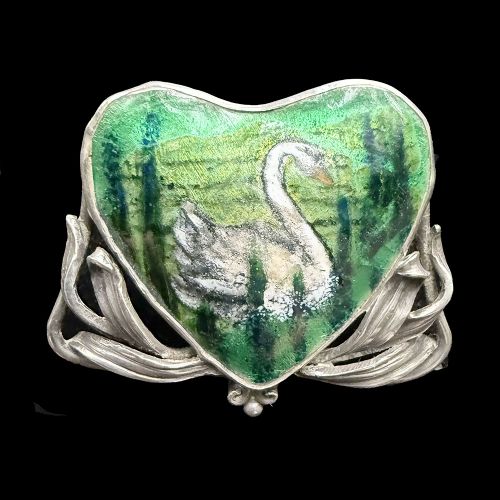
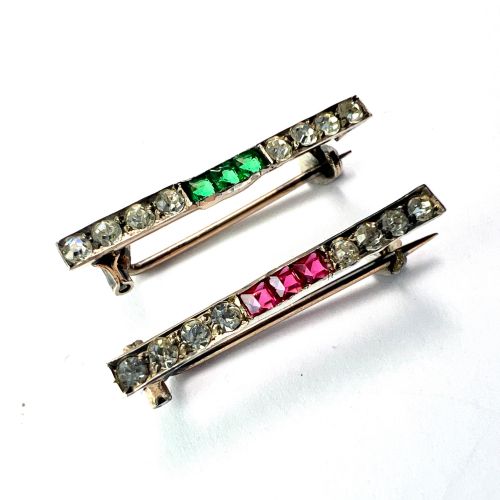
A vintage green brooch encompasses a wide array of styles spanning from the Victorian and Edwardian eras through to the mid-century period. Buyers seeking a vintage green brooch will find pieces taking the form of detailed insects, delicate florals, geometric bar designs, and classical heart motifs.
The selection ranges from early twentieth-century silver and enamel works to mid-century creations set with emeralds, peridots, malachite, and chrysoprase. These items originate from British, continental European, and Scandinavian workshops, reflecting diverse design movements from Arts and Crafts to Art Deco.
Among the most common finds on this page are silver and guilloche enamel butterfly brooches alongside gold mounts set with peridot and pearl. Each piece serves as a distinct example of how past makers employed green hues across various decorative contexts.
Materials and construction methods
Metals employed in these pieces include sterling silver, silver gilt, platinum, and various purities of gold such as nine-carat and eighteen-carat yellow and white gold. Makers combined these structured mounts with precious gemstones like diamonds, emeralds, and peridots, alongside paste alternatives.
Enamelling techniques play a central role, particularly translucent guilloche enamel on engine-turned silver grounds and vibrant plique-a-jour enamel that resembles stained glass. Artisans also utilised seed pearls, mother-of-pearl, rock crystal quartz, and carved malachite to build texture and depth within the framing of the pin.
Materials range from humble base metals and paste up to platinum, eighteen-carat gold, and certified emeralds.
Distinctions in craftsmanship and design
Quality varies significantly in the precision of the metalwork and the execution of the enamel, where finer pieces display smooth, uninterrupted surfaces and delicate application without cracking. The choice of stones also dictates the tier, moving from moulded paste and glass to genuine peridots, emeralds, and diamonds set in platinum or gold.
Attribution to documented makers and specific design movements elevates a piece, as seen in signed Scandinavian enamelwork or identified German Jugendstil silver. The complexity of the assembly, such as articulated pendant loops or intricate filigree wirework, separates standard production items from master-level studio output.
Levinger and Bissinger·Meyle and Mayer·Jakob Bengel·J Tostrup·Ivar Holth
The Vintage Green Brooch Glossary
- Guilloche enamel
- A decorative technique where translucent enamel is layered over metal engraved with a precise mechanical pattern. This method creates shimmering, geometric wave or sunburst effects underneath the coloured glass.
- Plique-a-jour
- An enamelling technique resembling miniature stained glass, where the enamel is fired without a backing metal skeleton. It allows light to pass directly through the translucent green or multicoloured cells.
- Bar brooch
- A narrow, elongated horizontal pin popular during the late nineteenth and early twentieth centuries. These pieces often feature a central gemstone cluster or an enamel plaque mounted across the central bar.
- Peridot
- A yellowish-green gemstone favoured heavily during the Edwardian and Arts and Crafts periods. It is typically set in yellow gold or silver to complement its bright, natural hue.
- Paste
- Hand-cut and polished lead glass used to imitate precious gemstones. High-quality paste stones were meticulously faceted and foiled to mimic emeralds and diamonds in antique costume and fine jewellery.
Vintage Green Brooch: Frequently Asked Questions
How should I wear an antique brooch?
These pieces suit heavy fabrics such as wool coats, tweed jackets, and structured knitwear where the pin can anchor securely. Many designs featuring pendant loops also transition onto chains to be worn as necklaces.
Ensure the fabric is thick enough to support the weight of the metal and stones without sagging. Fastening the safety catch properly prevents loss during daily wear.
How do I date a green enamel brooch?
Dating relies on examining the metal hallmarks, the clasp mechanism, and the overarching artistic style. Edwardian and Art Nouveau pieces often feature flowing organic motifs, while Art Deco items lean towards strict symmetry and geometric lines.
Enamel colours and mounting techniques also offer strong clues; plique-a-jour is frequently tied to early twentieth-century continental output. Comparing the pin stem and hinge style against known chronological shifts helps narrow the production window.
Are paste stones original to antique jewellery?
Past makers frequently utilised high-grade paste alongside or instead of genuine gemstones to achieve striking visual contrasts without prohibitive costs. These simulated stones are entirely authentic to the period of manufacture and hold their own historical value.
Replacements can happen over long histories, but period paste exhibits distinct cutting facets and ageing characteristics that match the surrounding metalwork. Evaluating the foil backing and setting wear helps confirm originality.
What is the difference between peridot and emerald?
Peridot possesses a distinct yellow-green or lime coloration and was immensely popular during the Edwardian and Arts and Crafts eras. Emeralds display a deeper, cooler bluish-green tone and appear more frequently in high-value Victorian and mid-century fine jewellery.
Under magnification, emeralds typically contain natural internal inclusions known as gardens, whereas peridots show characteristic round mineral crystals. Their different refractive indices also give each stone a unique brilliance.