





Vintage Gold Garnet Ring
A vintage gold garnet ring brings deep red warmth to the hand, drawing on centuries of skilled benchwork.
Vintage Gold Garnet Ring
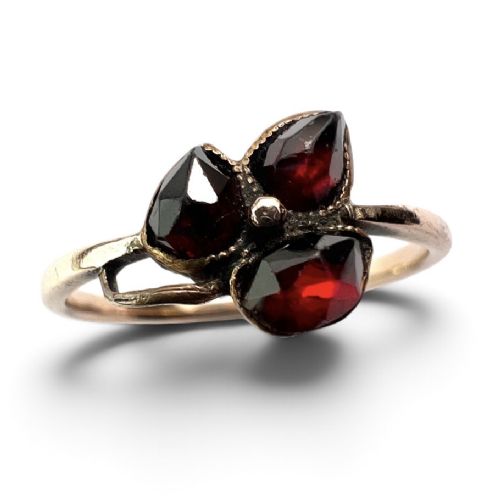
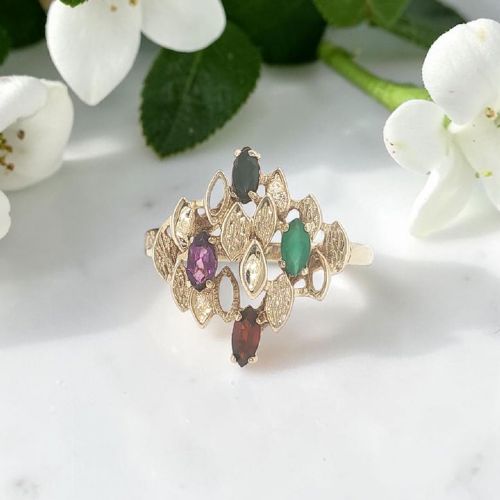
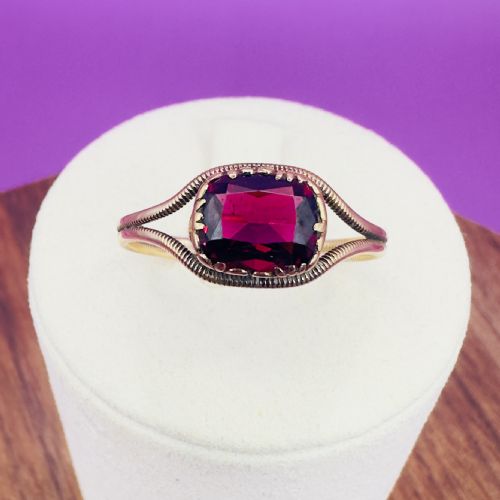
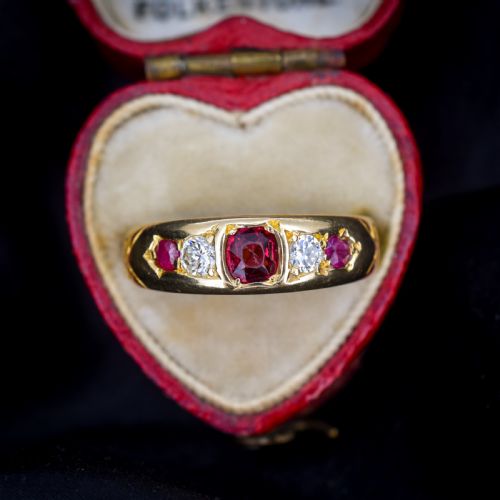
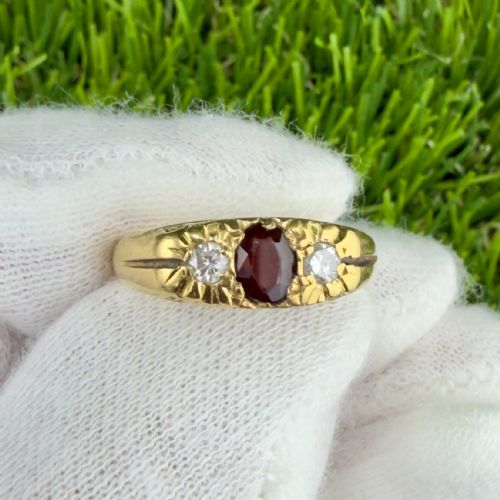
A vintage gold garnet ring combines rich red stones with yellow, white or rose gold settings. You will frequently encounter cluster forms, solitaire mounts and multi-stone dress rings on this page.
The pieces span periods from the eighteenth century through the Victorian and Edwardian eras into the mid-twentieth century. Earlier examples often feature foiled almandine stones, while later decades favour bright cluster designs.
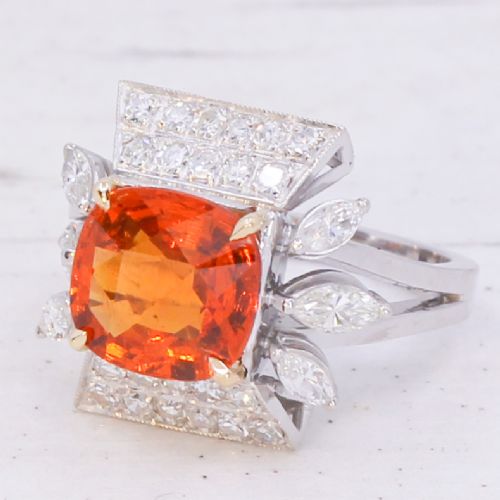
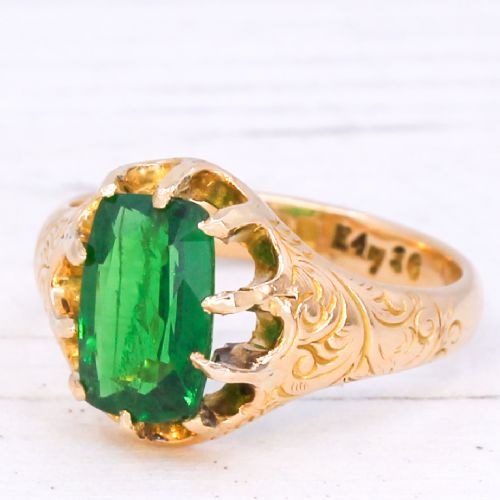
Makers utilised various carats of gold, pairing garnets with diamonds, pearls, opals or emeralds. The selection ranges from delicate posy rings to substantial cocktail pieces.
Materials and construction
Goldsmiths shaped mounts in nine, fifteen and eighteen carat gold, casting or hand-forging bands to hold deep red garnets. Stones were secured using claw, bezel or flush settings depending on the period.
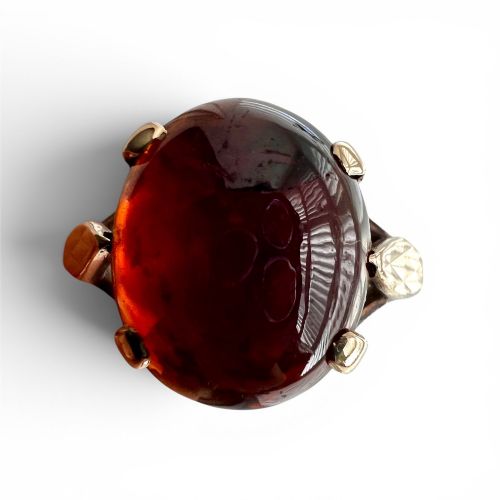
Clusters commonly arrange garnets around a central diamond or seed pearl, while solitaire rings showcase larger cabochon or faceted gems. Master jewellers balanced the heavy crimson of the garnet with sparkling diamond accents.
Georgian jewellers occasionally slipped tiny metallic foils beneath dark garnets to catch the flicker of candlelight.
Assessing quality and craftsmanship
Quality rests on the depth of colour in the garnet and the crispness of the metalwork surrounding it. Superior pieces display securely set stones without claw wear and retain fine details in any surrounding wirework or engraving.
The weight and purity of the gold mount dictate longevity, alongside the original precision of the gemstone faceting. Stronger items show minimal thinning to the shank and robust setting integrity.
The Vintage Gold Garnet Ring Glossary
- Cabochon
- A gemstone shaped and polished with a smooth convex surface rather than faceted. This style highlights the deep, glowing colour of the garnet.
- Almandine
- A dark red variety of garnet rich in iron and aluminium. It frequently appears in eighteenth and nineteenth-century cluster rings.
- Trilogy
- A ring featuring three principal stones set in a row. They represent the past, present and future.
- Old mine cut
- An early diamond cut characterised by a cushion shape, high crown and large culet. It appears frequently in antique cluster rings.
Vintage Gold Garnet Ring: Frequently Asked Questions
How do I care for my ring?
Clean your gold and garnet ring gently using warm soapy water and a soft brush. Avoid harsh chemical dips, which can damage softer accompanying gems like pearls or opals.
Store the piece separately in a fabric-lined box to prevent harder stones from scratching the gold band or the garnet surface.
Are these rings suitable for daily wear?
Garnet measures seven on the Mohs hardness scale, making it reasonably durable for regular wear. However, antique and vintage settings require care to protect delicate claws and older gold bands.
Consider removing the ring during heavy manual tasks or swimming to preserve the original structure and secure the smaller accent stones.
How can I date my ring?
Examine the style of the setting, the cut of the stones, and any hallmarks stamped inside the band. Georgian and Victorian pieces often feature closed-back settings or hand-engraved shanks.
Later mid-century designs display cleaner geometric clusters and standard maker marks that help narrow down the decade of production.
What is a cluster ring?
A cluster ring arranges a central gemstone surrounded by a border of smaller stones, often creating a floral or daisy outline. This configuration maximises visual impact on the finger.
Jewellers across the Victorian and Edwardian periods favoured this layout to showcase contrasting colours between red garnets, white diamonds and pearls.