
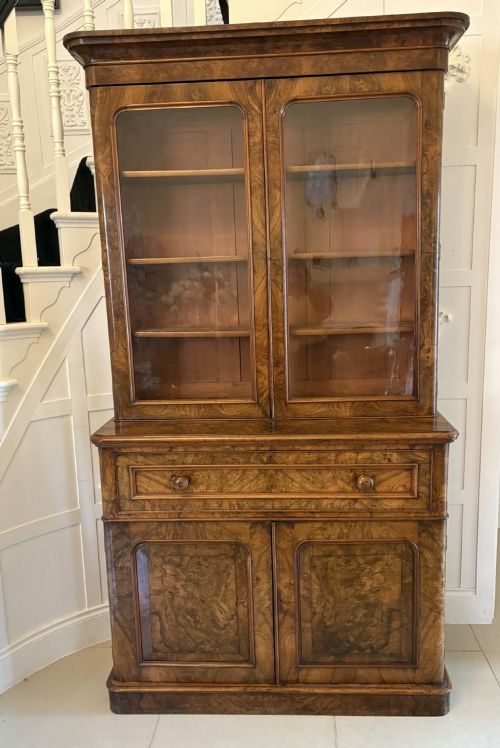
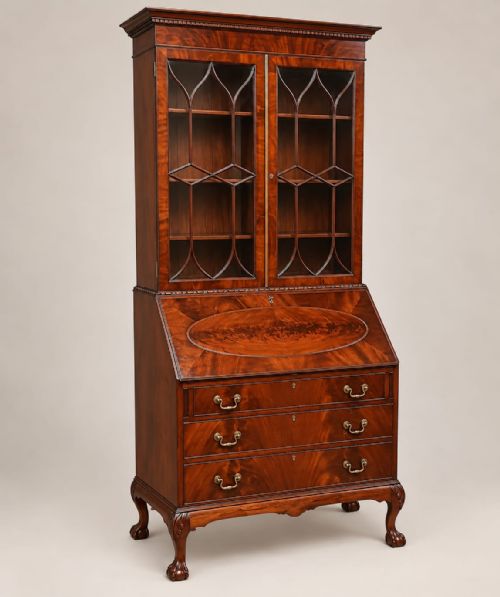
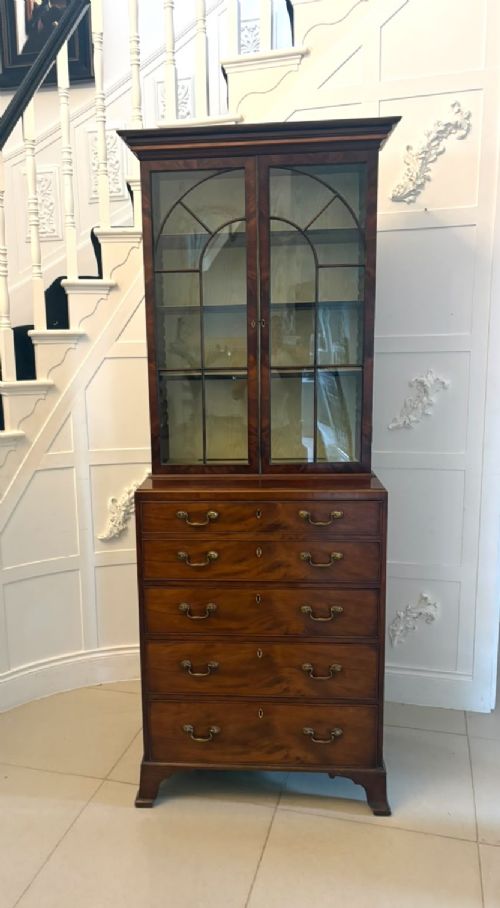
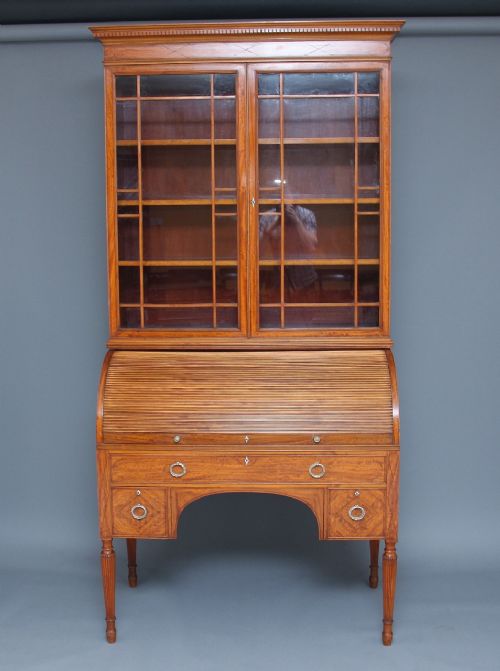
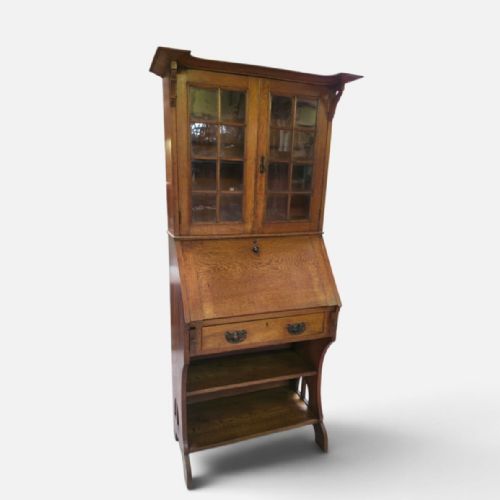
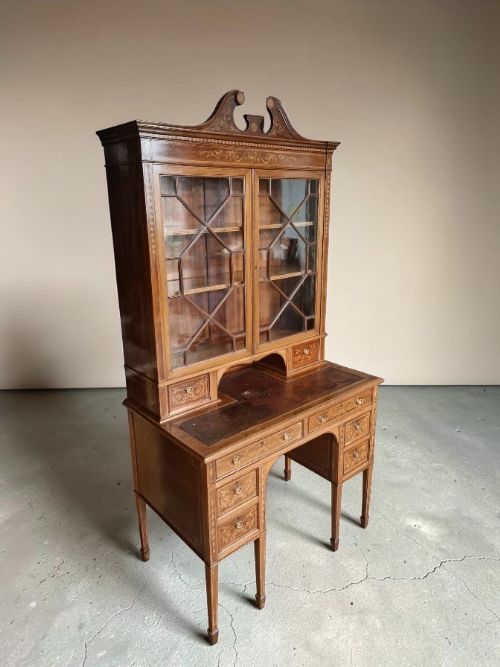
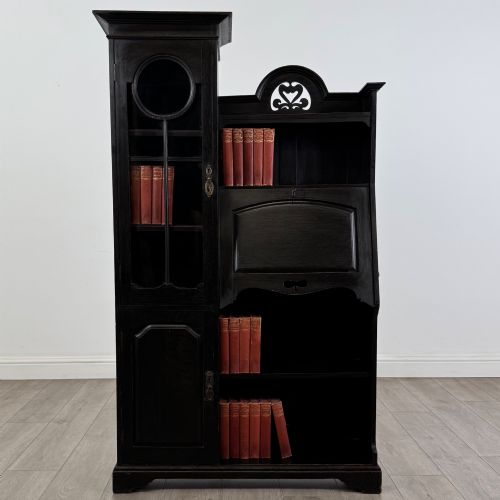
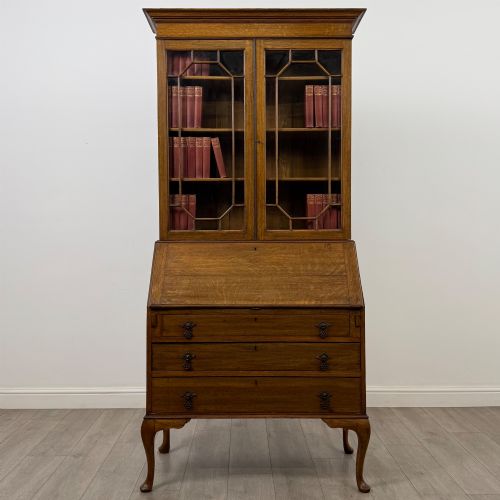


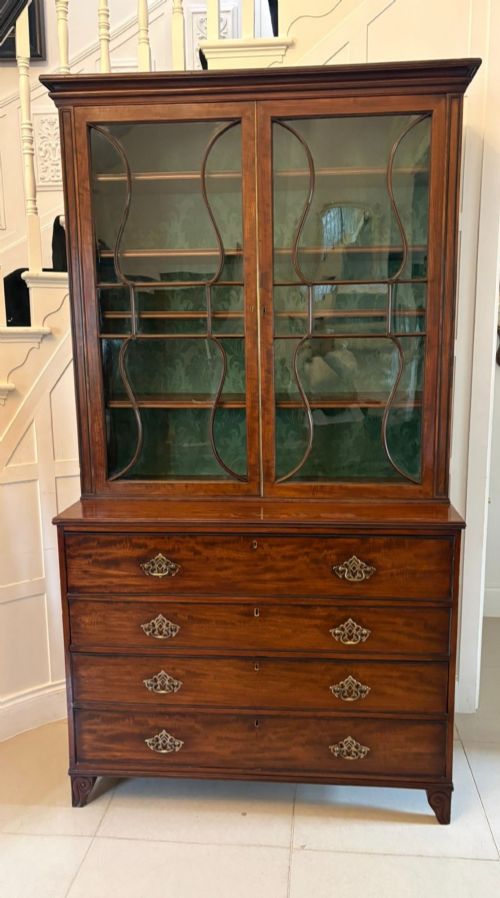
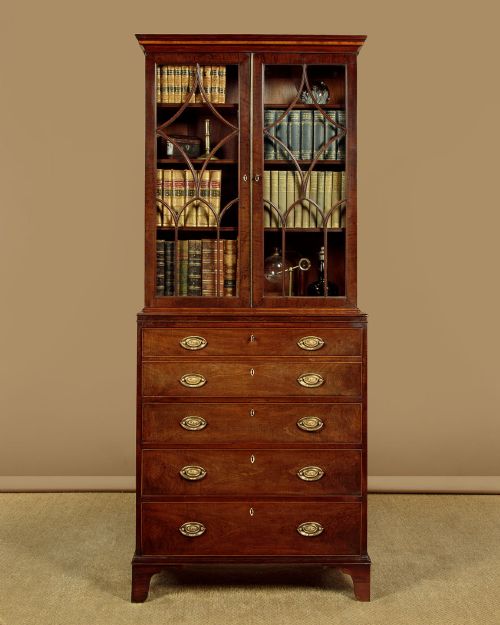
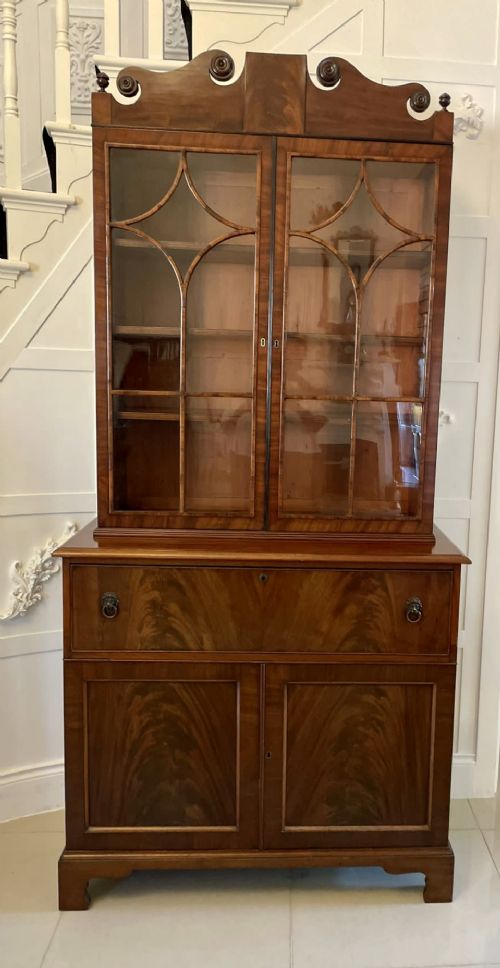
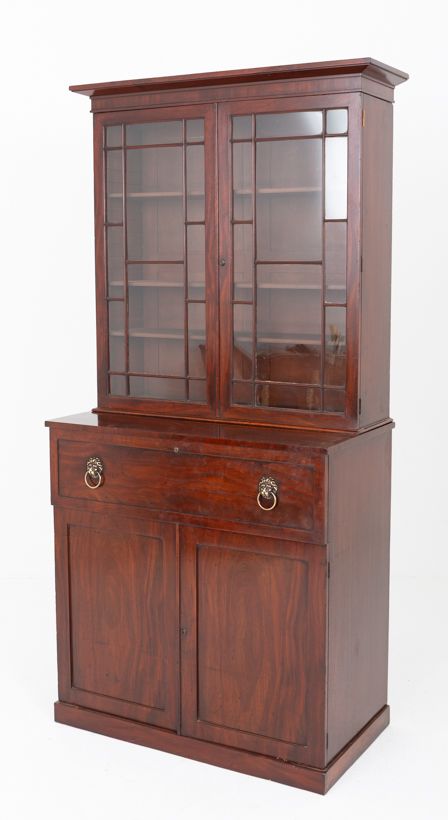
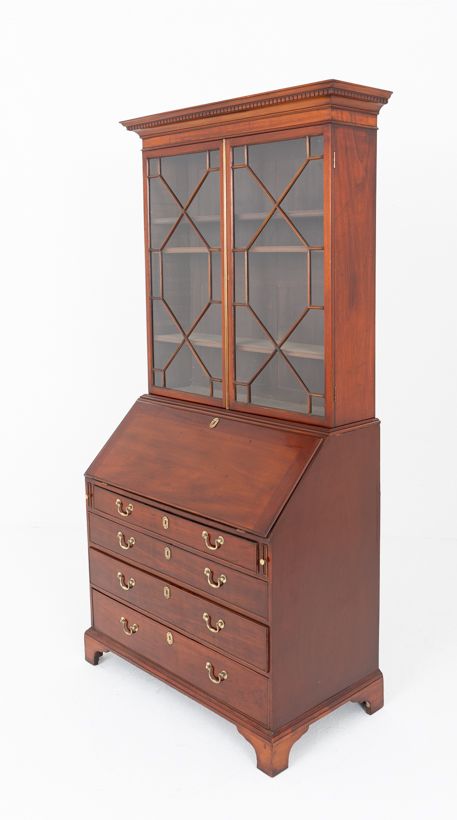
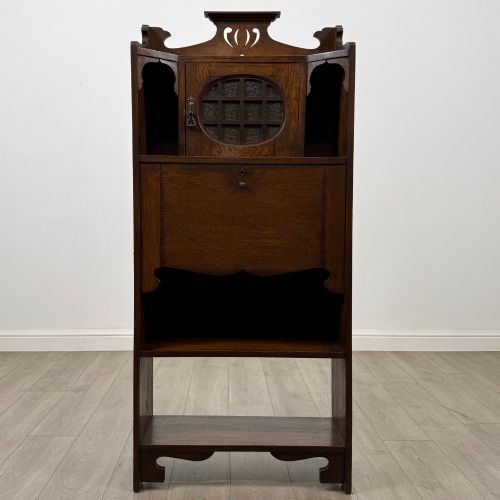
Vintage Glazed Bureau Bookcase
A vintage glazed bureau bookcase offers a fitted writing drawer beneath shelved glass doors, combining a library cabinet with a drop-front desk in one substantial piece of furniture.
Vintage Glazed Bureau Bookcase
A vintage glazed bureau bookcase brings together a display cabinet and a writing desk, providing upper shelving behind glass doors and a lower section with a fitted writing surface. These dual-purpose items range from formal Georgian and Regency library pieces to lighter Edwardian iterations and practical oak examples from the nineteen-twenties.
On this page, buyers meet pieces spanning several centuries, with Edwardian and Victorian examples appearing alongside Georgian and Regency originals. Woods vary from figured mahogany and satinwood inlay to oak and yew wood, reflecting the changing domestic tastes of each period.
Materials and construction
Cabinetmakers constructed these bookcases using solid timbers and select veneers such as mahogany, walnut, oak, and yew wood, often embellishing surfaces with satinwood inlay or flame mahogany figures. Glass panes were fitted into upper doors using wooden glazing bars, whilst brass handles and escutcheons secured drawers and drop-fronts.
Some secretaire drawers conceal tiny secret compartments behind the inner stationery drawers, designed to hide private letters and valuables.
Markers of distinction
Quality rests primarily in the selection of timber figures, such as flame mahogany or figured walnut, and the crispness of inlaid satinwood details. Finer examples display delicate astragal glazing bars and meticulously dovetailed internal compartments rather than plain framing.
Proportion and execution define the upper tier of pieces, where cabinetmakers balanced the visual weight of the glazed upper cabinet against the lower bureau. Secondary woods, drawer linings, and original brass hardware further separate standard production items from workshop-attributed furniture.
Gillows of Lancaster
The Vintage Glazed Bureau Bookcase Glossary
- Bureau bookcase
- A dual-purpose furniture form featuring a sloping desk compartment or drop-front writing drawer beneath a glazed upper cabinet for books.
- Secretaire
- A dedicated writing drawer that pulls out from the cabinet carcase, concealing a fitted interior with small drawers and pigeonholes behind a drop-front.
- Astragal glazing bar
- A narrow wooden moulding that holds individual panes of glass within a cabinet door, often arranged in geometric or gothic patterns.
- Figured mahogany
- Mahogany timber exhibiting natural grain patterns such as flame, curl, or fiddleback, chosen for decorative impact on primary surfaces.
- Satinwood
- A pale, hard timber used for veneers and fine stringing lines to create contrasting decorative borders on cabinet furniture.
Vintage Glazed Bureau Bookcase: Frequently Asked Questions
How do I use a bureau bookcase?
The drop-front or pull-out secretaire drawer folds down to create a writing surface, while the open interior provides slots for letters and small compartments for stationery.
Above this desk space, the glass-fronted cabinet holds books, ceramics, or display collections safely behind closed doors.
What is the difference between a bureau and a secretaire?
A bureau typically uses a sloping, diagonal fall-front that opens outward to reveal the writing surface and interior fittings.
A secretaire integrates the writing compartment into a standard horizontal drawer frame that pulls straight out before the front drops down.
How do I date a mahogany bookcase?
Dating relies on stylistic clues, construction methods, and timber choice, noting that Georgian pieces often feature hand-cut dovetails and solid mahogany linings.
Edwardian and later iterations frequently employ machine-sawn elements, lighter satinwood stringing, or revival styling such as Jacobean or Queen Anne influences.
Will these pieces fit in a modern room?
These cabinets are tall vertical pieces that combine a bookcase and a desk footprint into a single floor area, saving space compared to owning separate items.
Slim proportions appear across several periods, though buyers should verify ceiling heights and clearance for opening the drop-front desk.