
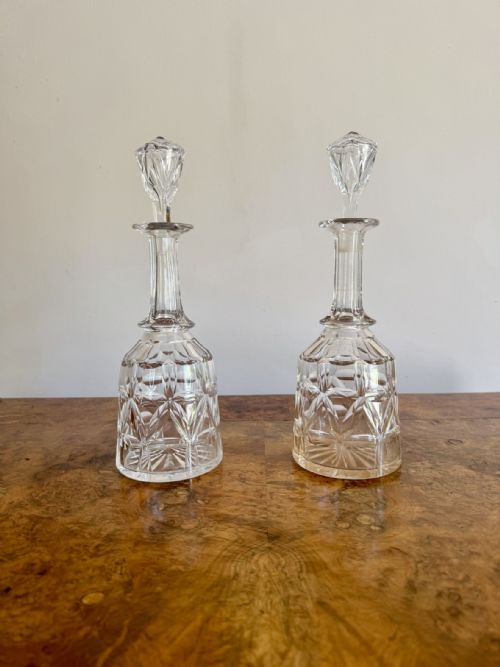
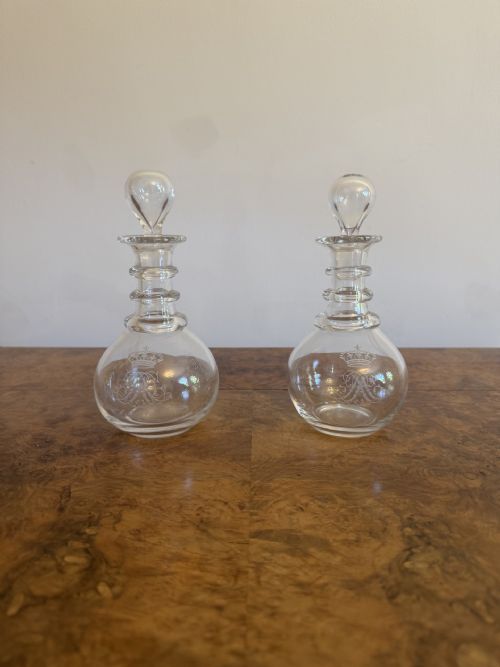


Vintage Glass Wine Bottle
These vintage glass wine bottle pieces, spanning Georgian to Edwardian periods, are substantial vessels designed to hold and pour wine with historic elegance.
Vintage Glass Wine Bottle
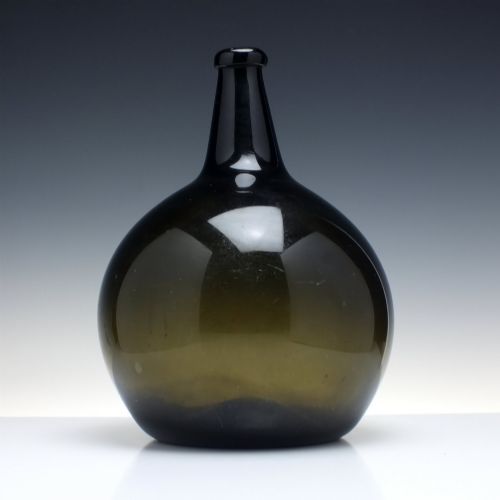
When you search for a vintage glass wine bottle, you are looking at functional serving vessels that bridge practical dining history and decorative art. The selection centres heavily upon decanters, ewers, carafes, and serving bottles originating from Victorian, Edwardian, and earlier eras.
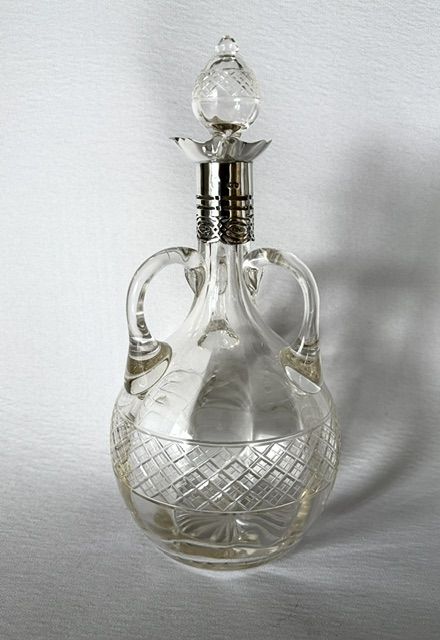
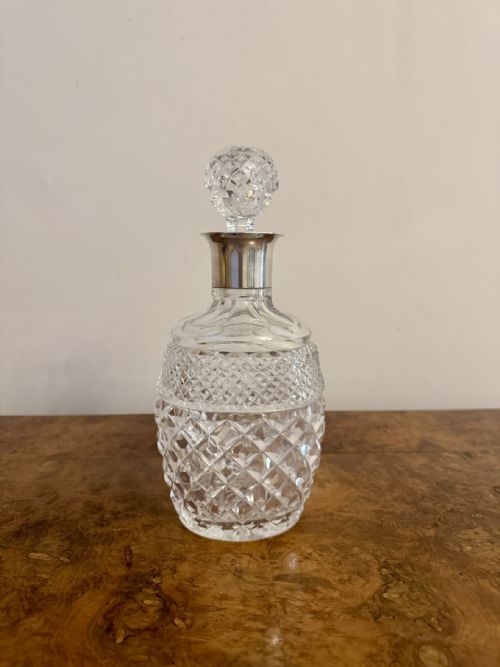
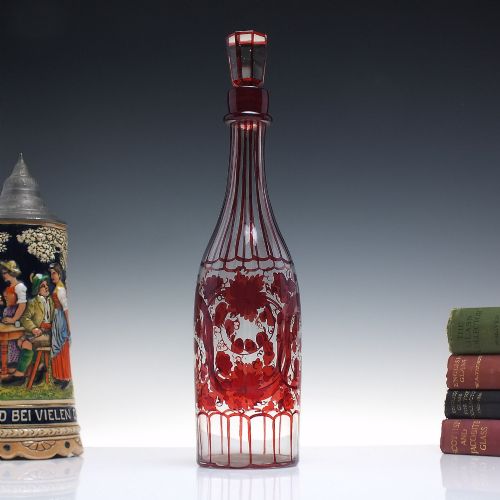
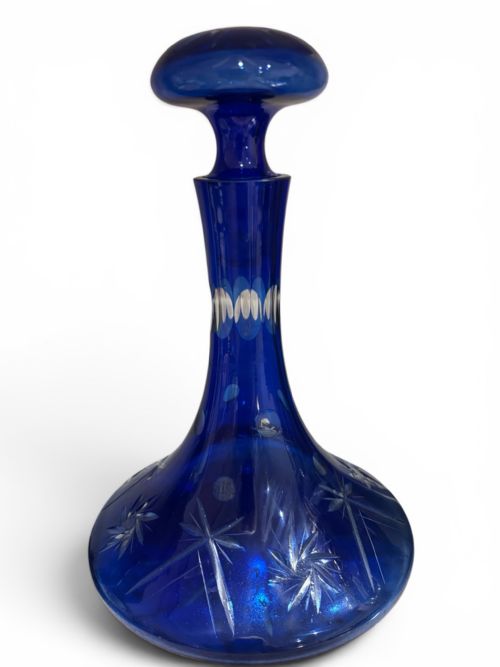
The pieces you are most likely to meet on this page include cut glass decanters mounted with sterling silver collars, alongside coloured glass examples in cranberry, ruby, amber, and cobalt hues. These items range from Scottish Alloa bottles of the late eighteenth century to bell-shaped crystal vessels produced in the early twentieth century.
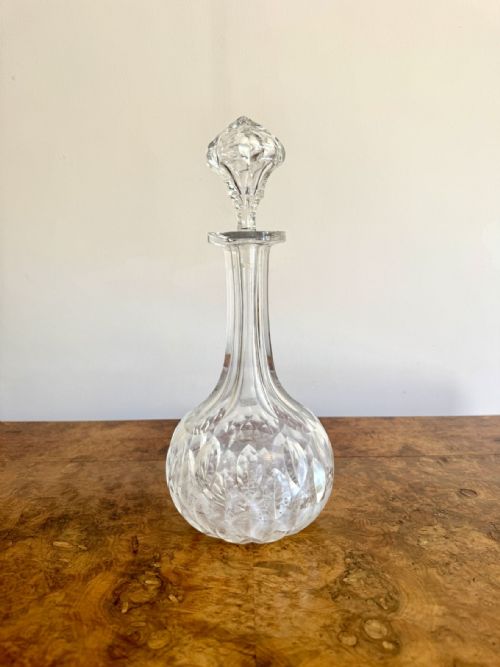
Form and utility dictate the design across these categories, incorporating shaft and globe silhouettes, cylinder wine bottles, and heavy crystal champagne coolers. Origin and period influence the weight of the material and the complexity of the cutting, connecting each vessel to its dining table heritage.
How they were made
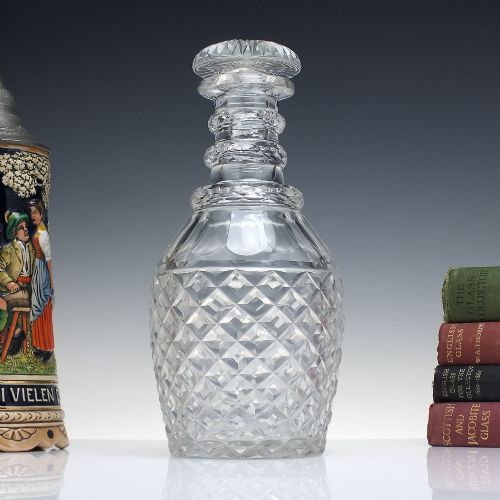
Makers utilised heavy lead crystal and clear glass, frequently applying deep wheel-cut patterns or overlay techniques such as cranberry and ruby casing over clear crystal. Coloured glass varieties, including cobalt and amber vessels, derived their rich tints from specific mineral oxides added during the molten stage.
Metalwork played a structural and decorative role, with silversmiths attaching sterling silver collars, mounts, and pourers to glass necks. Hand painting and delicate enamel work further embellished specific Victorian and Edwardian serving bottles.
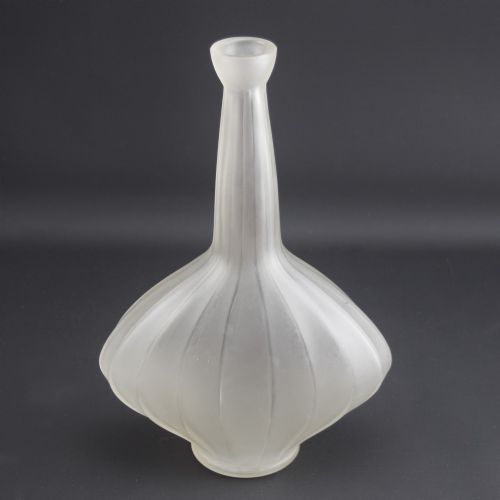
Techniques varied from blown cylinder bottles of the eighteenth century to precision-moulded Art Deco crystal forms. Specialised glasshouses also produced Nailsea type pieces and engraved shaft and globe designs using traditional wheel-cutting methods.
One Scottish Alloa bottle from seventeen-ninety carries the quiet weight of history, having survived over two centuries of dining rooms.
What varies in quality
The clarity of the material and the crispness of the cutting separate standard vessels from exceptional examples. Superior pieces exhibit sharp, deep facets that catch the light cleanly, while lesser items show softer edges from worn moulds or shallower engraving.
The integration of metal mounts defines another tier of distinction, where hallmarked sterling silver collars fit seamlessly against the glass neck. Weight distribution and the stability of the base also indicate the original workshop's standard of production.
Stevens & Williams·Rene Lalique
The Vintage Glass Wine Bottle Glossary
- Decanter
- A vessel used for holding and serving wine, typically fitted with a stopper. These pieces allow vintage wines to breathe before pouring.
- Lead Crystal
- Glass containing lead oxide, which increases brilliance, weight, and resonance. This material is standard for high-quality cut glass decanters.
- Overlay
- A technique where a layer of coloured glass is fused over a clear crystal body. Subsequent cutting exposes the clear glass beneath to form contrasting patterns.
- Shaft and Globe
- A traditional bottle silhouette featuring a long slender neck above a spherical body. This form was widely utilised during the Victorian period for wine storage.
Vintage Glass Wine Bottle: Frequently Asked Questions
How do I date a glass wine bottle?
Dating these pieces involves examining the manufacturing techniques, glass colour, and style of any metal mounts. Eighteenth-century examples often display pontil marks and thicker, iridescent glass, while Victorian and Edwardian items frequently feature precise mechanical cutting and silver hallmarks.
Form and silhouette also provide chronological clues. Shaft and globe shapes point toward the late nineteenth century, whereas clean geometric lines indicate early twentieth-century or Art Deco periods.
Were these bottles used for storage?
Most of these glass bottles and decanters were intended for serving wine at the table rather than long-term storage in a cellar. Their stoppers were designed to keep dust out during a meal rather than to create an airtight seal for ageing.
Wealthy households used them to transfer wine from large storage casks or standard bottles before presenting the drink to guests. They combined practical utility with aesthetic display.
How should I clean antique glass?
Cleaning antique glass requires gentle hand washing in warm water with mild detergent, avoiding sudden temperature changes that can crack old material. Metal mounts, particularly silver collars, should be kept dry and polished with appropriate cloths away from the glass.
Harsh abrasive cleaners and modern dishwashers must be avoided to protect delicate hand-cut facets and historical surface patinas. Soft bottle brushes can help reach interior residue safely.
What is the difference between a decanter and a carafe?
A decanter traditionally includes a fitted glass stopper designed to close the vessel, whereas a carafe is typically an open-topped vessel meant for immediate pouring. Both serve the primary function of aerating wine.
In historical listings, the terms sometimes overlap depending on the maker's design and the intended use for spirits or wine. Decanters more frequently feature heavy cut crystal and silver collars.