


Antique Blown Glass Bottle
These antique blown glass bottle selections span centuries of utilitarian and decorative vessels, offering genuine historical presence for any interior.
Antique Blown Glass Bottle
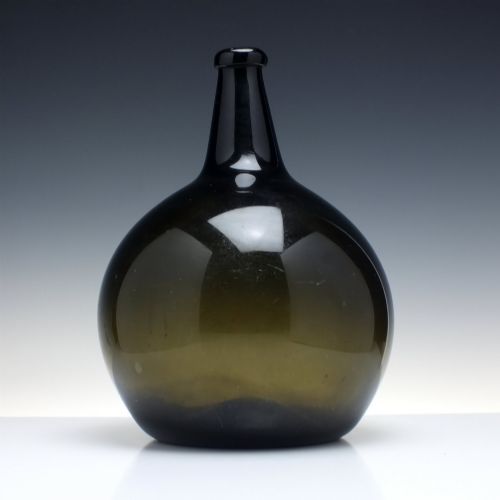
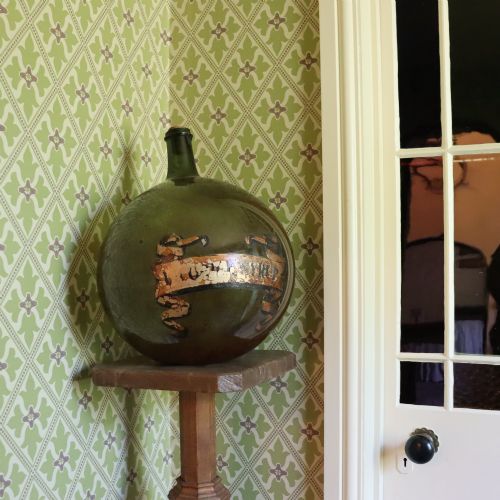
An antique blown glass bottle encompasses a diverse range of functional vessels, from large pharmacy carboys and chemist jars to serving decanters and pocket flasks. You encounter domestic containers designed for wine, cider, and spirits alongside utilitarian storage jars originating from English, French, and Scottish workshops.
The domestic table pieces include Georgian and Victorian decanters, often shaped for specific spirits or wines, while industrial and apothecary forms provide larger statement vessels with deep historical roots. These items reflect the daily domestic and commercial storage needs of past centuries.
The material presentation varies from robust, dark utility glass to delicate coloured wares intended for the Victorian parlour or Edwardian dining table. Each form retains the distinct tactile qualities of manual production.
Manufacturing and materials
The primary material is hand-blown glass, shaped by free-blowing or optical moulding to create characteristic surface ripples and slight asymmetries. Makers utilised clear, amber, cranberry, and Bristol blue glass, occasionally incorporating enamel decoration, gold leaf, or aventurine inclusions.
Specialised techniques such as latticinio banding and wheel engraving appear on finer decorative pieces from Venetian and English makers. Utility vessels rely on robust glass formulations designed to withstand heavy daily use in pharmacies, wine cellars, and merchant houses.
Materials recorded across the inventory include cranberry glass, amber glass, gold leaf, and enamel.
Assessing quality and craftsmanship
Quality rests in the balance of the vessel, the clarity or rich depth of the coloured glass, and the precision of any applied decoration. Pieces featuring documented maker attribution or specialised techniques like murrine work command greater interest from collectors.
The finesse of the pontil mark and the proportional harmony of the neck, body, and base distinguish standard utility wares from exhibition-grade decanters and ewers. Unaltered surfaces and complete original stoppers elevate the standing of surviving domestic bottles.
Franchini & Bigaglia·James Powell·Archibald Knox for Liberty·Stevens & Williams·Pauly & Co.
The Antique Blown Glass Bottle Glossary
- Pontil mark
- The rough scar left on the base of a vessel where the punty rod was detached after blowing. This physical evidence confirms traditional free-blown manufacture.
- Carboy
- A large, bulbous glass bottle traditionally used for holding liquids safely in bulk. Apothecaries and chemical laboratories relied heavily on these sturdy vessels.
- Latticinio
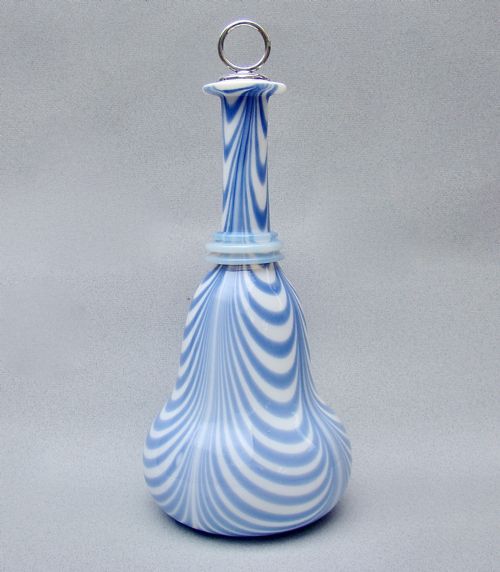
- A decorative glass technique featuring fine opaque white or coloured glass threads embedded within clear glass. Venetian glassmakers popularised this intricate linear pattern.
- Nailsea glass
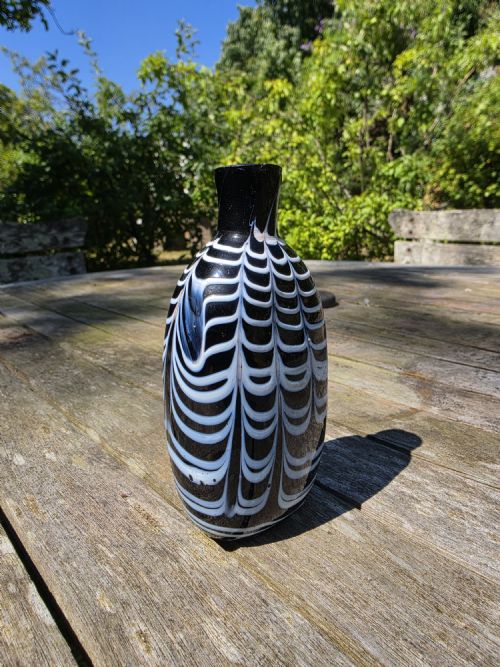
- Distinctive nineteenth-century British glass characterised by looped or splashed coloured glass trails over a milky or contrasting ground. The style originated at the Nailsea glassworks near Bristol.
- Aventurine
- Glass containing suspended copper crystals that produce a glittering, metallic appearance. Artisans prized this inclusion for adding rich reflective depth to dark glass bodies.
Antique Blown Glass Bottle: Frequently Asked Questions
Are stoppers usually original?
Many surviving decanters retain matched stoppers, though replacements are common given centuries of domestic use and handling.
Examine the ground glass fit and glass colour match to determine if a stopper belongs to the bottle.
What is Nailsea glass?
Nailsea glass refers to distinctive wares produced near Bristol featuring looped or feathered coloured glass trails.
Collectors prize these pieces for their charming irregularity and vibrant surface decoration.
How can I date an old bottle?
Dating relies on pontil mark characteristics, lip formation, glass colour, and overall manufacturing technique.
Deep kick-ups in the base and dark utility metal often point towards eighteenth-century production origins.