





Vintage Glass Tantalus Set
A vintage glass tantalus set locks away fine spirits behind a clever mechanism, combining security with hospitality in a handsome drinking cabinet or stand.
Vintage Glass Tantalus Set
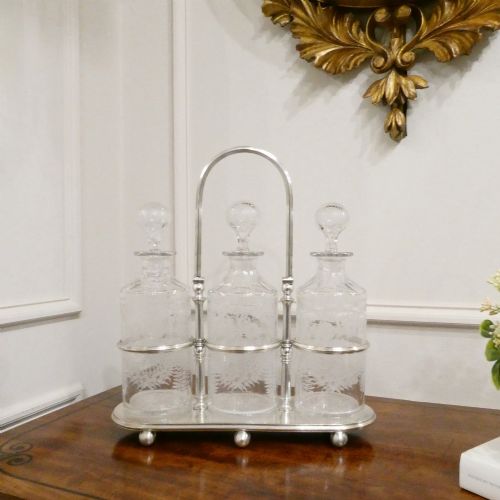
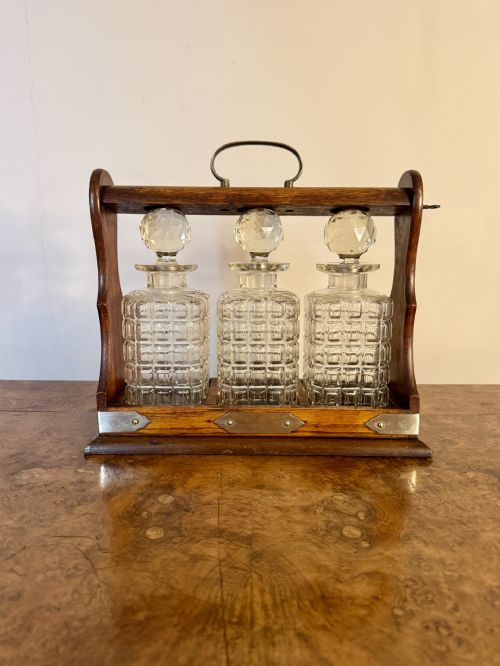
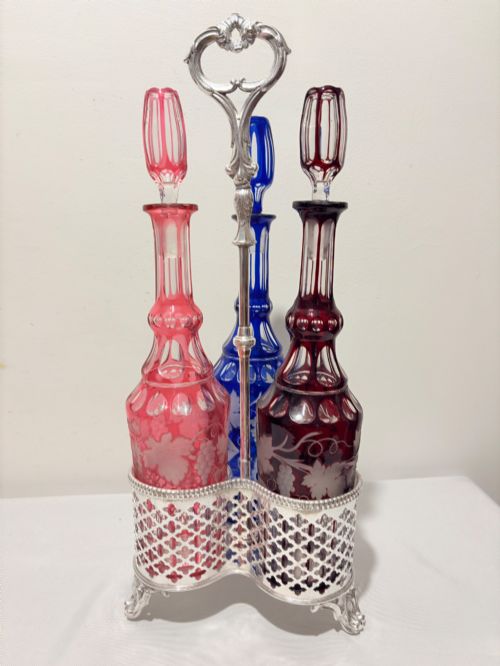
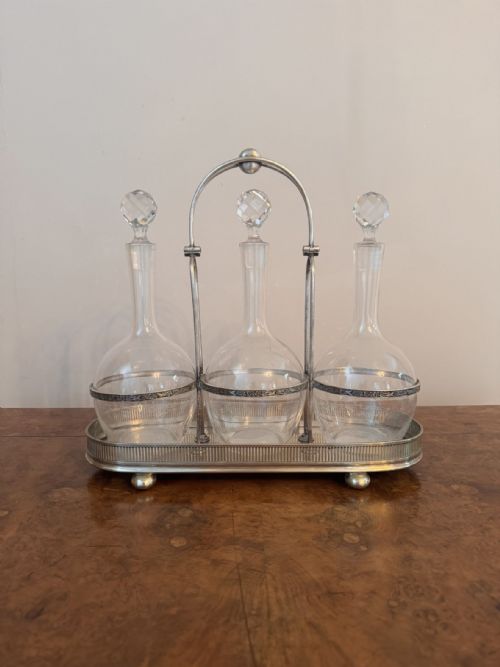
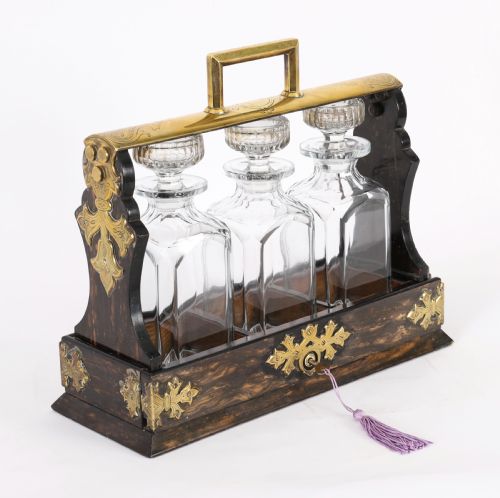
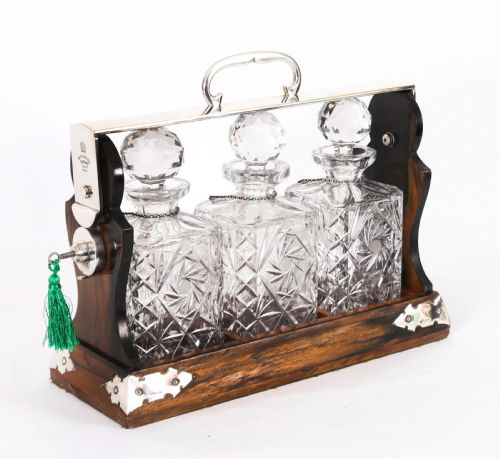
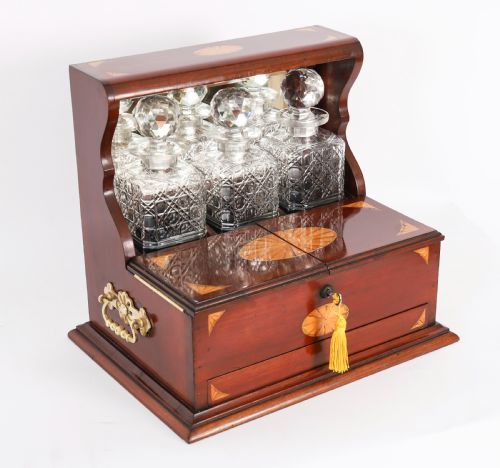
A vintage glass tantalus set brings together cut crystal or glass decanters held securely within a locking frame of oak, mahogany, coromandel, or silver plate. These drinking cabinets and stands emerge primarily from the Victorian and Edwardian eras, alongside French liqueur boxes and occasional Art Deco modernist designs.
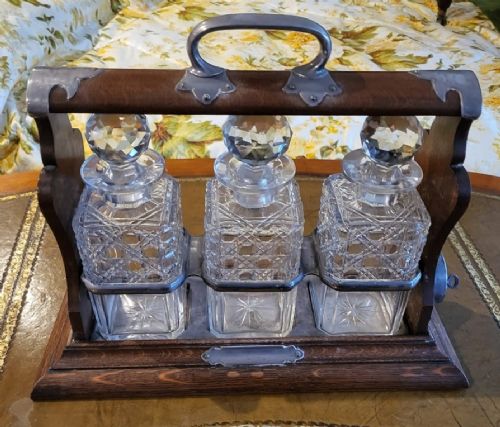
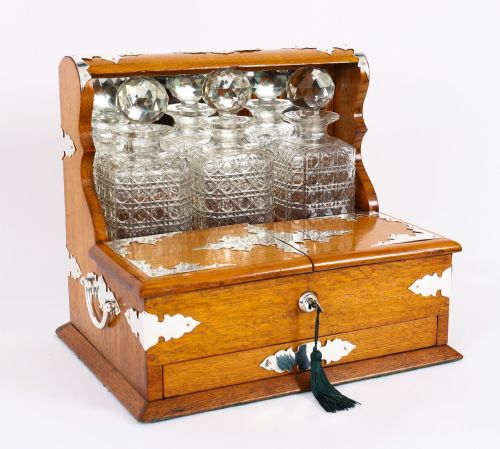
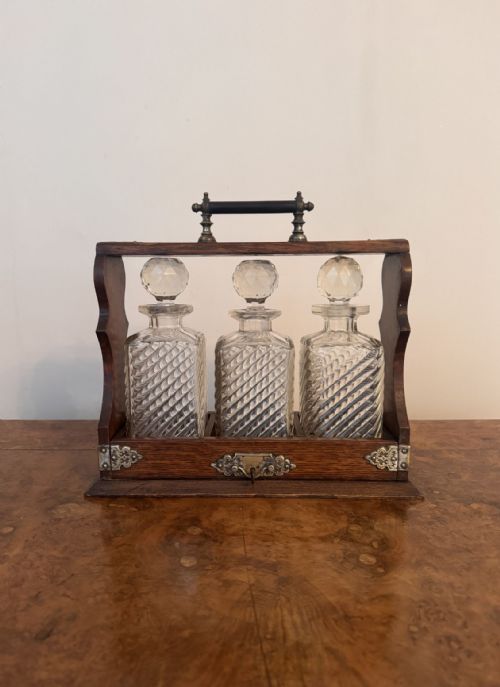
Buyers seek these pieces for their combination of fine cabinetmaking and practical barware. The most common forms on this page feature two or three bottles held in wooden frames with silver plated mounts, often incorporating games compendiums or locking mechanisms to curb unauthorized pouring.
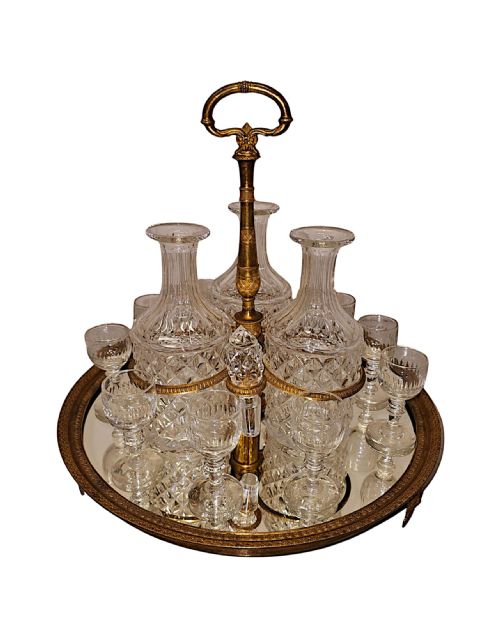
Originating as status symbols in nineteenth-century drawing rooms and smoking dens, these sets range from sturdy oak carriers to ornate French ormolu and boullework liqueur caves. Each variation reflects the entertaining customs of its specific period, spanning from robust campaign chests to delicate table decanter stands.
Materials and construction
The primary framework relies on solid hardwoods such as oak, mahogany, satinwood, and exotic coromandel, frequently enhanced with brass mounts, mirror glass, or marquetry stringing. Cabinetmakers joined these woods using traditional dovetail and mortise techniques to support the heavy weight of filled glass bottles.
Metal components involve silver plating, old Sheffield plate, or brass, providing the structural locking bars and carrying handles that secure the decanters. Specialised lock mechanisms operate via turning keys that release the upper retaining bar, keeping the spirits physically trapped until unlocked.
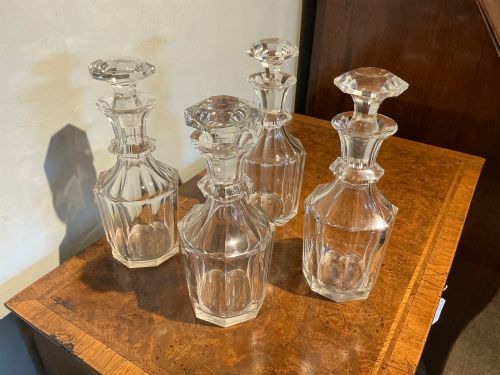
The glassware consists of heavy cut crystal, frosted glass, or moulded vessels, often shaped into matching decanters, barrels, or liqueur sets. Skilled glasscutters applied deep prismatic or fluted facets to catch the candlelight on a Victorian sideboard.
Vintage Glass Tantalus Set Retail Price Guide 2026
Typical asking prices for vintage glass tantalus set among the pieces listed under this phrase on Sellingantiques today, from the lower quarter to the upper quarter. They describe what is for sale here now, not the wider market.
Listings feature woods spanning oak, mahogany, satinwood, and coromandel alongside silver plate, brass, and cut crystal materials.
Distinctions in quality
Quality rests upon the harmony between the cabinetwork and the glassware, where fitted interiors, matching sets of decanters, and original locking mechanisms elevate a piece above standard utility items. Superior examples feature fully integrated games compendiums with cribbage boards and playing card compartments built directly into the base drawer.
The choice of secondary materials dictates the tier of the piece, moving from standard golden oak up to heavily figured coromandel veneers with substantial silver-plated mounts by recognised retailers. The precision of the locking mechanism and the clarity of the cut crystal further separate standard production items from bespoke parlor showpieces.
Elkington·Hukin and Heath·The Goldsmith Co·Jacques Adnet
The Vintage Glass Tantalus Set Glossary
- Tantalus
- A locking device and frame that holds decanters securely by their stoppers, preventing access to the contents while displaying them in plain view. The name derives from the mythological figure of Tantalus, who was condemned to stand in water just out of reach.
- Cave a Liqueur
- A French portable fitted box or tantalus set, typically housing several liqueur decanters and matching glasses within a velvet or silk-lined interior. These luxurious containers often feature tortoiseshell, brass inlay, or exotic wood veneers.
- Silver Plate
- A base metal, often copper or white metal, coated with a thin layer of silver through electroplating or older fusion methods. It provided the gleaming mounts and handles on nineteenth-century drinks frames without the full cost of solid silver.
- Coromandel
- A dense, heavy tropical hardwood featuring dark brown or black grain patterns with rich yellowish-brown streaks. Cabinetmakers utilised this prized material for high-end Victorian luxury boxes and tantalus frames.
- Games Compendium
- A multi-purpose box containing equipment for various parlor pastimes such as chess, backgammon, cards, and dice. These were frequently built into the base drawers of larger nineteenth-century decanter cabinets.
Vintage Glass Tantalus Set: Frequently Asked Questions
How does a tantalus lock work?
A tantalus operates by sliding a metal locking bar across the glass stoppers of the decanters, preventing them from being lifted straight up out of the frame. Turning a key in the side or top mechanism releases this retaining bar, allowing the bottles to be removed for pouring.
The clever design keeps the expensive spirits visible on a sideboard while physically securing them from unauthorized household staff or guests. Each system requires its matching key to disengage the upper bar.
What is a French liqueur cave?
A French liqueur cave is a portable fitted box designed to hold a set of matching crystal decanters and small glasses securely inside a decorative wooden case. Unlike standard open frames, these caves enclose the entire glassware collection behind hinged doors or lids.
They frequently display elaborate exterior decoration including brass inlay, ormolu mounts, or exotic wood veneers. Wealthy hosts carried or displayed these sets in drawing rooms to serve after-dinner cordials.
Are the decanters in these sets original?
Many sets retain their original matching cut crystal decanters and stoppers, which fit precisely into the fitted wooden or metal base compartments. Because glass is fragile, some pieces have accumulated replacement bottles over the decades.
Collectors look closely at the cut patterns, glass tint, and stopper fit to determine whether the decanters started life together in the frame. Matching glass sets significantly enhance the overall integrity of the piece.
How do I care for a wooden tantalus?
Wooden tantalus frames require simple dusting and occasional application of appropriate furniture wax to nourish the antique timber surface, whether oak, mahogany, or coromandel. Avoid placing them in direct sunlight or near heat sources that could dry out the wood and crack the veneers.
The metal mounts benefit from gentle cleaning with a soft cloth to preserve the silver plate without abrasive polishes. Keeping the interior dry prevents moisture damage to the fitted compartments.