




Vintage Glass Sconces
Vintage glass sconces bring brilliant illumination and historic character to interior walls, ranging from streamlined Art Deco chrome fixtures to ornate French gilt brass designs.
Vintage Glass Sconces
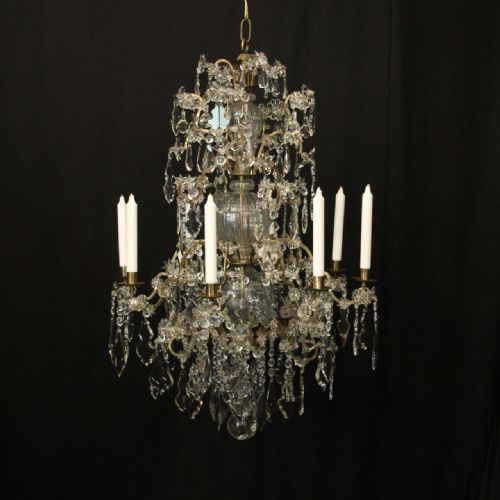
Vintage glass sconces are wall-mounted light fixtures designed to hold candles or electric bulbs, utilising glass elements to diffuse and reflect light. When searching for vintage glass sconces, buyers encounter a diverse range of forms spanning from the late nineteenth century through the Art Deco era of the 1930s.
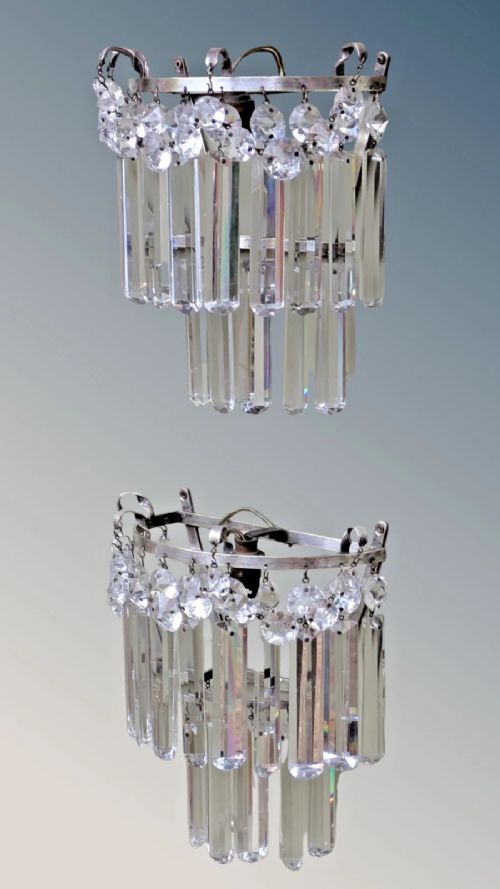
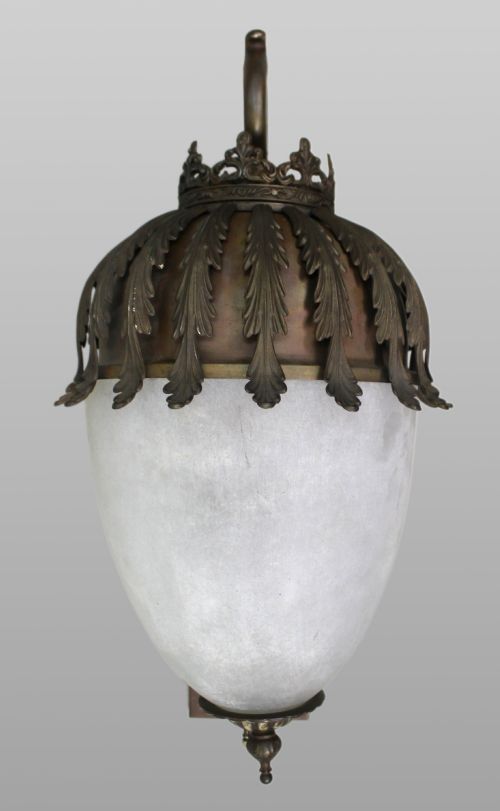
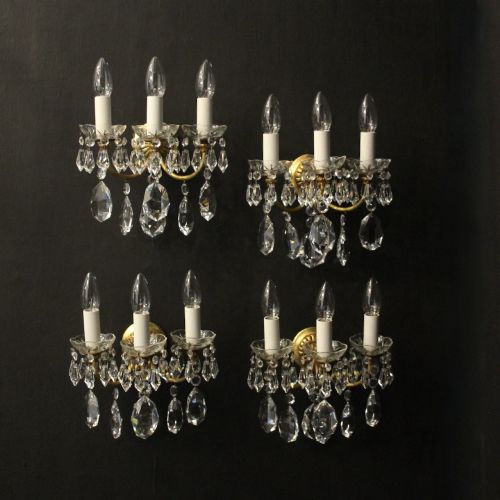
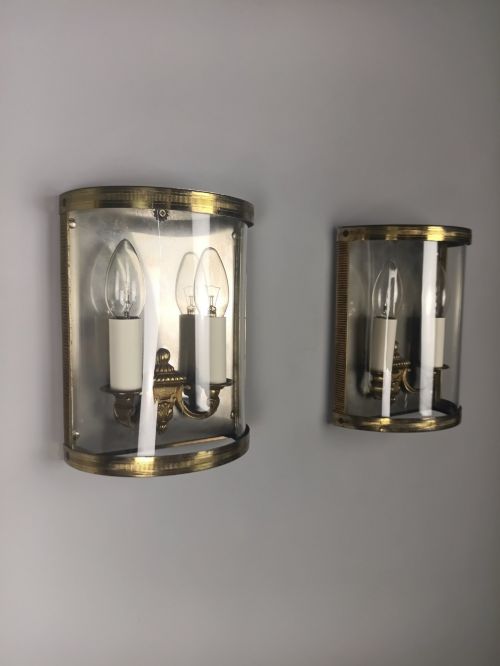
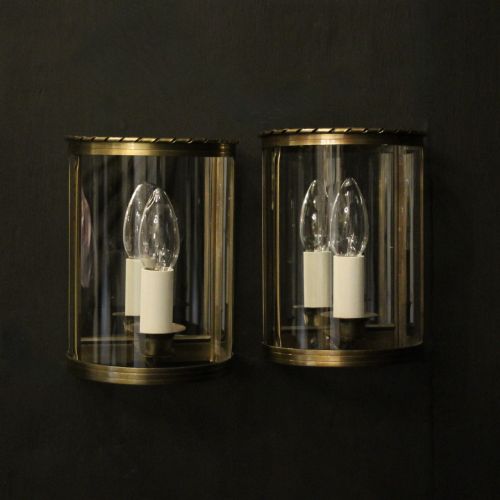
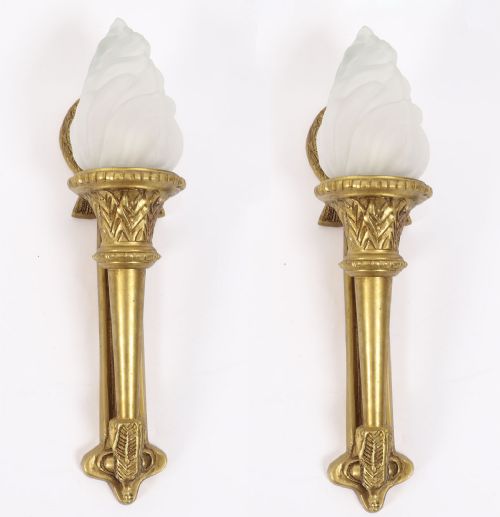
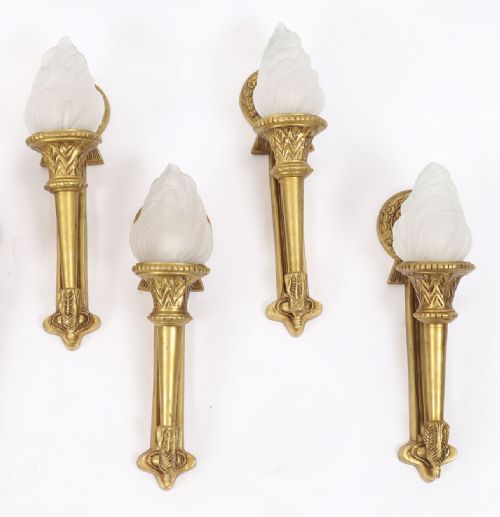
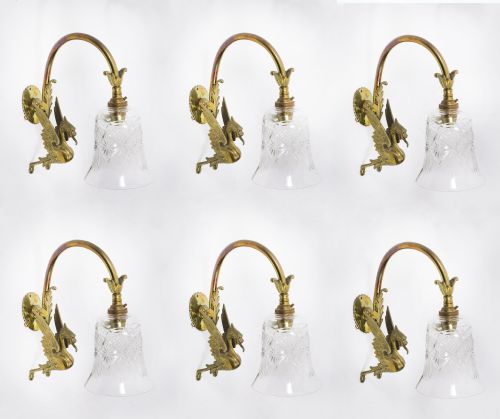
The selections available here heavily feature matched pairs and sets originating from French workshops, alongside British Edwardian and Victorian examples. Common configurations include multi-arm wall lights, half lanterns, and streamlined geometric shades fixed directly to metal backplates.
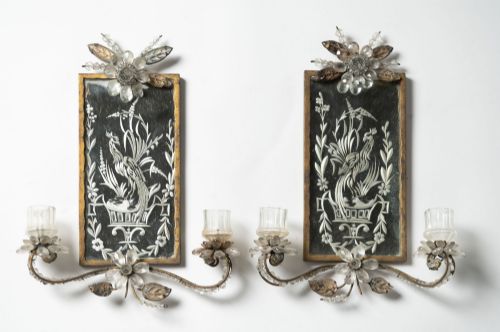
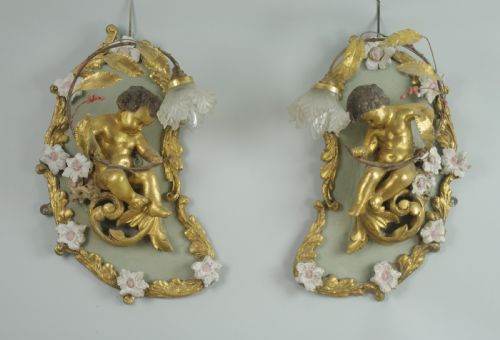
Beyond standard wall lighting, the category encompasses related decorative forms such as mirrored sconces and hurricane lamps adapted for wall placement. These pieces reflect historical shifts in interior decoration, moving from heavy nineteenth-century revival styles toward clean modernist lines.
Materials and construction methods
Makers constructed these wall lights using a combination of cast metal frames and shaped glass components. Brass, bronze, or chrome-plated metal provide the structural support and wall fixings, while glass elements range from smooth frosted shades to heavy cut crystal drops.
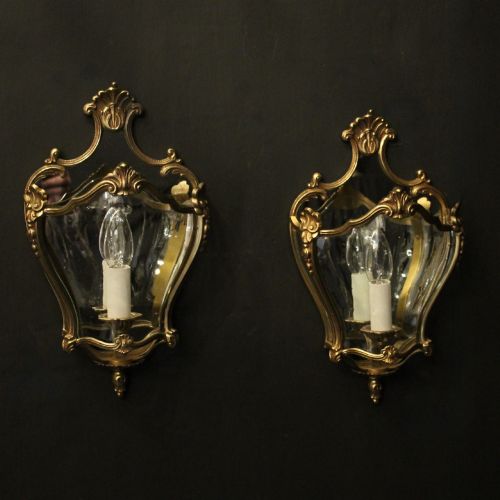
Manufacturing techniques varied by period, utilising sand-casting for heavy ormolu and brass mounts alongside pressed or moulded techniques for geometric Art Deco glass shades. Metal components were frequently gilded, silvered, or left in their natural polished state.
Assembly typically involved mechanical fixings such as screws and pins to secure delicate glass panels or crystal prisms to the metal armature. Original wiring or conversion hardware often remains visible on pieces adapted from earlier candle-lit designs.
Listings span the nineteenth century through the 1950s, highlighting materials such as crystal, brass, chrome, and frosted glass.
Assessing quality and craftsmanship
Quality in these wall lights rests upon the weight and finish of the metal armature and the clarity of the glass components. Finer examples display crisp hand-chased detailing on bronze or ormolu mounts rather than soft, mass-produced surface casting.
The integrity of the glass elements significantly distinguishes standard production from superior pieces. Hand-cut crystal, heavy moulded frosted glass, and bevelled mirror plates demonstrate a higher level of artisan skill than thin, machine-rolled alternatives.
Originality of fittings and matching components elevate the standing of a fixture. Complete sets featuring uniform glass shades, period fixings, and intact manufacturer details retain greater architectural cohesion.
Maison Baguès·F. & C. Osler·Dugué
The Vintage Glass Sconces Glossary
- Ormolu
- Gilded bronze used extensively for decorative mounts on furniture and lighting fixtures. It provides a rich golden appearance without tarnishing easily.
- Half Lantern
- A wall light shaped like a traditional outdoor lantern split vertically to sit flush against a wall. These often feature curved glass panels held within a brass or copper frame.
- Bevelled Mirror
- A mirror plate with an angled edge polished around the perimeter. This technique adds depth and reflects light more dynamically behind a wall sconce.
- Toleware
- Painted or lacquered sheet metal used to form decorative components and shades on lighting fixtures. It often mimics darker patinated finishes or incorporates colour.
- Frosted Glass
- Glass treated to scatter light, creating a soft and diffuse illumination. This finish became particularly popular during the Art Deco period for reducing glare from electric bulbs.
Vintage Glass Sconces: Frequently Asked Questions
How do I date a vintage glass sconce?
Dating relies heavily on stylistic cues, manufacturing techniques, and the materials used in the metal frame and glass components. Pieces featuring heavy cast ormolu and neoclassical motifs typically point to the turn of the twentieth century, whilst geometric chrome and frosted glass strongly suggest an Art Deco origin.
Examining the screw threads, wiring channels, and fixing methods also helps establish age. Earlier examples often retain hand-cut components or candle-drip pans that were later converted for electricity.
Can these wall lights be wired for modern use?
Most vintage wall lights can be adapted to meet contemporary electrical standards by a qualified electrician. Many pieces have already undergone conversion during their lifespan to accommodate standard bulb fittings.
It is advisable to inspect the internal wiring channels and backplates before installation to ensure safe attachment to modern wall junctions. Professional rewiring preserves the original decorative housing while ensuring compliance.
How should I clean antique glass and brass?
Routine maintenance involves gentle dusting with a soft, dry cloth to prevent grime accumulation on delicate surfaces. Glass shades and crystal drops can occasionally be washed in warm soapy water, provided they are completely dry before reattachment.
Harsh chemical polishes should be avoided on patinated brass, bronze, or ormolu mounts to protect the historic surface finish. Gentle care preserves the subtle tones built up over decades of existence.
Are pairs and sets common in vintage lighting?
Matched pairs frequently appear in historical lighting, originally designed to flank fireplaces, mirrors, or doorways for balanced illumination. Larger sets of four or six pieces are scarcer and generally originated from larger salons or institutional spaces.
Acquiring matching sets ensures uniform light diffusion and decorative symmetry across an interior scheme. Single sconces also occur, often serving as accent lighting in compact spaces.