
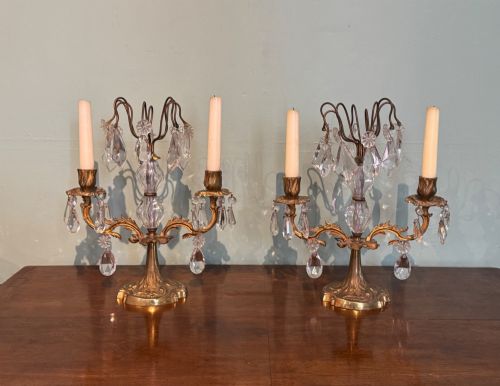


Vintage Glass Mantelpiece
These vintage glass mantelpiece options span grand Victorian ruby lustres and sleek Art Deco timepieces, bringing distinct period character to any hearth.
Vintage Glass Mantelpiece
When you search for a vintage glass mantelpiece, you encounter a varied selection of decorative items designed to sit upon a mantel, primarily consisting of overmantel mirrors, clocks, and mantel lustres. The assortment ranges from large nineteenth-century arched and gilt-framed overmantel mirrors to twentieth-century glass clocks and vases.
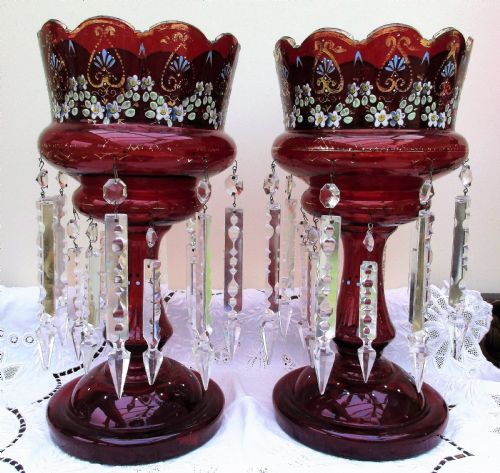
The version you are most likely to meet on this page is a Victorian ruby glass lustre or a nineteenth-century overmantel mirror framed in giltwood, gesso, or carved wood. Alongside these, twentieth-century examples introduce modernist green glass and chrome designs from the Art Deco period.
Objects on this page also include carriage clocks housed in glass cases, opaline vases, and oil peg lamps with painted motifs. Each category reflects the domestic tastes of its specific era, transitioning from ornate Victorian flourishes to cleaner twentieth-century lines.
How they were made
Glass production for these pieces involves techniques such as cutting, etching, and moulding, seen notably in ruby glass lustres and opaline vases. Makers utilised enamel and gilt detailing to embellish the glass surface, often pairing the material with brass, chrome, or giltwood frames.
Mirrors and clocks integrate structural elements of carved wood, gesso, and brass, combining wooden joinery with cast metal bezels and glass panels. The construction relies on traditional nineteenth-century framing methods and twentieth-century modernist assembly for electrical and mechanical timepieces.
Listings feature items spanning the Victorian era through the Art Deco period, incorporating materials such as ruby glass, giltwood, chrome, and brass.
What varies in quality
Quality in these pieces depends on the crispness of the glass cutting, the depth of the gilding on frames, and the preservation of original enamel work on lustres and vases. Superior examples display clean bevels on mirror glass and well-defined casting on brass or gilt components.
The integrity of the structural elements, such as the stability of carved wood and gesso on large mirrors or the precision of clock movements, dictates the overall standard. Pieces retaining their matching pairs, original mercury glass, or untouched period finishes stand apart from heavily altered items.
Baccarat·GEC·Dent·Smith
The Vintage Glass Mantelpiece Glossary
- Mantel lustre
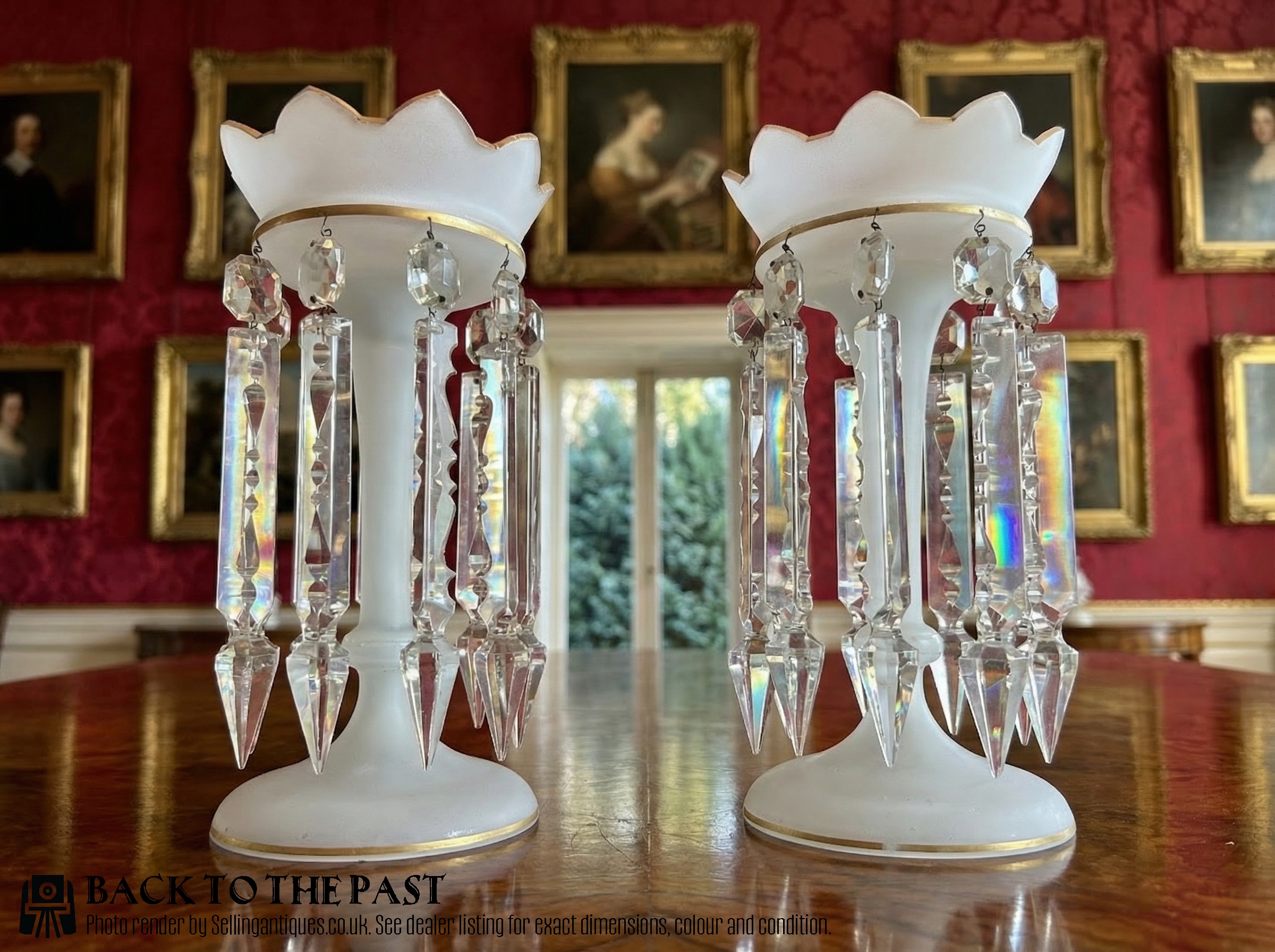
- A decorative glass vase or pedestal hung with prismatic glass drops designed to catch candlelight. They were traditionally displayed in pairs on nineteenth-century mantelpieces.
- Overmantel mirror
- A large mirror designed to be hung specifically on the wall directly above a mantelpiece. These often feature arched tops and frames made of giltwood or gesso.
- Ruby glass
- A deep red coloured glass produced by adding gold chloride to the molten batch. It gained popularity during the Victorian era for decorative tableware and lustres.
- Gesso
- A plaster-like mixture applied to wood frames before gilding or painting. It provides a smooth surface that can be moulded into intricate relief decorations.
- Carriage clock
- A small, portable spring-driven clock developed for travelling. They frequently feature glass panels on all sides to expose the mechanical movement.
Vintage Glass Mantelpiece: Frequently Asked Questions
What are mantel lustres used for?
Mantel lustres served as decorative garniture sets placed on either side of a clock on the mantelpiece. Their hanging crystal prisms caught and reflected the flickering light of candles or gas lamps in nineteenth-century rooms.
Today, they remain purely ornamental objects that display the rich colours and glass-cutting skills of the Victorian period.
How do I date an overmantel mirror?
Dating relies on the frame construction, the style of the carving, and the characteristics of the mirror plate itself. Nineteenth-century versions often feature heavy gesso and giltwood frames with arched tops, whereas later pieces show simpler Edwardian mahogany surrounds.
Examining the backboards and fixings also helps determine whether the mirror dates from the Victorian era or the early twentieth century.
Are Art Deco glass clocks electric?
Many Art Deco clocks from the nineteen-thirties utilise electric movements by makers such as Smith or GEC. These models often combined green glass, chrome, and Bakelite in a modernist style suited to contemporary interiors.
Alongside electric versions, spring-driven eight-day movements also appear from the same period.
How should I clean antique glass?
Cleaning requires a soft, dry cloth or a gentle glass cleaner applied sparingly to avoid damaging painted enamel or gilt details. Care must be taken around nineteenth-century mercury glass or areas where the silvering has aged.
For lustres, the hanging glass drops can be washed separately in lukewarm soapy water and dried thoroughly before rehanging.