


Vintage Glass Desk Inkwell
These vintage glass desk inkwells combine heavy cut reservoirs with metal, silver and wood stands for daily writing.
Vintage Glass Desk Inkwell
A vintage glass desk inkwell serves as a functional desktop receptacle designed to hold liquid ink for writing with a pen. These pieces appear most frequently in Victorian, Edwardian and early twentieth-century iterations, often paired with metal stands or wooden bases.
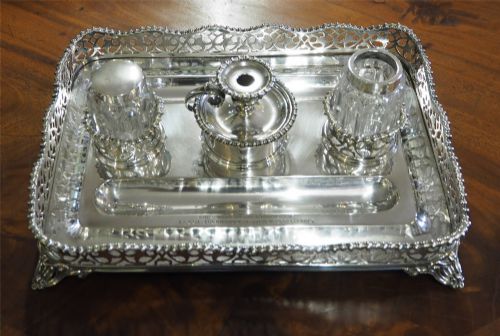
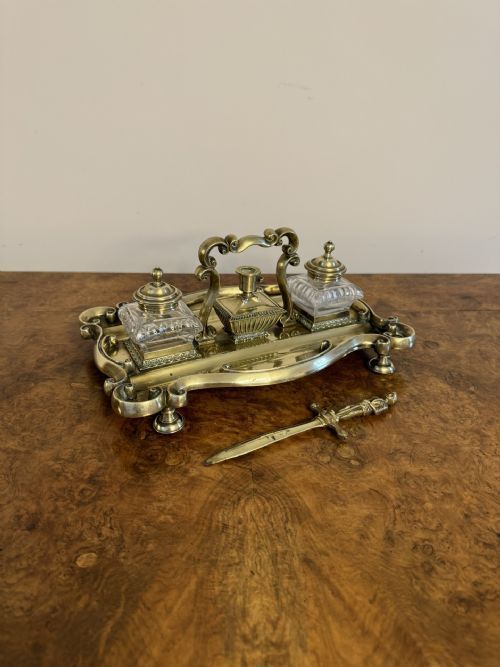
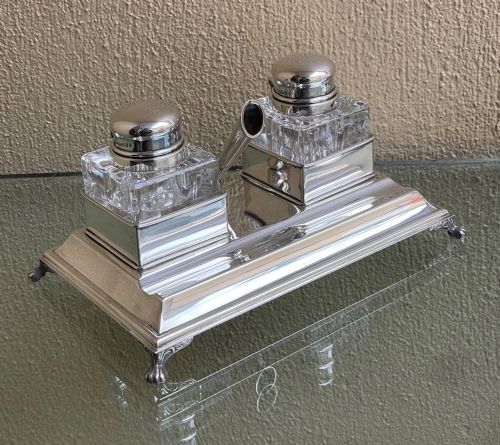
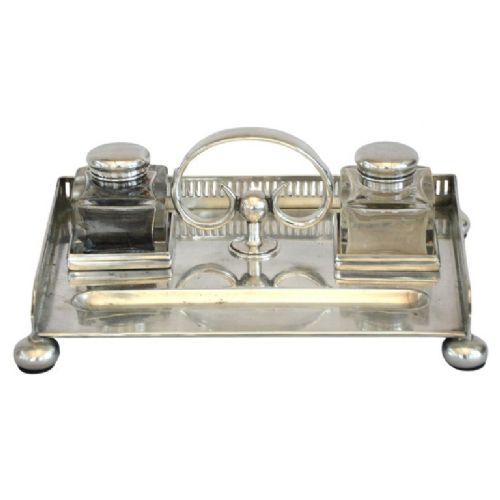
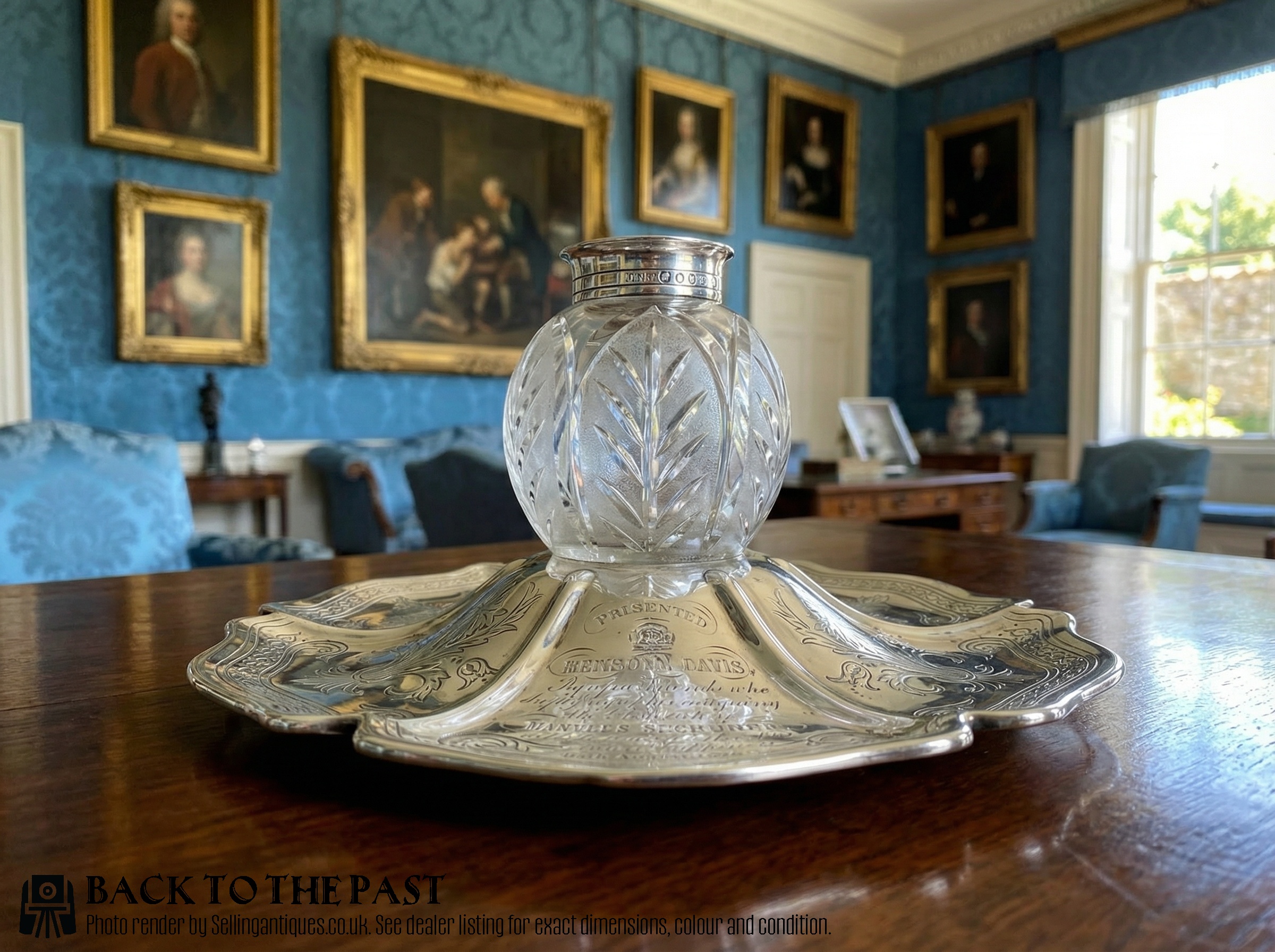
The selections span simple standalone glass bottles to elaborate double and triple inkstands incorporating pen trays and stationery compartments. Collectors encounter heavy cut glass inserts fitted into brass, silver-plated, solid silver, pewter and oak frames.
Many specimens incorporate hinged lids made from sterling silver, brass or pewter to prevent the ink from drying out during daily use. The physical forms range from compact ships inkwells designed for maritime travel to grand double-sided desk sets intended for office and library writing desks.
Materials and Construction Methods
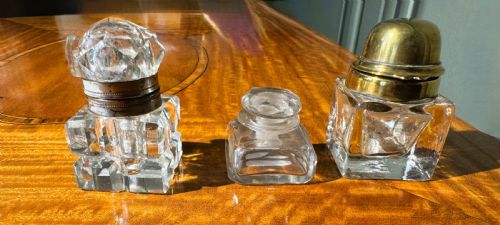
Glass bodies are produced through heavy moulding or deep facet cutting to create thick walls that resist tipping on a busy desk. These reservoirs are then paired with cast brass, spun pewter or plated metal mounts secured by threaded collars and hinges.
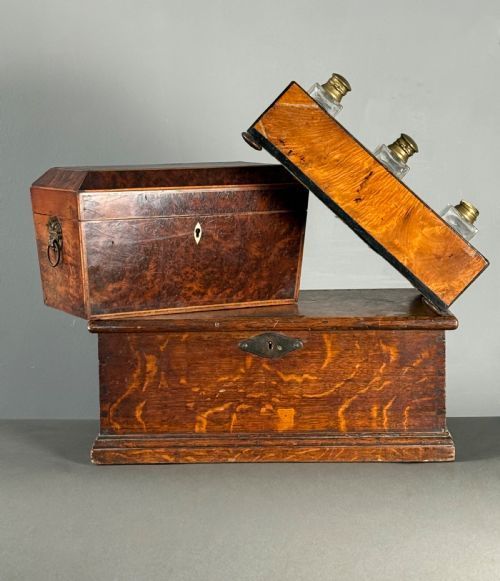
Wooden stands utilise timbers such as oak, mahogany, walnut and coromandel, frequently fitted with inset brass mounts, mother-of-pearl details or carved ebony components. Metalwork components show casting, chasing and silver plating techniques typical of nineteenth and early twentieth-century manufacturing workshops.
Material combinations on this page span mother-of-pearl, bone, coromandel, ebony, pewter and horn of plenty cornucopia designs.
Distinctions in Quality
Quality rests in the weight and clarity of the glass insert, alongside the precision of the metal mounts and hinges. Heavy facet-cut crystal paired with substantial silver or cast brass frames demonstrates superior manufacturing standards compared to lighter, pressed glass alternatives.
The integration between the glass reservoir and its fitted stand reveals the standard of craftsmanship. Superior pieces feature original matching ink bottles, intact internal glass liners and fully functional, well-aligned lids that seal tightly against the glass rim.
Elkington·Walker And Hall·Tiffany And Co·Kralik·Loetz·James Cartland And Sons
The Vintage Glass Desk Inkwell Glossary
- Inkstand
- A complete desk accessory comprising one or more inkwells fixed to a tray that usually incorporates pen rests and storage compartments. These units anchor the writing surface.
- Cut Glass
- Glass shaped and patterned by grinding wheels to produce deep facets and sharp geometric designs. This technique adds weight and brilliance to the inkwell body.
- Silver Plate
- A base metal layer coated with a thin layer of silver through electroplating or older rolling methods. It provides the appearance of solid silver at a lower production cost.
- Ships Inkwell
- A weighted inkwell design featuring a dome lid and low centre of gravity to prevent spilling at sea. Sailors and travellers utilised these on moving vessels.
- Guilloche
- An intricate mechanical engraving technique producing precise, repetitive patterns beneath translucent enamel. It decorates the metal lids of select pieces.
Vintage Glass Desk Inkwell: Frequently Asked Questions
What is a vintage glass desk inkwell?
A vintage glass desk inkwell is a small desktop container designed to hold writing fluid for dip pens during the nineteenth and early twentieth centuries.
These items usually combine a heavy glass reservoir with a hinged metal lid and a matching stand made from wood, brass or silver.
How do I date a glass inkwell?
Dating relies on stylistic clues like Victorian brass mounts, Edwardian silver plate marks, or Art Nouveau organic forms. The manufacturing methods of the glass and the presence of original hallmarks offer further chronological markers.
Examining the screw threads, hinge construction and metal composition helps narrow down the decade of production.
Are original glass liners important?
Original glass liners preserve the integrity and correct proportions of the desk set. Finding an inkstand with its matching, undamaged glass insert adds to its completeness.
Replacements are common, so matching glass opacity and rim style indicates whether the insert belongs to the stand.
How were double inkstands used?
Double inkstands held two different types of ink, typically black for standard correspondence and red for editing or accounting entries. They sat centrally on writing desks in homes and offices.
The adjoining tray provided a convenient resting place for dip pens between writing tasks.
Can I use these inkwells for writing?
These inkwells function adequately for modern fountain pens or dip pens provided the glass and lids are cleaned thoroughly. Many collectors prefer to display them as decorative antiques rather than using them daily.
Checking for internal residue and ensuring the lid seals properly is essential if liquid is added.