
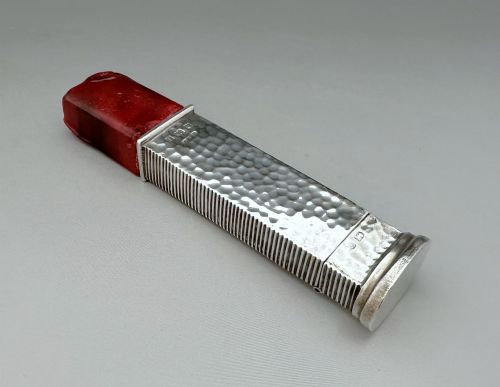
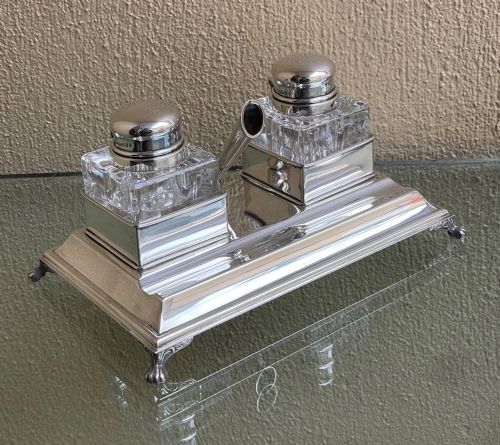
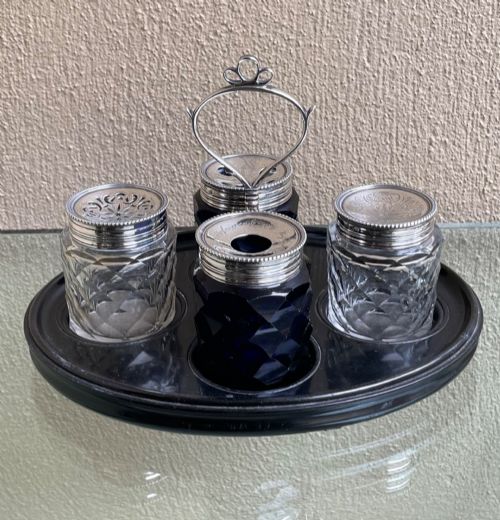


Antique Sterling Writing Set
An antique sterling writing set brings tangible weight and enduring polish to a desk, uniting silver with cut glass and ebony.
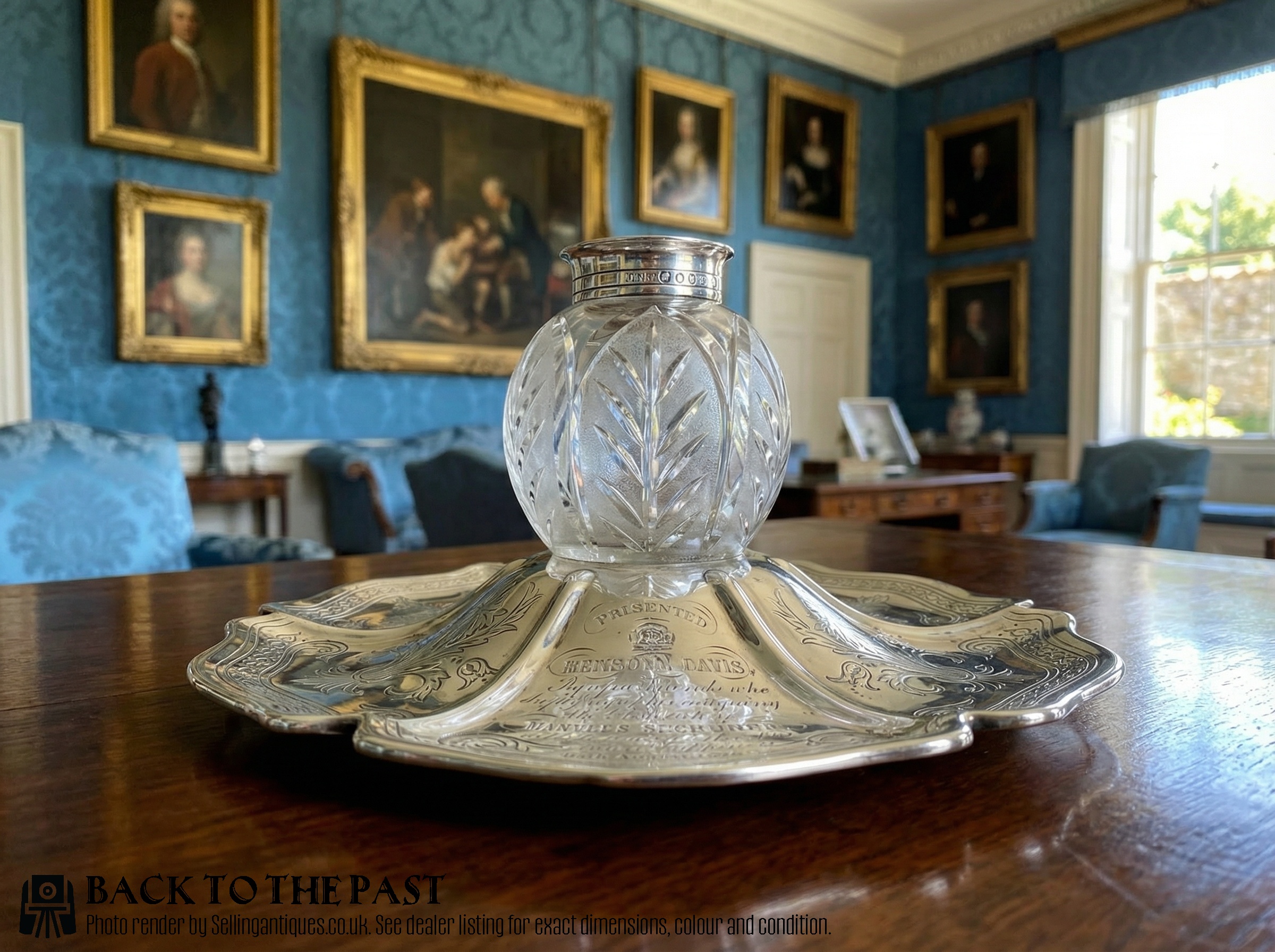
Antique Sterling Writing Set
An antique sterling writing set encompasses desk accessories, inkstands, inkwells, and vesta cases forged in silver across the Georgian, Victorian, and Edwardian eras. These pieces formed the central apparatus for correspondence before the dominance of the fountain pen and typewriter.
Buyers on this page most commonly encounter Victorian and Edwardian examples, ranging from simple desk inkwells to large double inkstands fitted with chambersticks and sealing wax. The forms reflect the formal writing rituals of their respective periods.
Origins span English assay offices, notably London and Sheffield, alongside occasional continental pieces featuring carved ivory and enamel details. Each object demonstrates the practical demands of nineteenth-century and early twentieth-century desk organisation.
How they were made
Silversmiths shaped sterling silver through casting and hammering, often incorporating cut glass bottles, ebony accents, and natural bristle brushes. These materials combined structural metalwork with functional glass and organic details.
Makers integrated specialised compartments for sealing wax and incorporated mechanisms such as hinged vesta lids and integrated timepieces. Hallmarks stamped into the metal recorded the assay office, city, and year of production.
Victorian desk accessories occasionally included novelty pen wipes disguised as miniature animals to catch stray ink drops.
What varies in quality
The distinction between standard desk items and superior pieces rests upon the complexity of the design, such as incorporating a chamberstick, clock, or double inkwells rather than a single well. Heavier gauge sterling silver and comprehensive hallmarking elevate the stature of an inkstand.
The inclusion of supplementary materials like cut glass bottles, enamel work, or carved ivory introduces greater artisanal effort. The harmony between the silver frame and its fitted accessories dictates the overall cohesion of the set.
Robert Garrard
The Antique Sterling Writing Set Glossary
- Sterling silver
- A silver alloy containing 92.5 percent pure silver by mass, forming the primary metal body of these writing sets.
- Inkstand
- A portable tray or stand holding inkwells, pen holders, and sometimes a sander or bell for desk use.
- Vesta case
- A small pocket or desk box designed to hold matches, frequently combined with sealing wax compartments in Edwardian pieces.
- Capstan inkwell
- An inkwell shaped like a naval capstan, tapering upwards from a wide circular base.
- Assay office
- An official body that tested precious metals and stamped hallmarks to guarantee the standard of silver.
Antique Sterling Writing Set: Frequently Asked Questions
What pieces comprise a writing set?
A writing set typically includes inkstands, inkwells, desk accessories, and vesta cases designed to hold writing implements and materials.
Many configurations also feature integrated items like chambersticks, clocks, and compartments for sealing wax.
How do I date a silver inkstand?
Dating relies upon the hallmarks stamped directly into the sterling silver by assay offices in cities such as London and Sheffield.
These marks indicate the specific year of testing alongside stylistic indicators from the Georgian, Victorian, and Edwardian periods.
Were these sets used daily?
These pieces served as functional desk accessories for writing letters and sealing envelopes using liquid ink and wax.
Their substantial weight and decorative materials also signified social standing in nineteenth-century and early twentieth-century studies.
What materials accompany the silver?
Makers frequently paired sterling silver with cut glass bottles for ink, ebony elements, and natural bristle brush components.
Selected pieces incorporate enamel details, sealing wax, and carved ivory alongside the primary metal structure.