




Vintage Gilt Hall Mirror
A vintage gilt hall mirror brings a flash of gold and light to a narrow entryway, reflecting centuries of European design.
Vintage Gilt Hall Mirror
When buyers search for a vintage gilt hall mirror, they encounter wall-hanging glass plates framed in gold leaf, gesso, and carved timber. These items range from compact domestic looking glasses to enormous overmantle and full-length pieces designed to expand the perceived width of tight corridors.
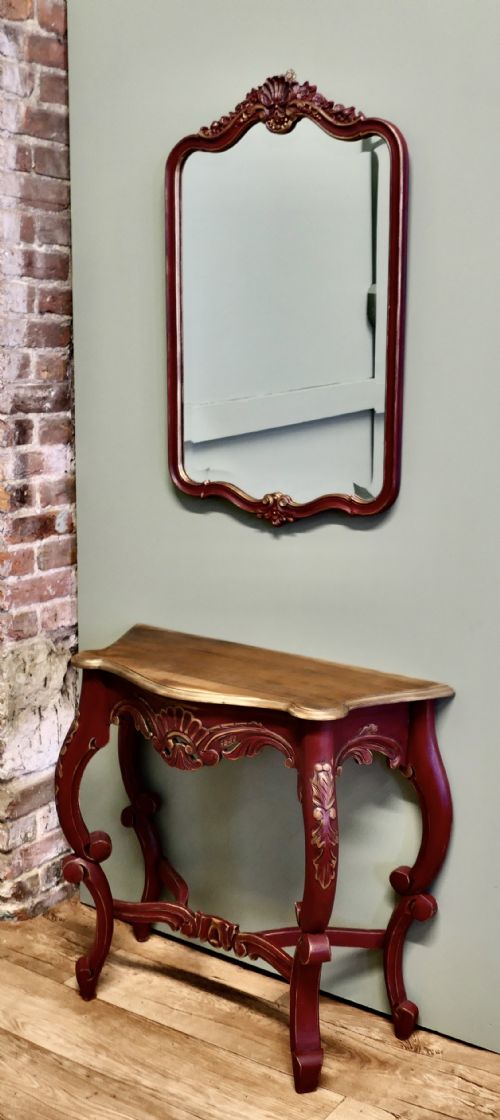
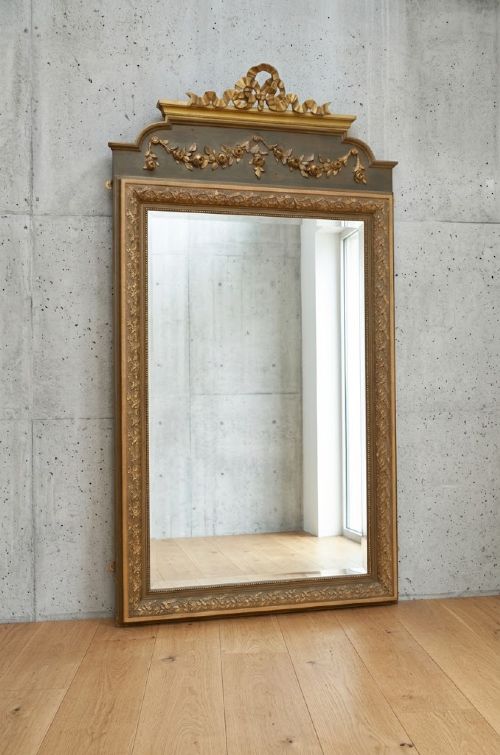
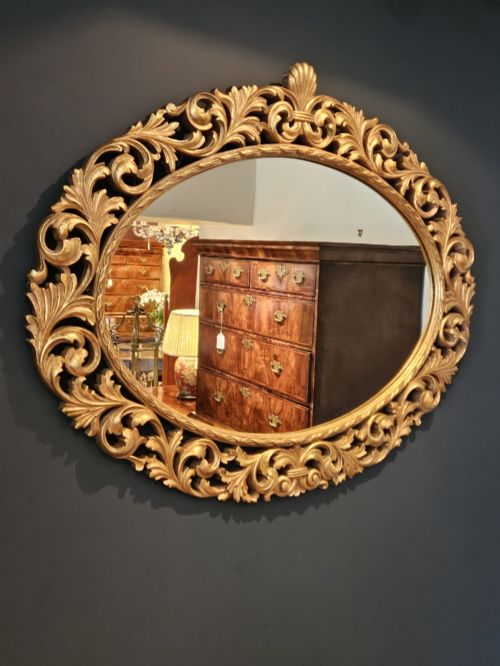
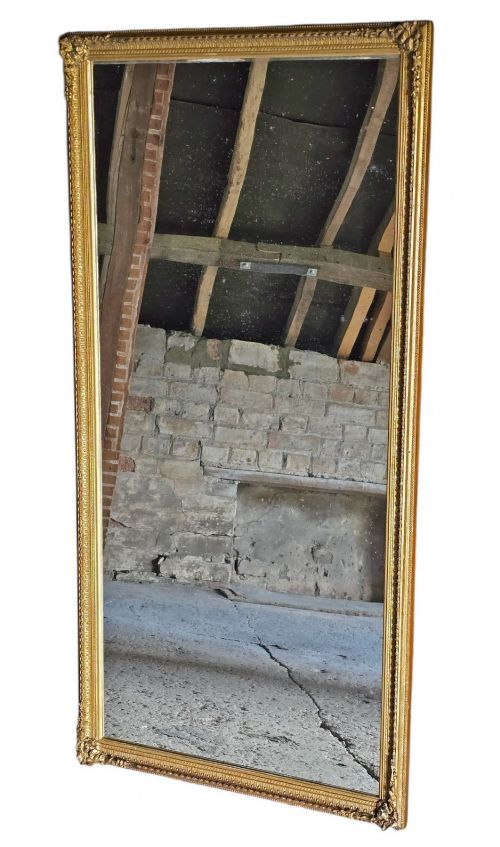
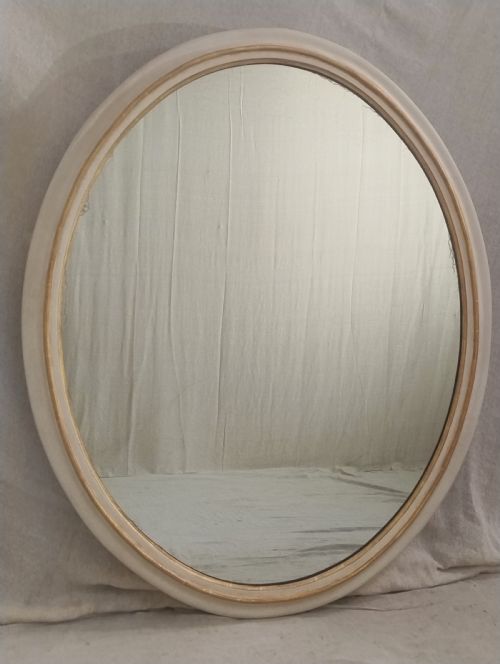
The selections available here lean heavily into nineteenth-century French and English traditions, spanning Victorian, Edwardian, and revival aesthetics. Pieces appear in distinct shapes, including oval formats, arched tops, rectangular pier glasses, and elaborate console sets.
Origins stretch across stylistic revivals such as French Rococo, Georgian, and Louis Philippe, reflecting the diverse tastes of nineteenth- and early twentieth-century households. Buyers frequently select these objects to anchor a hallway or reception space with traditional decorative weight.
Materials and construction methods
Carved timber forms the structural core for many frames, providing a stable base for detailed ornamentation. Artisans applied thin layers of gold leaf or paint over prepared surfaces to achieve a luminous metallic finish.
Gesso, a mixture of plaster and binder, was modelled directly onto the wooden substrate to create high-relief flowers, scrolls, and ribbon crests. This versatile paste allowed makers to cast intricate decorative motifs before gilding.
Glass plates of the period frequently exhibit individual characteristics such as slight foxing or replacement over time. Frames combine walnut, oak, and ebonised wood with gilt metal accents to produce contrasting surface textures.
Listings feature frames finished in gold leaf, paint, and composition, spanning Victorian, Edwardian, and Georgian revival styles.
Differentiating quality across examples
The depth and sharpness of hand-carved details separate superior frames from simpler moulded compositions. Crisp relief work in the gesso and timber indicates skilled workshop execution rather than mass production.
The integrity of the original gilding defines much of the visual weight, with burnished gold leaf retaining a warmer, more complex lustre than flat painted surfaces. Surviving original mirror plates add historical weight, though replacements are common.
Proportion and scale dictate the success of the piece within an architectural setting, with balanced crests and substantial framing timbers commanding stronger visual presence.
Nosetti
The Vintage Gilt Hall Mirror Glossary
- Gesso
- A plaster-like preparation applied to wood frames to create a smooth surface for carving or moulding relief decoration. It accepts gilding exceptionally well.
- Giltwood
- Timber that has been coated with gold leaf. This method provides a durable and radiant metallic finish that ages gracefully.
- Overmantle
- A large horizontal mirror historically hung above a fireplace mantel. These grand pieces frequently find new placement in spacious hallways.
- Parcel Gilt
- A decorative treatment where only specific portions of the frame receive gilding, contrasting with painted, ebonised, or exposed wood surfaces.
- Pier Glass
- A tall, narrow mirror designed to hang on the wall space between windows. They maximise ambient daylight in period rooms.
Vintage Gilt Hall Mirror: Frequently Asked Questions
Where should I hang a vintage gilt hall mirror?
These items suit narrow entranceways, stair landings, and reception halls where they bounce light around dark architectural spaces. Positioning the glass opposite a doorway or window maximises the illumination.
Ensure the wall structure can support the substantial weight of carved timber and gesso frames. Heavy brass fixings attached directly to wall studs provide the necessary security for larger formats.
How do I distinguish between nineteenth-century styles?
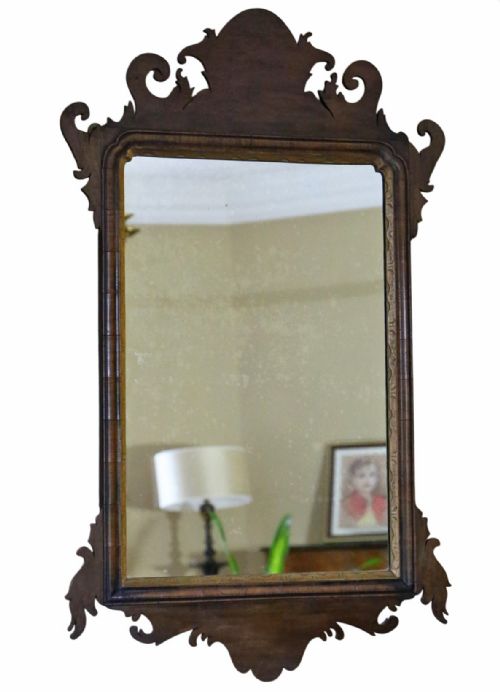
French Rococo and Louis Philippe designs favour asymmetrical curves, floral motifs, and arched tops, often reflecting mid-nineteenth-century opulence. Georgian and Edwardian revivals tend towards cleaner symmetry, fret-cut walnut borders, and classical architectural proportions.
Examining the construction of the wooden backing boards and the composition of the gesso helps confirm the manufacturing era. Subtle tool marks and ageing patterns on the frame offer clues to the workshop origin.
Are the mirror plates original?
Many surviving pieces retain their historic glass, which may display minor foxing, dark spots, or distortion from early manufacturing processes. These visual imperfections are normal indicators of age and authenticity.
Some listings note modern replacement glass installed to maintain clear reflection. Both original and updated plates serve practical daily use while preserving the historic frame.
How do I care for antique gilt surfaces?
Dust the carved frames gently with a soft, dry brush to avoid disturbing fragile gesso or flaking gold leaf. Liquid cleaning products can permanently damage historical water or oil gilding.
Keep the mirrors away from direct, prolonged moisture and strong direct sunlight to protect the metallic finish and wooden substrate from warping.