





Vintage German Jewellery
Vintage german jewellery brings together the bold industrial lines of Art Deco and the flowing floral motifs of Jugendstil.
Vintage German Jewellery
Vintage german jewellery encompasses a wide range of decorative metalwork, wearable accessories, and personal storage boxes spanning from the nineteenth century through the mid-century period. When searching for vintage german jewellery, collectors frequently encounter items produced during the height of the Jugendstil and Art Deco movements.
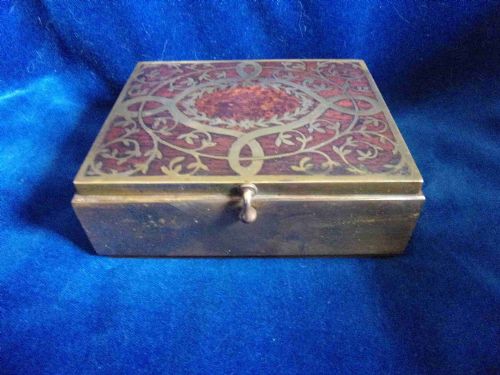
The selection includes pendants, bracelets, brooches, earrings, necklaces, dress clips, and small containers such as trinket boxes and powder jars. Silver and silver gilt forms dominate the earlier twentieth-century items, whilst chrome and base metals emerge strongly in later modernist works.
How they were made
Craftsmen utilised traditional metalsmithing techniques alongside specialised decorative methods such as plique-à-jour enamel, which creates a translucent stained-glass effect without a backing. Silver, silver gilt, and gold provide the foundational structure for gemstone and pearl settings, whilst steel, chrome, and galalith define industrial modernist pieces.
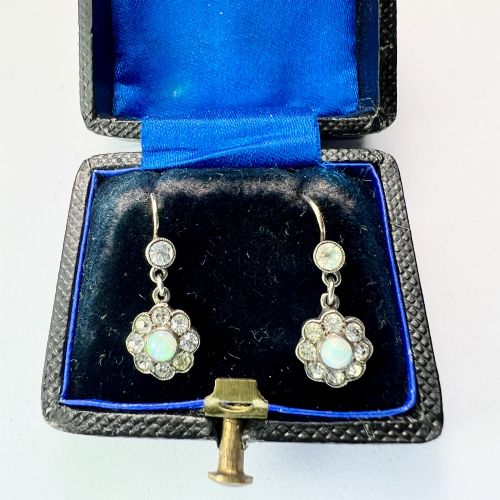
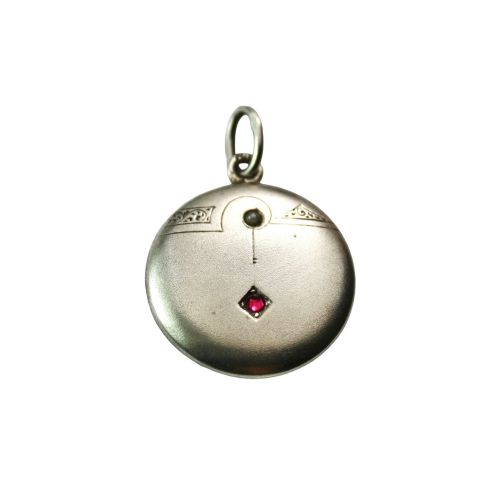
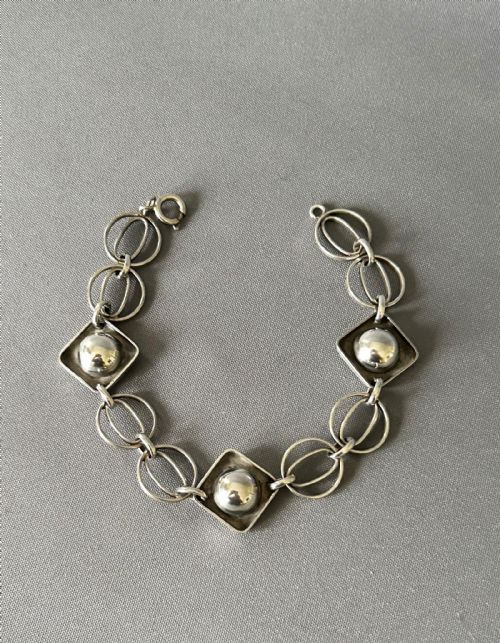
Pendants and brooches often incorporate detailed wirework and bezel settings to secure pearls, paste diamonds, opal, citrine, amazonite, and chrysoprase. In later modernist designs, distinct brickwork patterns and geometric panel links reveal precise mechanical construction and assembly.
Listings feature items from the Edwardian, Victorian, and mid-century periods alongside distinct Art Nouveau and Art Deco styles.
What varies in quality
The standard of execution in plique-à-jour enamel work largely dictates the visual depth and refinement of Jugendstil pieces, distinguishing master workshops from standard production. Greater precision in stone cutting and the secure integration of delicate pearl drops indicate higher workshop capability.
In industrial modernist items, the crispness of chrome plating and the structural integrity of linked geometric components determine the overall calibre of the manufacturing.
Knoll and Pregizer·Jakob Bengel·Erhard and Sohne·Levinger and Bissinger·Posen of Frankfurt·Fahrner and Bennett·Theodor Fahrner·Meyle and Mayer·Martin Mayer·Ludwig Knupfer·Peter Behrens·Osiris
The Vintage German Jewellery Glossary
- Jugendstil
- The German variant of Art Nouveau, characterised by sinuous organic lines and natural motifs. This artistic movement flourished around the turn of the twentieth century.
- Plique-à-jour
- An enamelling technique where enamel is applied within a cellular metal framework without a backing, allowing light to shine directly through the translucent colour. It resembles miniature stained glass.
- Galalith
- An early semi-synthetic plastic derived from casein and formaldehyde, frequently utilised in modernist and Art Deco accessories for its smooth texture and rich colour capability.
- Silver Gilt
- Silver that has been coated with a thin layer of gold on its surface. This technique provides the warm appearance of gold whilst retaining a silver base.
Vintage German Jewellery: Frequently Asked Questions
What is Jugendstil jewellery?
Jugendstil jewellery represents the German expression of the Art Nouveau movement, focusing on organic forms, flowing lines, and nature-inspired motifs. These pieces frequently feature plique-à-jour enamel and silver work.
Created primarily around the turn of the twentieth century, these items highlight the craftsmanship of notable workshops and designers of the period.
How do I identify Art Deco pieces?
Art Deco items typically display strict geometric shapes, streamlined chrome elements, and structured patterns such as brickwork link bracelets. They reflect the industrial aesthetic of the interwar years.
These designs often utilise modern materials like chrome and galalith alongside traditional metals and manufactured stones.
What is plique-à-jour?
Plique-à-jour is an intricate enamelling method where translucent enamel fills open metal cells without a solid backing plate. This allows natural light to pass straight through the coloured glass.
It requires exceptional skill to execute successfully and is a hallmark of high-quality Jugendstil pendants and brooches.