




Vintage Gateleg Accent Table
A vintage gateleg accent table is a clever drop-leaf furniture piece that saves space, and these examples bring timber warmth and versatile folding surfaces to any room.
Vintage Gateleg Accent Table
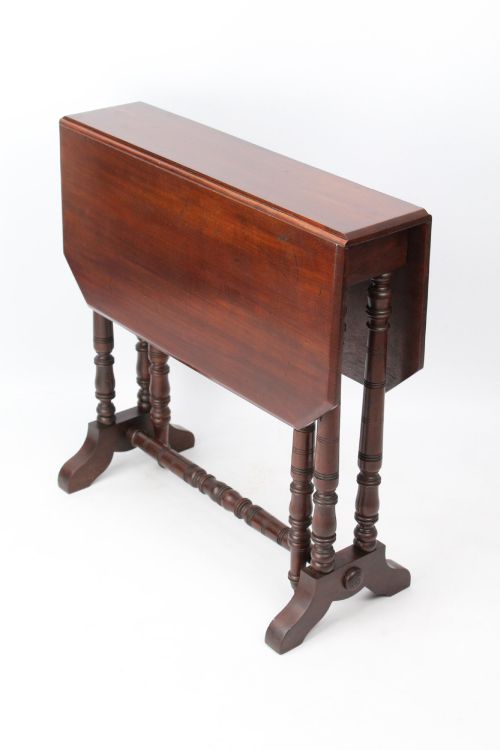
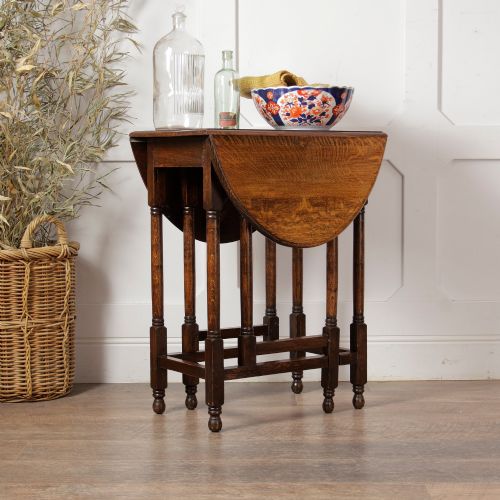
A vintage gateleg accent table operates as a flexible surface with hinged flaps that fold down when space is tight and swing out on pivoting legs when extra room is needed. Buyers searching this phrase encounter various forms, from small Sutherland tables with narrow frames to compact oak and mahogany drop-leaf designs intended for occasional use.
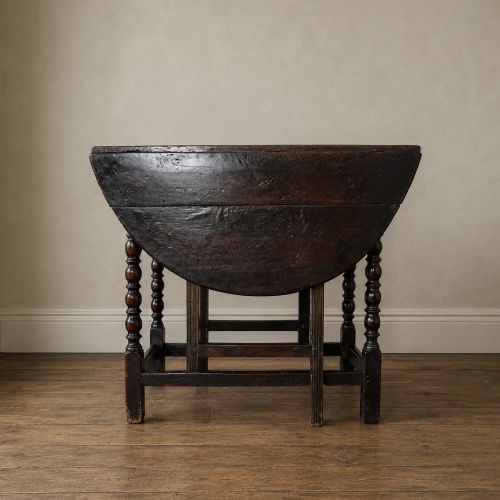
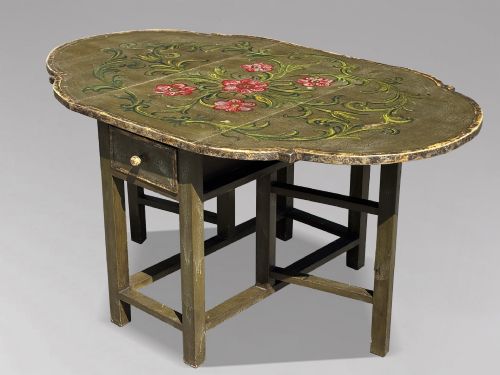
The selection ranges across several eras, spanning late seventeenth-century oak pieces through Georgian, Victorian, and Edwardian specimens up to early twentieth-century creations. Alongside traditional English country styles, the listings include Italian painted drop-leaf examples and burr walnut occasional tables suited for modern interiors.
How they were made
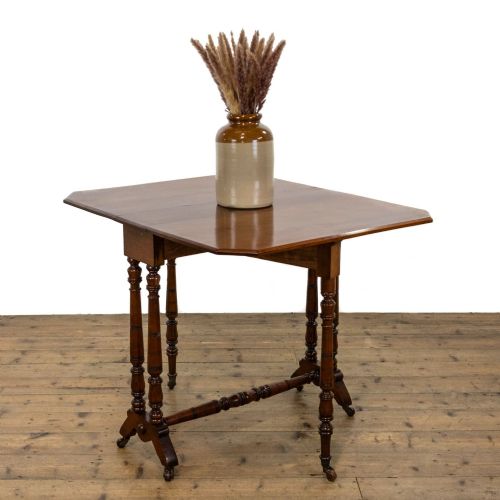
Cabinetmakers constructed these tables using dense hardwoods such as oak, mahogany, and walnut, frequently selecting burr walnut veneers or ash for decorative surfaces. Joinery relies on traditional methods to support the pivoting gate legs, while secondary materials like brass hardware and ceramic castors appear on specific Victorian and Edwardian iterations.
Surface treatments vary according to period, encompassing polished mahogany finishes, honey oak patination, inlaid details, and green painted surfaces found on continental variations.
The listings here span four centuries of cabinetmaking, featuring oak, mahogany, walnut, and burr walnut across multiple revival styles.
What varies in quality
Quality in these folding tables rests upon the integrity of the timber selection and the precision of the hinge mechanisms that support the drop leaves. Superior pieces maintain tight joints in the gate action and feature choice grain patterns, such as figured burr walnut or substantial early oak planks.
The refinement of the turning on the legs and the presence of period-appropriate inlay or original surface patination distinguish finer examples from standard utilitarian pieces.
The Vintage Gateleg Accent Table Glossary
- Gateleg table
- A drop-leaf table featuring hinged legs that swing outward like a gate to support the raised leaves. This structural design allows the table to fold down into a narrow footprint when not in use.
- Sutherland table
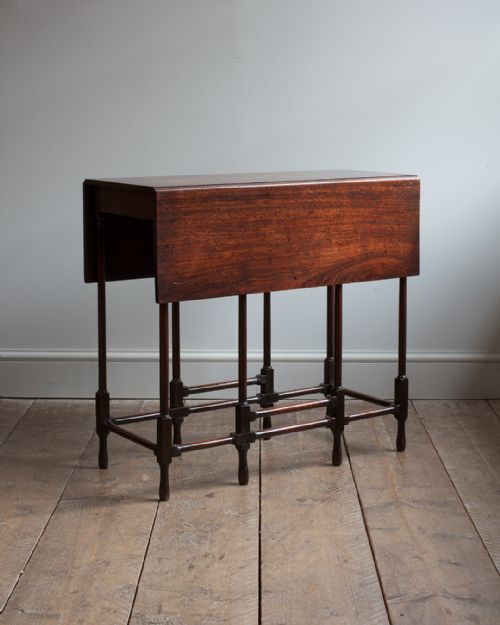
- A particularly slender variety of drop-leaf table with narrow leaves and a gate mechanism where the legs stand very close together when closed. They frequently function as tea or occasional tables.
- Spider leg
- A style characterised by extremely slender, delicate turned legs that provide support for lightweight occasional and Sutherland tables. They emerged during the Georgian period and remained popular through the Edwardian era.
- Drop-leaf
- A table top configuration comprising a fixed centre section and two movable flaps hinged on either side. These flaps drop vertically when unsupported.
- Burr walnut
- A prized timber veneer sliced from the irregular growths on walnut trees, yielding intricate, swirling grain patterns. It was heavily utilised for high-status Victorian occasional furniture.
Vintage Gateleg Accent Table: Frequently Asked Questions
How do gateleg tables work?
The central fixed leaf is flanked by two hinged flaps that hang down at the sides. To expand the surface, you swing out one or both of the pivoting support legs, known as gates, until they lock beneath the leaf.
This clever hinged mechanism allows a compact console or side table to transform into a functional dining or serving surface within seconds.
Where should I use an accent table?
These compact tables fit easily beside sofas, in hallways, or tucked into small breakfast corners where floor space is limited. Their folding leaves make them particularly useful in rooms that need to adapt quickly for guests or daily tasks.
Kept folded against a wall, they act as display surfaces for lamps and objects, then open fully when extra table space is required.
How do I identify a Sutherland table?
A Sutherland table is distinguished by its exceptionally narrow centre fixed top and very wide drop leaves that fold almost vertically. When closed, the entire assembly collapses into a slim profile supported by closely paired gate legs.
Victorian and Edwardian makers frequently mounted these delicate tables on castors for easy movement around a drawing room.
What is the difference between oak and mahogany versions?
Oak tables generally belong to earlier periods like the seventeenth and eighteenth centuries, displaying visible grain patterns and sturdy, robust construction. Mahogany and walnut versions often date from the Georgian, Victorian, or Edwardian eras, showcasing smoother polished finishes and finer turned legs.
Choosing between them usually depends on whether you prefer the rustic warmth of early English oak or the formal polish of later mahogany and burr walnut.