




Vintage Garden Urn Pair
A vintage garden urn pair brings classical symmetry to outdoor spaces, offering structured planting options shaped by decades or centuries of weathering.
Vintage Garden Urn Pair
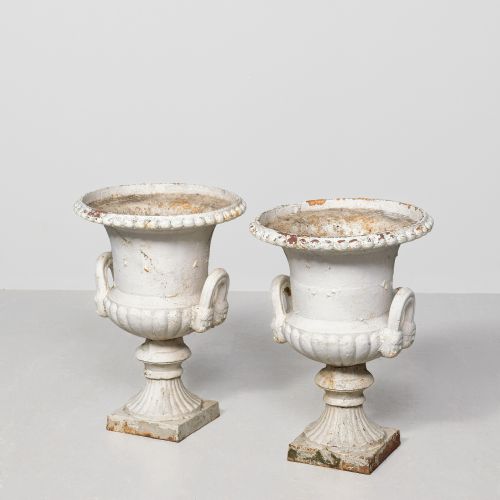
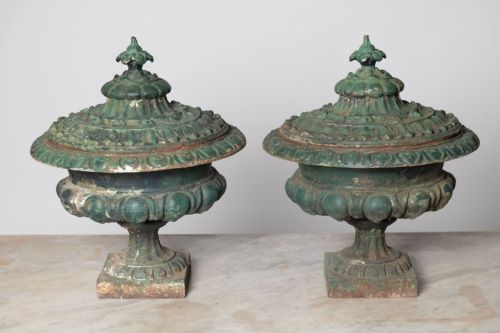
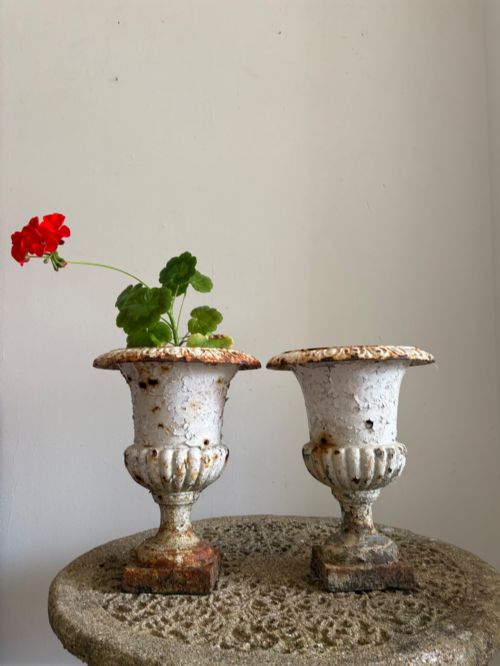
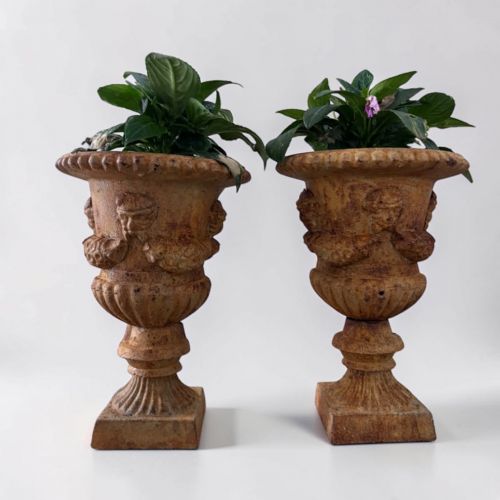
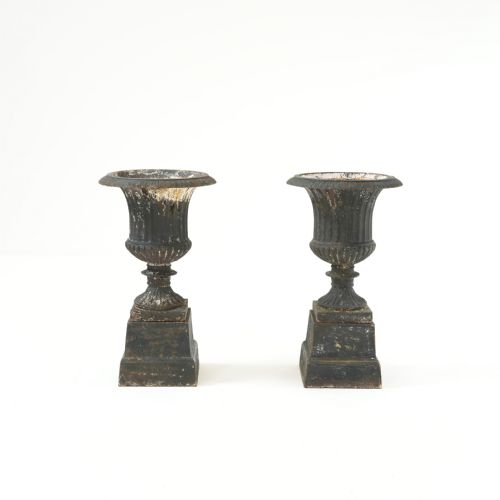
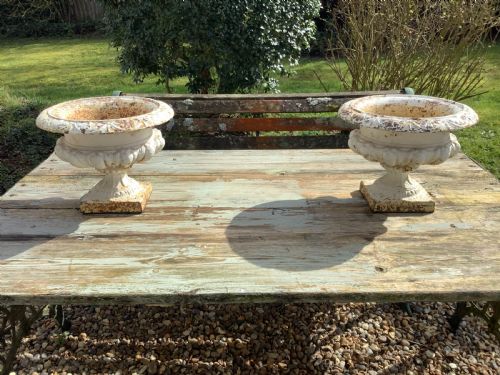
A vintage garden urn pair consists of matching vessels designed for symmetrical placement flanking pathways, steps or terrace entrances. These pieces appear most frequently in heavy cast iron, often following traditional campana or tazza forms influenced by nineteenth century neoclassical design.
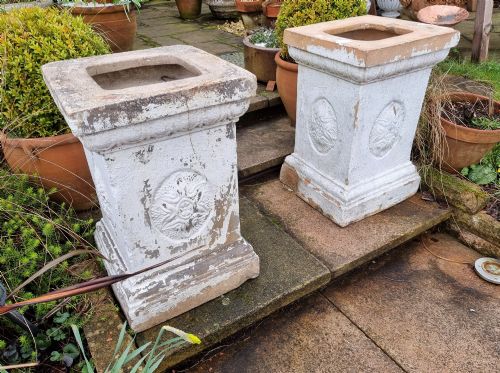
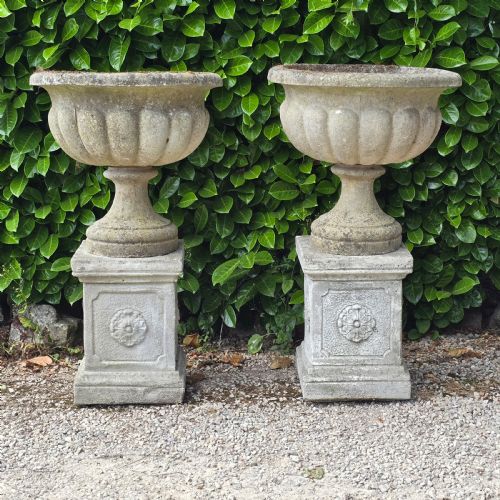
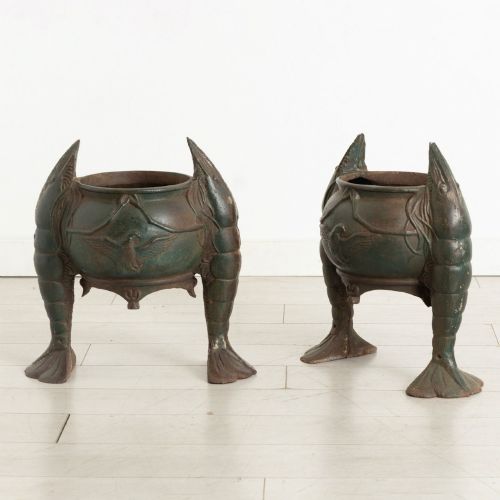
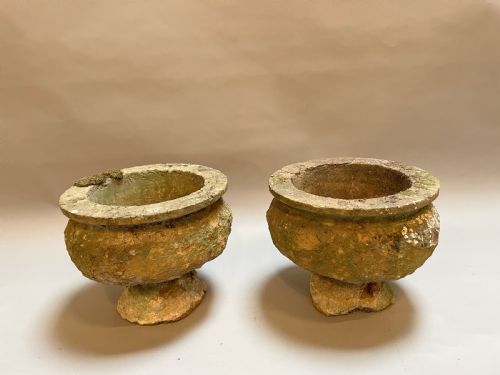
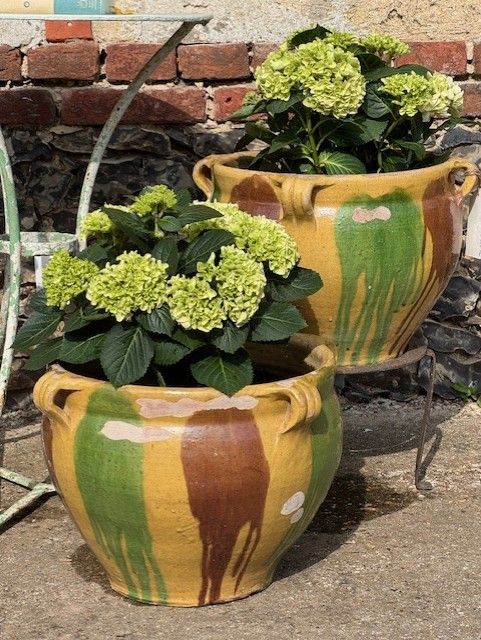
The selection extends from substantial Victorian examples mounted on matching plinths to early twentieth century terracotta pots and reconstituted stone planters. Buyers also encounter French provincial styles alongside occasional novelty iterations cast in unusual animal motifs.
Originating predominantly from British and continental workshops, these matched sets carry the patina of long exposure to the elements. Their primary function remains housing hardy plantings while anchoring formal or informal garden layouts with architectural weight.
Evaluating Quality and Character
The distinction between standard utility gardenware and superior examples lies in the crispness of the cast ornament and the harmonious matching of the pair. Finer nineteenth century ironwork exhibits sharply rendered acanthus leaves and well proportioned stems that maintain visual balance from every angle.
Surface integrity and weathering depth also define the calibre of a piece, with stable patinas and original structural joinery holding greater appeal than heavily restored or structurally compromised bodies.
Listings feature cast iron, terracotta, and limestone spanning the nineteenth and twentieth centuries.
Dunfermline Clay Company·Coalbrookdale·Hakusan·Compton Pottery
The Vintage Garden Urn Pair Glossary
- Campana
- A bell shaped garden urn with an everted rim and footed base. This classical silhouette dominates nineteenth century metal and terracotta production.
- Tazza
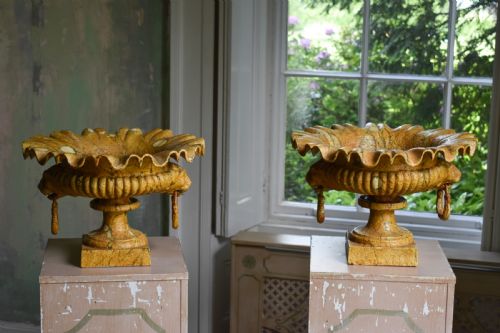
- A shallow bowl shaped vessel raised on a stem and foot. These wide forms suit trailing plants and create a distinct profile compared to deeper urns.
- Reconstituted Stone
- A durable composite material made from crushed stone aggregate mixed with a binder. It replicates the appearance of natural carved stone at a lower weight.
- Plinth
- A heavy base block or pedestal that elevates an urn. Matching plinths provide additional height and formal presence in garden settings.
- Finial
- A decorative terminal ornament placed on top of a lid or structure. Floral basket finials offer a detailed focal point above matched vessels.
Vintage Garden Urn Pair: Frequently Asked Questions
How do I secure urns to plinths safely?
Heavy cast iron and stone vessels generally rely on their own substantial weight to remain stable on flat surfaces. Contractors often use hidden dowels or appropriate exterior adhesives for added security in windy locations.
Ensuring the supporting ground is completely level prevents shifting or uneven settling over time. Consult a specialist for antique pieces requiring delicate handling during installation.
Can cast iron urns stay outside in winter?
Cast iron handles freezing temperatures well, provided any internal soil drainage remains completely clear. Trapped water that freezes and expands can occasionally stress historic metal joints.
Elevating the base slightly on pot feet encourages proper water runoff during heavy winter rains. Lining interior cavities helps protect original painted surfaces from constant dampness.
How do I distinguish cast iron from stone?
A gentle tap with a wooden tool reveals a metallic ring for iron, whereas stone produces a duller thud. Visual inspection of seams often uncovers traditional casting lines on metal versions.
Weight distribution also differs, as iron maintains thinner walls with dense heft while stone or reconstituted materials appear thicker and more porous.
What plants suit campana urns best?
Trailing ivy and cascading cascading flowers complement the flared lip and deep bowl of a traditional campana shape. Compact box balls or formal structural evergreens maintain architectural scale year round.
Ensure adequate drainage material sits at the base before adding soil to protect both the plant roots and the interior of the vessel.