



White Metal Garden Urn
A white metal garden urn brings architectural structure and aged character to a terrace or lawn.
White Metal Garden Urn
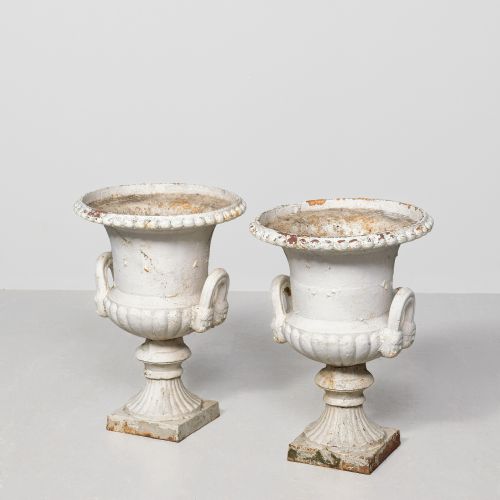
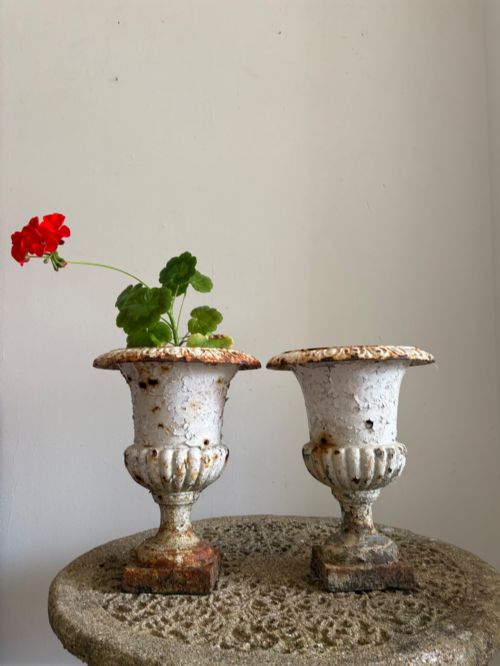
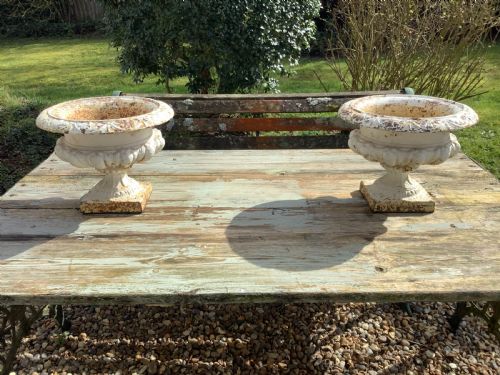
A white metal garden urn provides a focal point for outdoor spaces, drawing on classical and neoclassical design traditions. These vessels appear frequently in Victorian and nineteenth-century forms, including Campagna shapes, tazza designs, and urns mounted on pedestals or plinths.
Makers such as Andrew Handyside and Coalbrookdale produced notable examples in this category, often utilising durable metals suited to outdoor display. Buyers encounter pairs and individual planters showing the weight and presence characteristic of nineteenth-century foundry work.
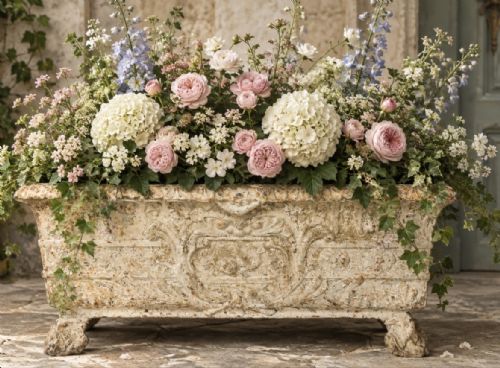
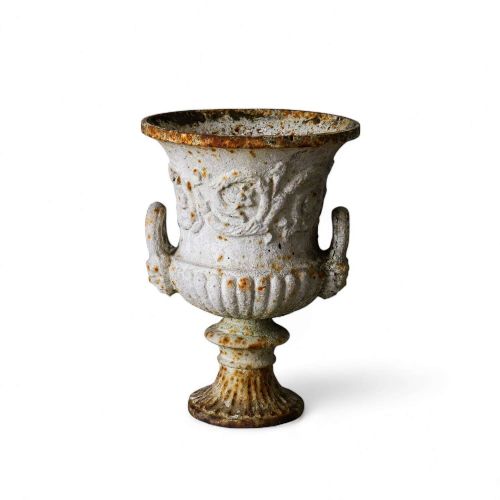
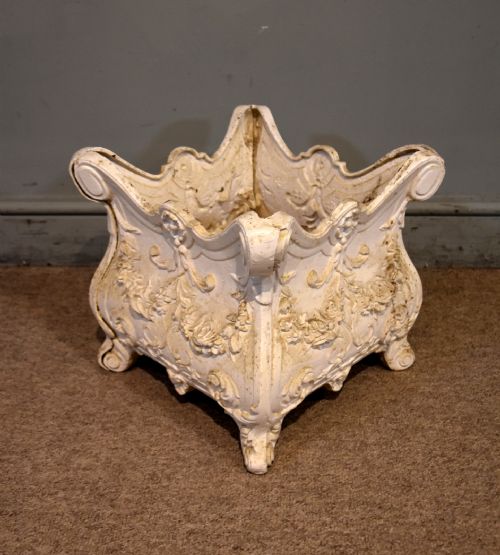
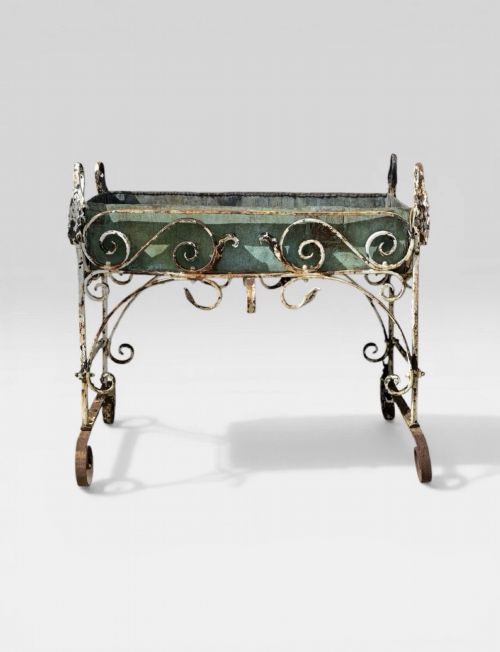
The objects span simpler table urns to large garden planters adorned with acanthus leaves and classical motifs. Most carry weathered paint surfaces or distressed finishes resulting from decades of exposure to the elements.
Materials and construction
Foundries shaped these pieces primarily using cast iron and wrought iron, complemented by zinc elements for specific decorative or structural components. Iron casting allowed makers to achieve crisp relief details such as classical acanthus foliage and gadrooned rims.
Surfaces were traditionally finished with protective coats of paint, which over time weathered to reveal complex layers of texture and tone. The combination of heavy iron casting and original distressed paint defines the physical character of these garden antiques.
Many iron urns retain decades of forgotten garden soil packed tightly into their drainage holes like stubborn time capsules.
Evaluating quality and design
Quality rests upon the crispness of the cast relief, the proportion of the classical form, and the integrity of the metalwork. Pieces from recognised foundries exhibit superior detailing in handles, fluting, and base plinths.
The survival of original paint surfaces and the presence of matching pairs elevate the distinction of an urn. Balance in the proportions between the bowl, stem, and foot distinguishes standard production from finer foundry work.
Andrew Handyside·Coalbrookdale
The White Metal Garden Urn Glossary
- Campagna urn
- A bell-shaped garden vessel with a flared rim, frequently mounted on a short stem and square base. This classical form became a staple of nineteenth-century garden ornament.
- Tazza urn
- A shallow, cup-shaped vessel on a pedestal, resembling a monumental drinking chalice. These pieces often feature wide rims and classical detailing.
- Plinth
- A heavy rectangular or square base supporting an urn or planter. It raises the vessel to improve sightlines in a garden setting.
- Acanthus leaf
- A classical decorative motif carved or cast in relief, mimicking the serrated leaves of the Mediterranean plant. It appears frequently on the body or handles of nineteenth-century urns.
- Distressed paint
- Surface coating that has worn, flaked, or weathered over decades of exposure. This patination provides visual depth and confirms long-term outdoor ageing.
White Metal Garden Urn: Frequently Asked Questions
How do I clean a cast iron urn?
Wash the surface gently with water and a soft brush to remove loose dirt while preserving the weathered patina. Avoid harsh chemical cleaners that might strip historical paint layers.
Allow the metal to dry completely before applying any protective wax or oil suitable for outdoor ironwork.
Can these urns stay outside in winter?
Cast iron and wrought iron withstand cold weather well, though standing water inside the bowl can freeze and cause cracking. Ensure drainage holes remain clear so moisture escapes freely.
Elevate the base slightly off the ground during freezing months to prevent moisture absorption from damp soil.
Are these urns heavy to move?
Nineteenth-century cast iron pieces possess substantial weight and generally require two people for safe lifting and placement. Their mass provides stability against wind when positioned on terraces or lawns.
Use wooden rollers or lifting straps if repositioning large examples to protect both the object and the ground surface.
How do I identify a Victorian urn?
Victorian examples typically feature heavy cast iron construction, classical revival motifs, and proportions derived from neoclassical architecture. Look for foundry marks, sand-cast textures, and layered historical paint.
Compare the rim decoration and foot design against standard nineteenth-century catalogue forms to confirm the period.