
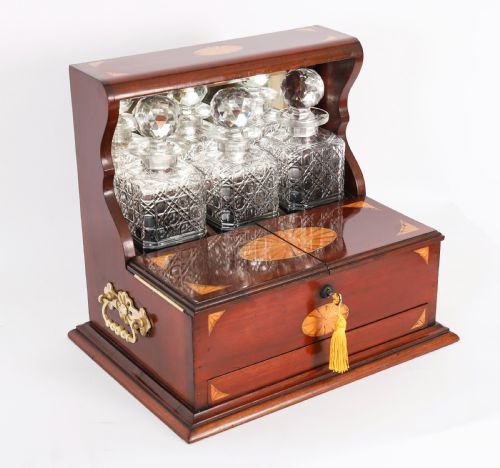


Vintage Game Box Set
A vintage game box set gathers parlour pastimes in timber and bone, offering tactile entertainment for the fireside.
Vintage Game Box Set
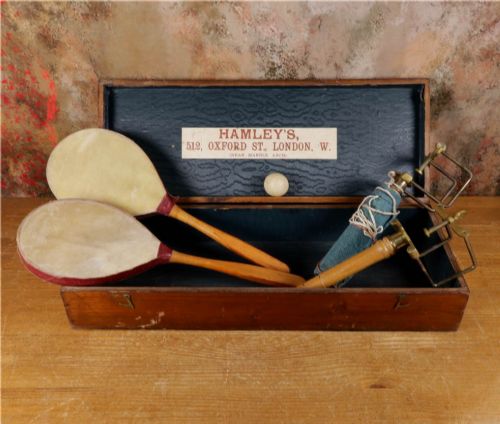
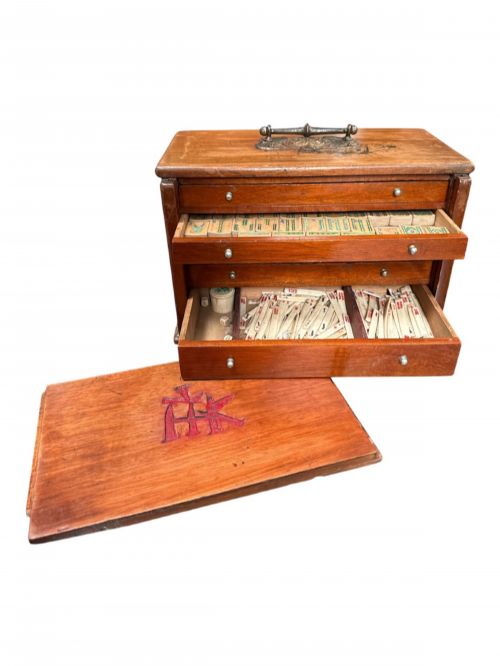
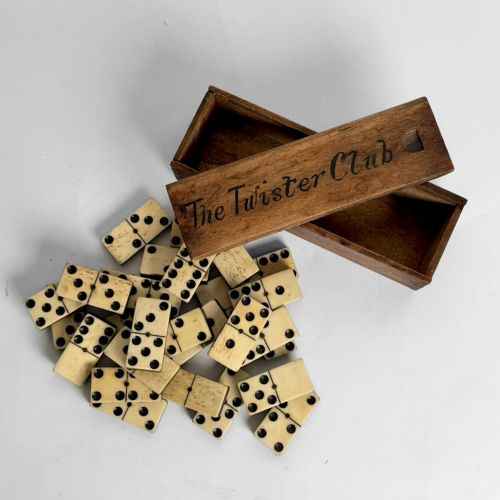
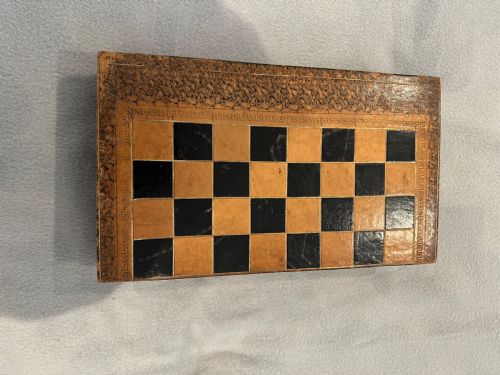
A vintage game box set covers compendiums, fitted cases, and traditional pastimes housed in wood or leather containers from the nineteenth and early twentieth centuries. These encompass chess sets, dominoes, croquet sets, and multi-game compendiums produced during the Victorian and Edwardian periods.
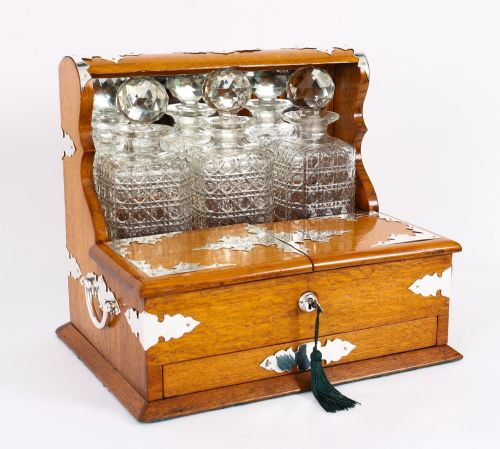
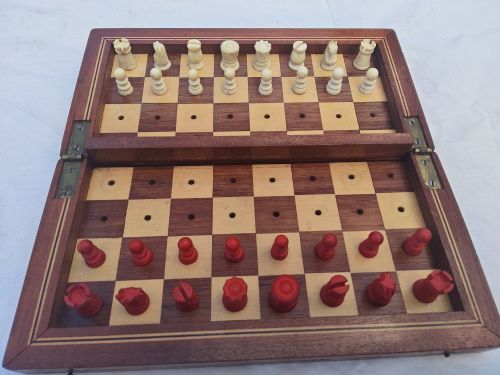
The versions most commonly met on this page range from small travelling chess boards and bone domino sets to large oak or walnut tantalus and games compendiums. Makers such as Jaques, F.H. Ayres, and the British Chess Company created fitted boxes designed to keep pieces secure in transit or in the parlour.
Construction and materials
Boxes are fashioned from timbers such as mahogany, oak, walnut, satinwood, and pine, frequently featuring brass mounts or inlaid details. Interior compartments are specifically arranged to hold playing cards, counters, and boards.
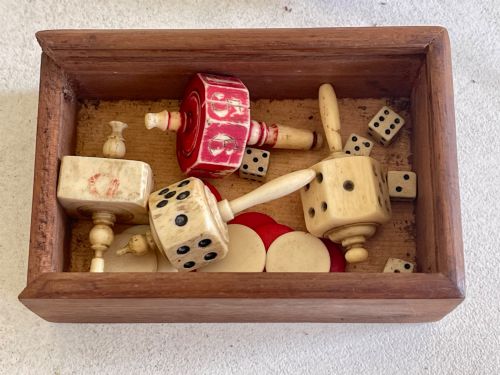
Playing pieces utilise boxwood, ebony, bone, and leather, sometimes carved by hand or turned on a lathe. Early items incorporate carved bone from prisoner-of-war work or traditional materials like porcelain for whist counters.
Prisoners of war carved intricate bone dominoes and teetotums during the nineteenth century, creating portable gaming pieces behind enemy lines.
Judging quality
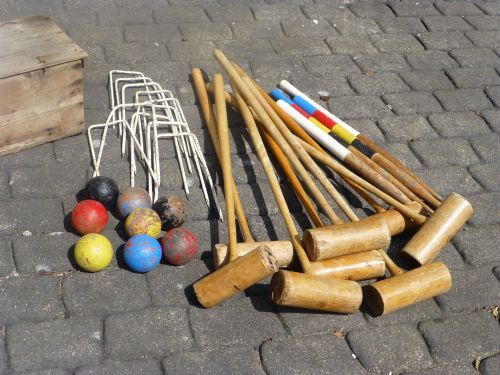
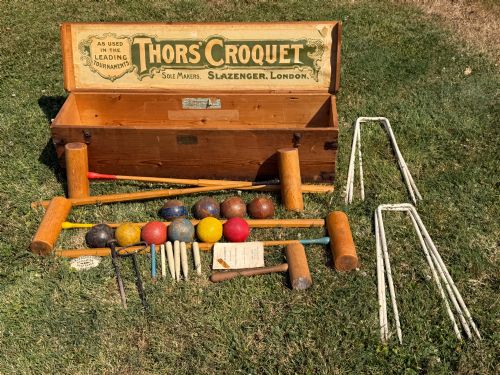
Quality rests on the integrity of the fitted interior and the fidelity of the original box to its contents. Complete sets retain their matching pieces, whether weighted chessmen or entire croquet equipment housed in the correct pine or wooden case.
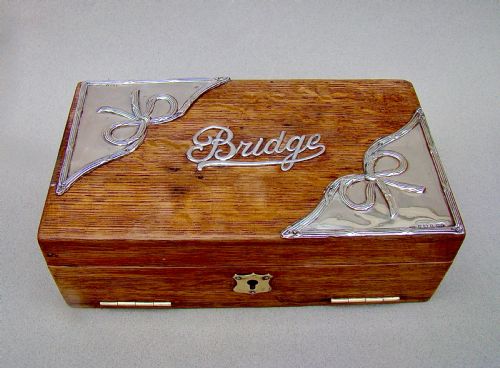
Fine examples display careful joinery, select timber grains such as burr walnut, and hallmarked silver mounts by makers like Levi & Salaman. Finer boxes balance robust outdoor utility with polished indoor presentation.
Jaques·Levi & Salaman·Slazenger·A.W. Gamage·F.H. Ayres Ltd·British Chess Company
The Vintage Game Box Set Glossary
- Compendium
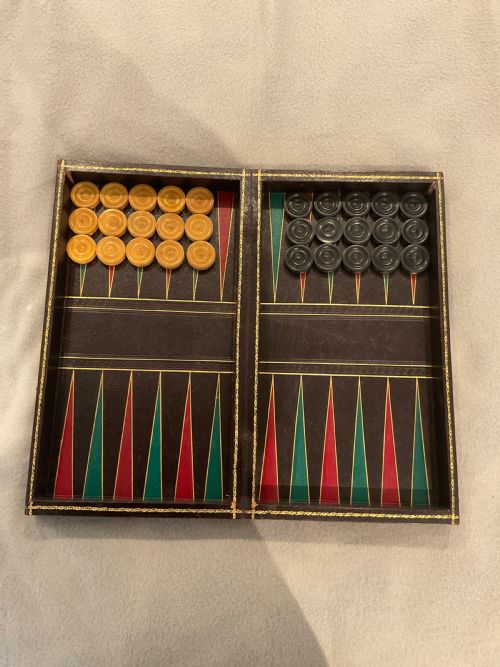
- A multi-game box housing various pastimes in one fitted container. These typically include boards and pieces for chess, backgammon, and card games.
- Staunton
- A standard pattern of chess pieces introduced in the mid-nineteenth century. It remains the universal design for tournament play.
- Tantalus
- A locking drink decanter frame often combined with a games compendium. It secured the spirits away while keeping the parlour games accessible.
- Teettotum
- A small spinning top used for gambling or parlour games. They are frequently found carved from bone in nineteenth-century collections.
- Squails
- A traditional table game played by sliding wooden discs across a surface towards a target. Sets include coloured discs in original boxes.
Vintage Game Box Set: Frequently Asked Questions
What games are inside these boxes?
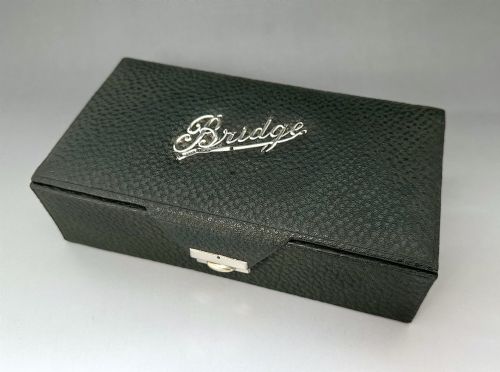
These sets contain traditional pastimes including chess, draughts, dominoes, backgammon, and bridge. Many larger compendiums combine several of these activities within a single fitted wooden cabinet.
Smaller cases often focus on a single pursuit, such as travelling chess or whist counters kept in leather boxes.
How were compendiums used?
Victorian and Edwardian households utilised these sets for evening entertainment in the parlour or drawing room. The fitted compartments kept pieces organised between gatherings.
Travelling versions allowed families to take chess and backgammon on journeys by train or carriage.
Are the pieces usually complete?
Many listings preserve their original contents, such as full bone domino sets or matched chessmen. Original boxes and fitted trays generally accompany the pieces.
Descriptions note whether items like dice, counters, or specific chess pieces remain together in the set.
How do I date a game set?
Dates rely on stylistic clues, timber choices, and maker marks from the nineteenth and early twentieth centuries. Victorian pieces often use burr walnut or rosewood, while Edwardian examples frequently feature silver mounts with Birmingham hallmarks.
Specific makers recorded in the evidence help narrow the decade of production.