





Brown Wooden Gaming Box
These brown wooden gaming box items span the Victorian, Edwardian, and Regency periods, offering fitted interiors and traditional materials.
Brown Wooden Gaming Box
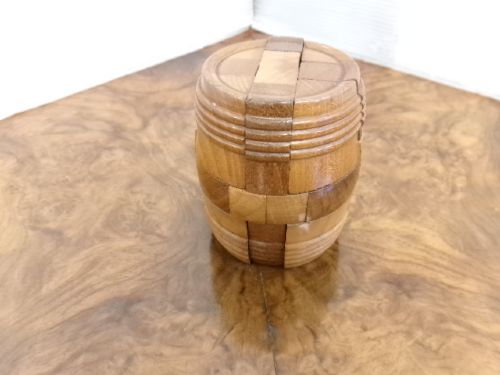
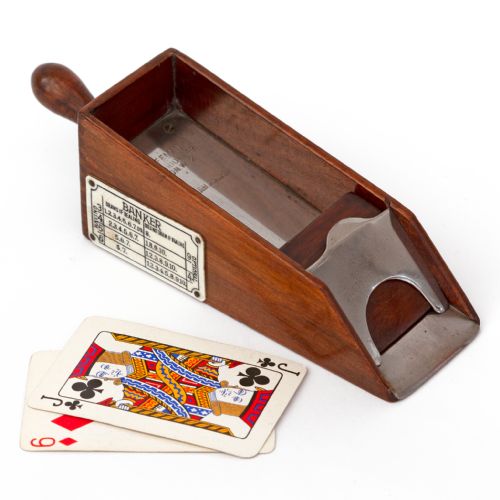
A brown wooden gaming box brings together traditional tabletop pastime equipment and period cabinet-making from the Victorian, Edwardian, and Regency eras. When searching for this phrase, a buyer encounters everything from small cribbage containers to large compendiums and puzzle cases.
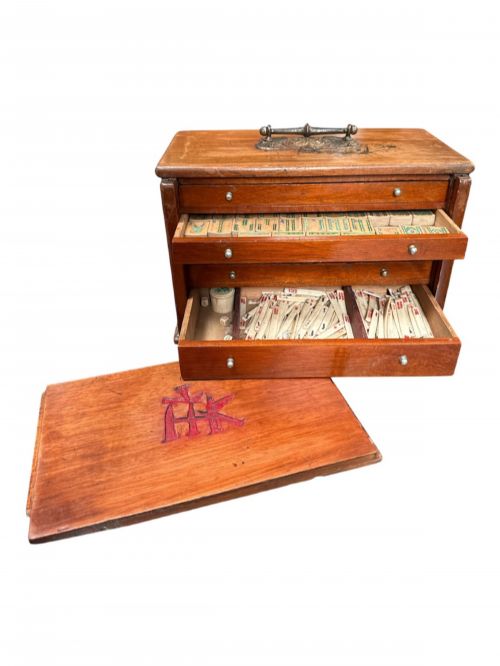
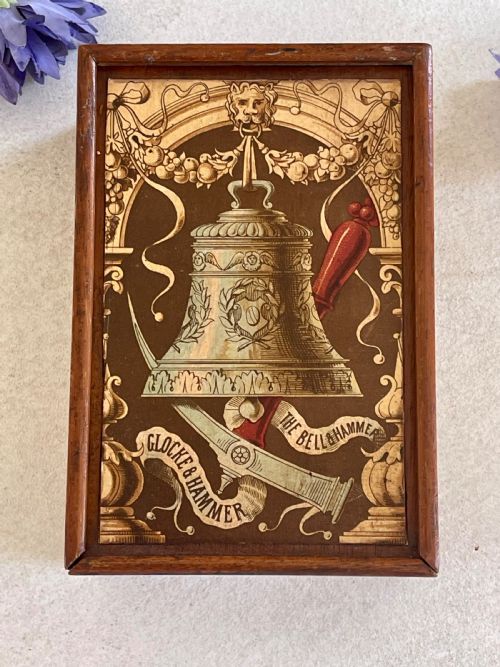
The selections on this page draw from English, Black Forest, and Chinese regional workshops, spanning the nineteenth and early twentieth centuries. Mahjong sets in fitted cabinets, painted penwork containers, and parquetry inlaid boxes appear alongside folding tables and parlour game cases.
How they were made
Cabinet-makers utilised solid timbers and decorative veneers including mahogany, walnut, oak, and rosewood to construct these containers. Surface ornamentation relied on parquetry inlay, painted penwork, carved Black Forest details, and Tunbridge Ware mosaic patterns.
Interiors frequently featured fitted compartments designed to hold bone dominoes, counters, miniature chess sets, and cards. Brass hardware, locks, and handles provided functional security and contrast against the dark woods.
Brown Wooden Gaming Box Retail Price Guide 2026
Typical asking prices for brown wooden gaming box among the pieces listed under this phrase on Sellingantiques today, from the lower quarter to the upper quarter. They describe what is for sale here now, not the wider market.
Victorian puzzle boxes occasionally secreted miniature sliding panels, challenging guests to unlock the games before play could even begin.
What varies in quality
Differentiation across the range rests on the precision of the parquetry inlay, the complexity of the carved woodwork, and the completeness of the internal fittings. Simple nineteenth-century boxes compare with elaborate Edwardian compendiums housing multiple gaming sets.
The distinction between standard containers and finer examples involves regional stylistic execution, such as intricate Black Forest carving or specialised Tunbridge Ware decoration, alongside the selection of superior hardwoods.
The Brown Wooden Gaming Box Glossary
- Parquetry
- A geometric mosaic of wood pieces used for decorative surfaces on boxes and tables. It involves precise cutting and fitting of different timber tones.
- Tantalus
- A locking wooden cabinet frame securing decanters or game components while leaving them visible. This mechanism often formed part of larger Edwardian compendiums.
- Tunbridge Ware
- Woodworking featuring microscopic mosaic tiles to create pictorial or geometric designs. Items from this tradition display exceptional miniature craftsmanship.
- Cribbage Box
- A specialised container designed to hold playing cards and scoring pegs for the game of cribbage. These often feature sliding lids or fitted internal channels.
- Penwork
- A decorative technique utilising ink drawing on a prepared wood or painted surface before varnishing. Regency examples frequently employ this detailed linear ornamentation.
Brown Wooden Gaming Box: Frequently Asked Questions
What fits inside a brown wooden gaming box?
These containers hold traditional pastime equipment such as bone dominoes, miniature chess sets, playing cards, and scoring pegs. Many incorporate specialised partitions or trays designed specifically for particular parlour games.
Larger compendiums combine multiple games within a single fitted cabinet, keeping various components organised for domestic entertainment during the Victorian and Edwardian periods.
How do I identify a Regency box?
Regency pieces often display distinct decorative treatments such as painted penwork or geometric parquetry inlay on surfaces of mahogany and other dark timbers. Their proportions reflect the neoclassical design preferences of the early nineteenth century.
Examining the construction methods, interior lining materials, and hardware style helps distinguish these earlier examples from later Victorian and Edwardian productions.
Where were these boxes used?
Originating primarily in English country houses, European workshops, and Chinese regional centres, these items served as domestic entertainment fixtures in parlours and drawing rooms. They provided accessible recreation for families and guests.
Their decorative exterior design ensured the containers remained suitable for display on tables and sideboards when not in active use during social gatherings.
How do I care for wooden game boxes?
Preserving these items involves maintaining stable indoor humidity levels and keeping them away from direct sunlight to protect the wood and inlay work. Gentle dusting with a dry cloth prevents accumulation without risking the delicate surfaces.
Period finishes respond best to minimal intervention, avoiding modern harsh chemical polishes that can degrade nineteenth-century varnishes and painted penwork details.