

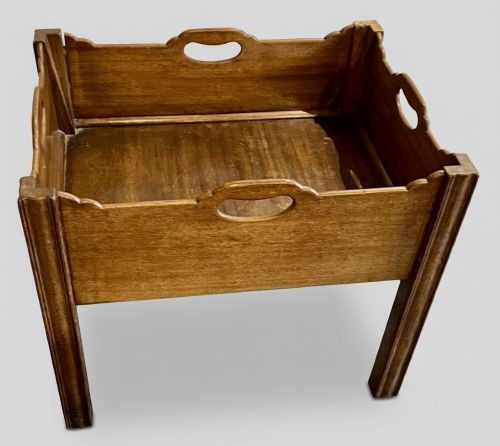
Vintage Gallery Side Table
These vintage gallery side tables offer raised borders to keep objects secure, blending practicality with period charm.
Vintage Gallery Side Table
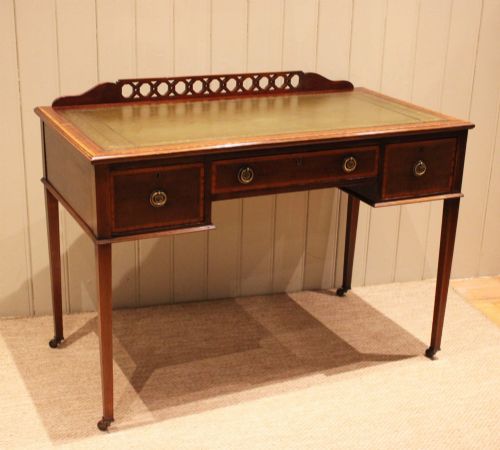
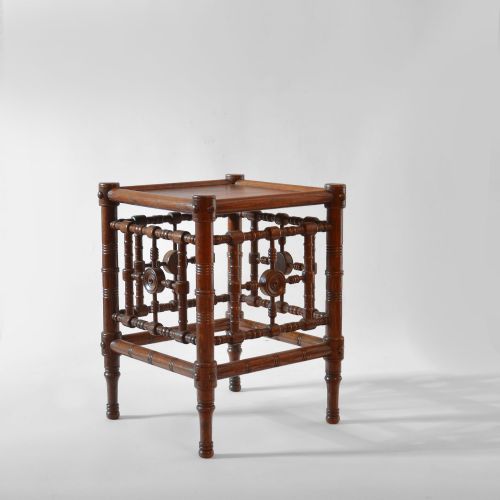
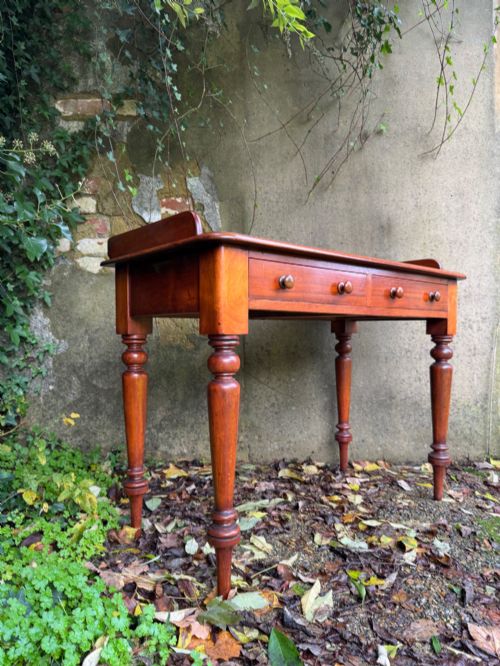
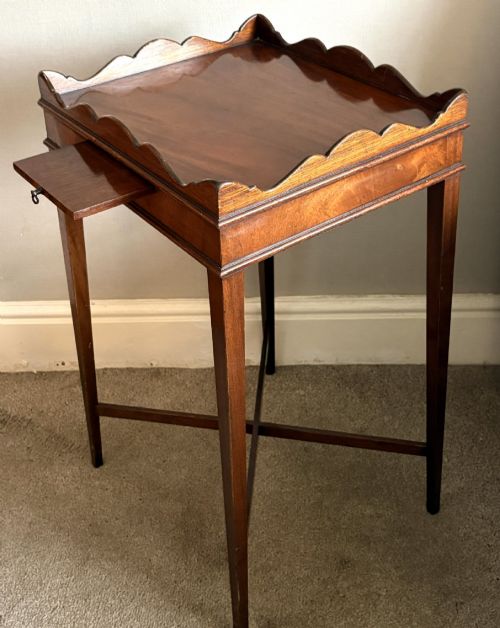
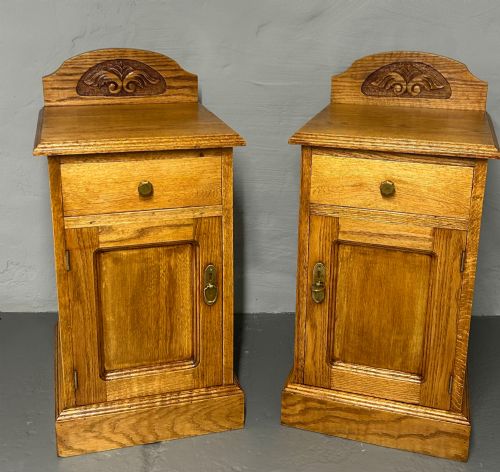
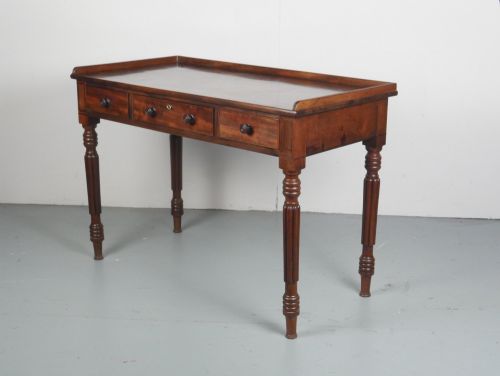
A vintage gallery side table is a compact surface defined by its raised rim or gallery, designed to prevent items from rolling off. The selections span the 19th Century, Victorian, Edwardian, and the early 20th century, encompassing forms such as occasional tables, writing desks, lamp tables, and bedside cabinets.
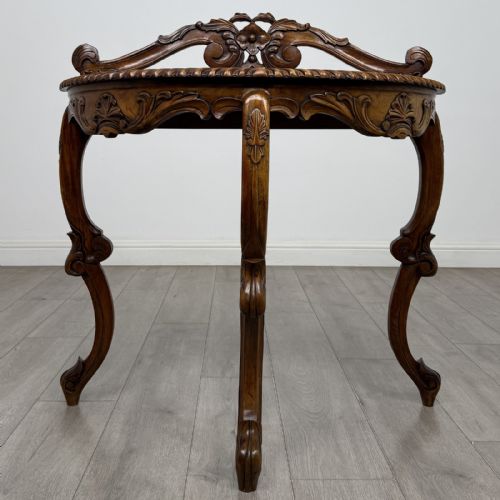
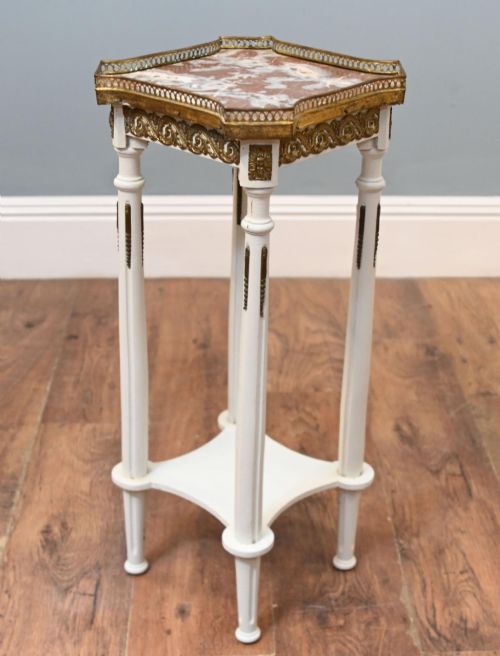
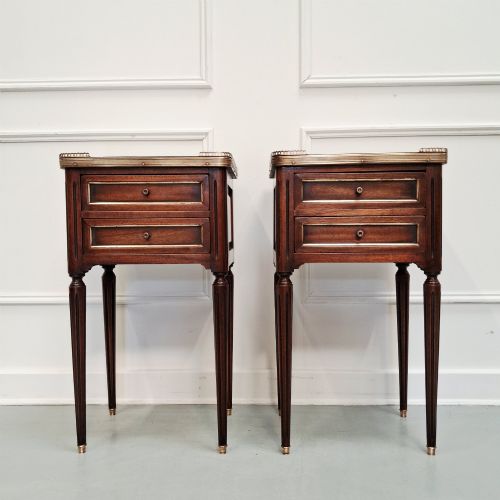
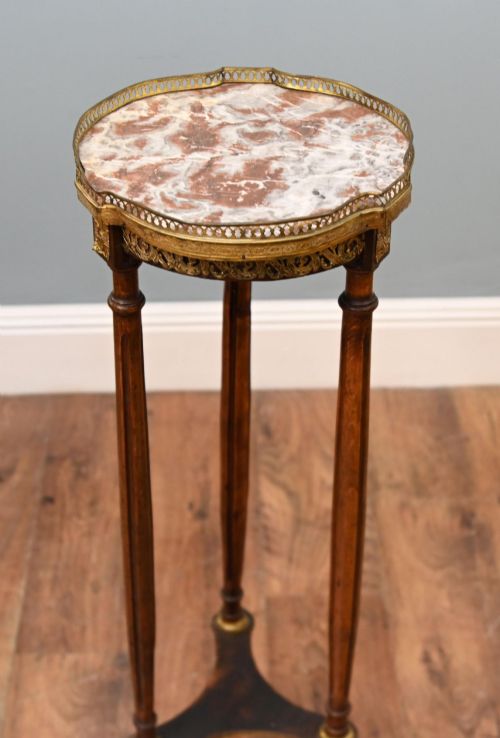
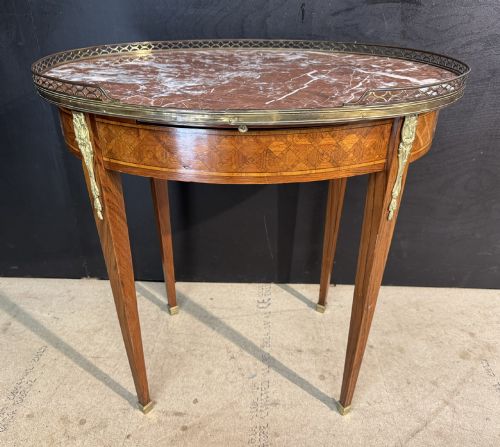
Mahogany and oak dominate the timber choices, often accompanied by walnut, satin birch, and pitch pine. French influence appears frequently through demi-lune consoles, gueridon tables with marble inserts, and ormolu-mounted bedside pieces.
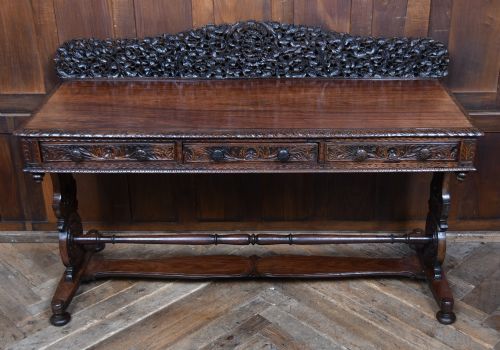
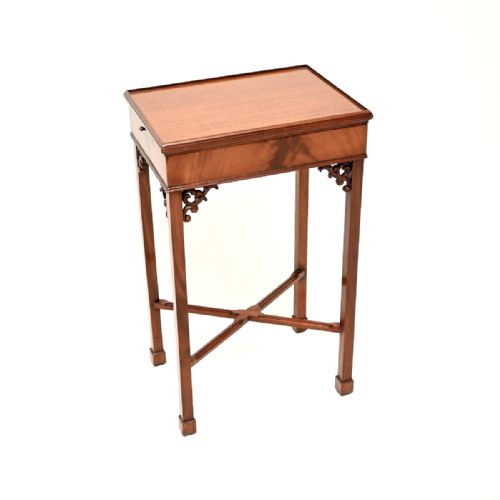
Buyers encounter everything from rustic pine washstands to finely inlaid marquetry lamp tables and butlers trays on stands. These pieces function easily beside seating or serve as display surfaces in hallways and bedrooms.
Materials and construction
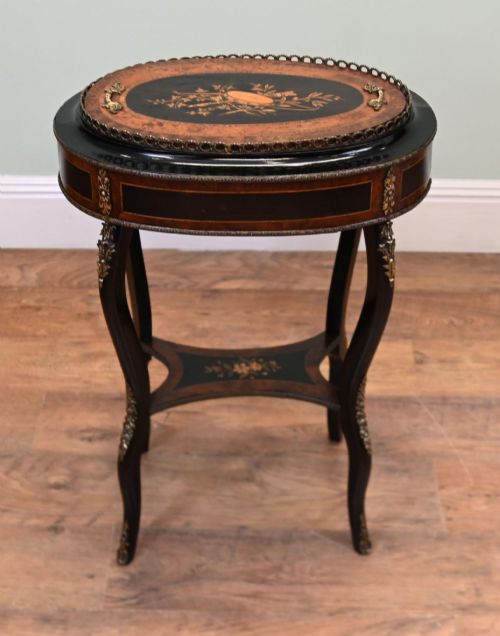
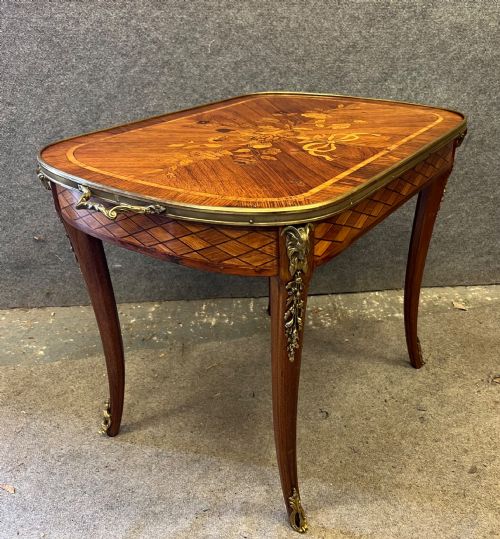
Cabinetmakers utilised solid timbers and selected veneers like mahogany, walnut, and amboyna, frequently enhancing surfaces with marquetry inlay or brass detailing. Brass galleries secure the perimeters of marble or timber tops, requiring precise metalwork and stable joinery.
Marble inserts provide durable, cool surfaces on French bedside tables and gueridon stands, while ormolu mounts add cast metal enrichment to empire and chateau styles. Turned legs, tapering supports, and carved pedestals distribute weight beneath these smaller table tops.
Vintage Gallery Side Table Retail Price Guide 2026
Typical asking prices for vintage gallery side table among the pieces listed under this phrase on Sellingantiques today, from the lower quarter to the upper quarter. They describe what is for sale here now, not the wider market.
Evaluating quality and execution
Quality rests on the crispness of the timber carving, the precision of the inlay work, and the structural integrity of the raised gallery. Superior examples show tight joints in the gallery rail and careful matching of wood grain across the top.
The integration of secondary materials like white marble and cast ormolu mounts separates standard production from finer workshop output. Hand-finished surfaces and well-figured mahogany or satin birch elevate a utilitarian table into a decorative focal point.
The Vintage Gallery Side Table Glossary
- Ormolu
- Gilded bronze mounts applied to furniture for decorative accent, common in French Empire and 19th-century cabinet work. The technique involves mercury gilding over a cast bronze base.
- Marquetry
- The art of applying pieces of veneer to a structure to form decorative patterns and pictorial designs. Cabinetmakers use contrasting woods such as satinwood, mahogany, and walnut to achieve tonal depth.
- Demi-lune
- A half-moon shape characteristic of console and side tables designed to sit flush against a wall. This profile saves floor space while providing an adequate surface for lamps or ornaments.
- Gueridon
- A small French round table, often supported by a central pillar or three legs, frequently topped with marble. Originating in the 17th century, the form persisted into the 20th century for occasional use.
Vintage Gallery Side Table: Frequently Asked Questions
What is a gallery side table used for?
These tables provide a compact surface for lamps, drinks, or decorative objects where space is limited. The raised rim ensures items remain secure on the top.
They fit easily beside armchairs, near beds, or against hallways walls as console surfaces.
How do I identify a Victorian side table?
Victorian pieces often utilise dense mahogany, pitch pine, or satin birch, featuring substantial proportions and darker finishes. Construction methods reflect industrial mechanisation alongside traditional hand joinery.
Look for typical 19th-century turnings, ceramic castors, or simple raised galleries characteristic of the period.
Are marble top tables difficult to maintain?
Marble tops require gentle cleaning with mild soap and water, avoiding acidic substances that can etch the polished stone surface. The stone itself provides a robust and heat-resistant finish.
Most marble inserts sit loose within the wooden gallery frame or lift out for safe transport.
What distinguishes Edwardian tables from earlier pieces?
Edwardian examples generally favour lighter aesthetics, including satinwood inlay, delicate tapering legs, and slender brass galleries. These pieces lean towards refined elegance rather than the heavier mass of mid-Victorian furniture.
Construction from this era around 1900 to 1910 often incorporates mahogany or oak with subtle stringing and marquetry.