



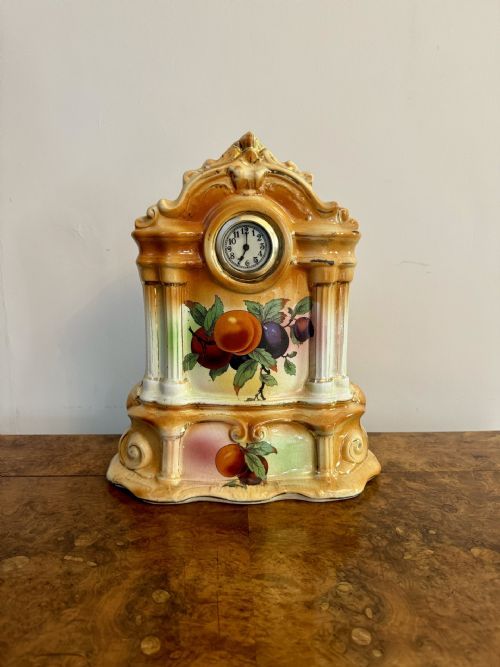


Vintage Fruit Pottery
Vintage fruit pottery brings together charming earthenware and stoneware forms decorated with botanical motifs from the nineteenth and twentieth centuries.
Vintage Fruit Pottery
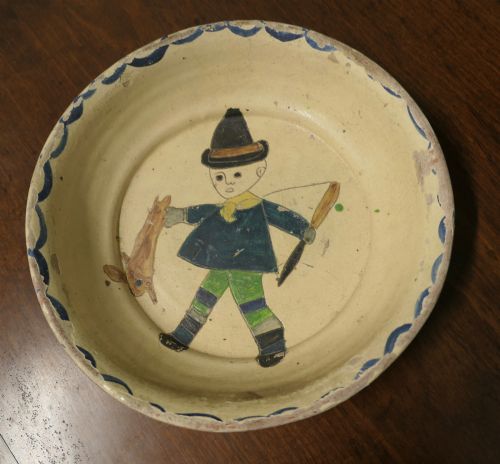
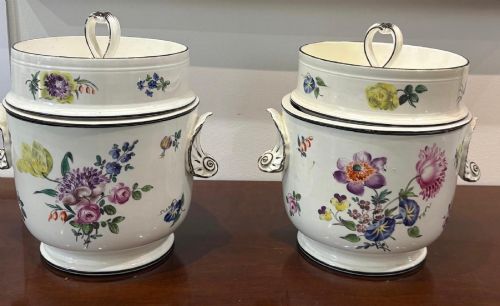
Vintage fruit pottery encompasses a wide array of decorative vessels, including centrepiece bowls, comports, ice pails, and vases adorned with painted or glazed fruit and floral patterns. These pieces span from nineteenth-century creamware and ironstone to twentieth-century art pottery from factories such as Moorcroft, Maling, and Charlotte Rhead's Bursley Ware.
The most common forms you will encounter on this page are large decorative bowls and pedestal comports, often featuring rich depictions of pomegranates, cherries, and tulips. Alongside traditional earthenware, the selection includes pieces influenced by Art Deco designs and earlier Victorian and Georgian traditions.
Originating from British potteries and international makers alike, these ceramics serve as both functional tableware and decorative centrepieces. They reflect the shifting aesthetic tastes from the detailed transfer prints of the nineteenth century to the vibrant lustres and tubelined patterns of the 1920s and 1930s.
Materials and methods
The pieces rely primarily on earthenware, creamware, and ironstone bodies, shaped either by throwing on a potter's wheel or moulding into distinct forms like pedestal bowls and ice pails. Potters applied glazes and enamel colours to create the vibrant surfaces characteristic of these decorative wares.
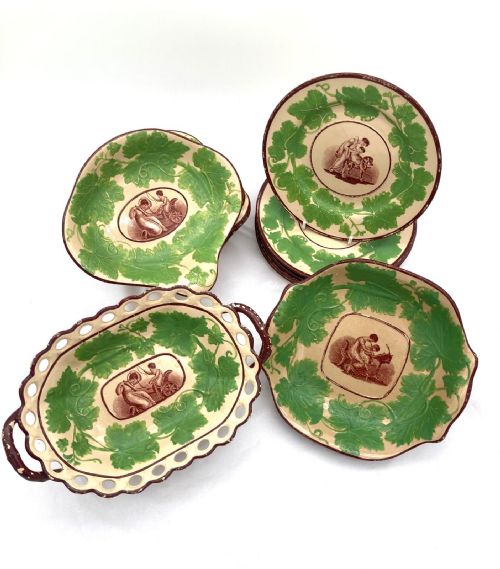
Techniques such as tubelining, seen in works by Moorcroft and Charlotte Rhead, built raised clay outlines to contain the rich enamel colours of fruit motifs. Transfer printing provided intricate blue and white patterns on earlier nineteenth-century creamware and ironstone bodies.
Specialised glazing methods, including mottled orange lustres and Royal Doulton's Flambé finishes, added depth and vitreous sheen to the fired ceramic surfaces. These varied techniques ensured that each factory achieved its own distinct texture and visual weight.
Vintage Fruit Pottery Retail Price Guide 2026
Typical asking prices for vintage fruit pottery among the pieces listed under this phrase on Sellingantiques today, from the lower quarter to the upper quarter. They describe what is for sale here now, not the wider market.
Potters delighted in immortalising humble cherries and pomegranates onto durable earthenware, ensuring the fruit stays permanently ripe.
Quality and execution
The distinction between standard production wares and exceptional pieces rests upon the crispness of the modelling and the depth of the glaze application. Hand-painted or tubelined details that retain sharp definition and vibrant enamel saturation represent superior craftsmanship.
The prestige of the maker and the clarity of factory stamps or artist signatures strongly influence the standing of a piece within its period. Well-preserved surfaces free from excessive wear or heavy crazing demonstrate better preservation and original factory finish.
Wemyss·Maling·Charlotte Rhead·William Moorcroft·Royal Worcester·Royal Doulton
The Vintage Fruit Pottery Glossary
- Creamware
- A refined earthenware developed in the eighteenth century with a pale yellowish-cream glaze. It provided a smooth surface suited to transfer printing and delicate painting.
- Ironstone
- A durable type of earthenware patented in the nineteenth century. It combined pottery clay with slag iron to produce a dense, hard-wearing body.
- Tubelining
- A ceramic decoration technique where a thin trail of liquid clay is squeezed through a nozzle onto the vessel to form raised outlines for enamel colours.
- Comport
- A decorative pedestal dish or bowl used historically for serving fruit or dessert at the table. It elevates the contents above the main dining surface.
- Lustre
- A type of ceramic glaze containing metallic elements that produce an iridescent or reflective sheen upon firing. It was widely used during the Art Deco era.
- Majolica
- A heavy earthenware pottery covered with an opaque tin-glaze and painted with brightly coloured metal oxides. It gained popularity for vibrant Victorian and twentieth-century decorative wares.
Vintage Fruit Pottery: Frequently Asked Questions
How do I date vintage fruit pottery?
Dating relies heavily on factory stamps, backstamps, and the distinct stylistic markers of periods such as the Arts and Crafts movement or Art Deco. Examining the specific type of earthenware body and glaze can also narrow down the production era.
Matching the pattern name, such as Pomegranate or Tulip, to known factory production years provides a reliable window of manufacture. Signatures and impressed registry marks further pinpoint the exact decade.
Were these bowls used for actual fruit?
Many of these large bowls and comports were originally designed to hold fresh fruit or serve as centrepieces for dining tables and dessert services. Their wide, open forms accommodated seasonal produce during formal meals.
Over time, many transitioned into purely decorative display objects. Their robust earthenware and ironstone construction allowed them to withstand practical domestic use before becoming collectible display pieces.
What is the difference between ironstone and creamware?
Creamware is a light, refined earthenware featuring a warm, creamy-yellow transparent glaze developed during the Georgian period. It is relatively lightweight and prized for its delicate elegance.
Ironstone, introduced later in the nineteenth century, is a much heavier, semi-vitrified ceramic designed to mimic porcelain's durability. It provides a sturdier base for busy transfer-printed or hand-painted patterns.
How should I display fruit pottery at home?
These pieces look best when placed on sideboards, tables, or open shelving where their colourful painted fruit motifs can catch the light. Large centrepiece bowls and comports serve as natural focal points in a room.
Keep them away from direct heat sources and areas of heavy foot traffic to protect their historic glazes. Pairing them with complementary antique ceramics enhances their visual impact.