
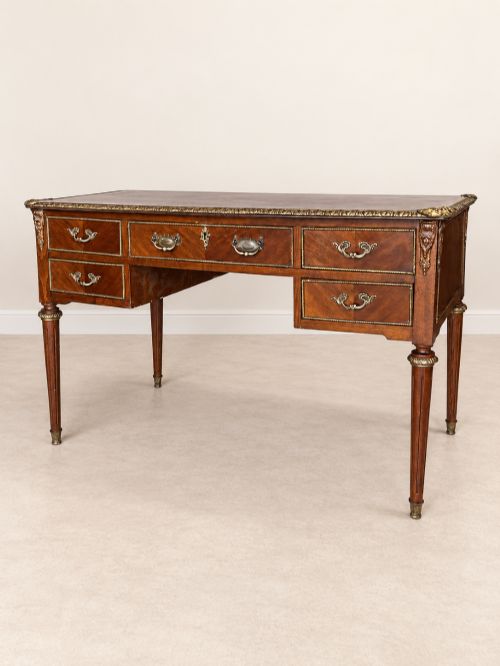
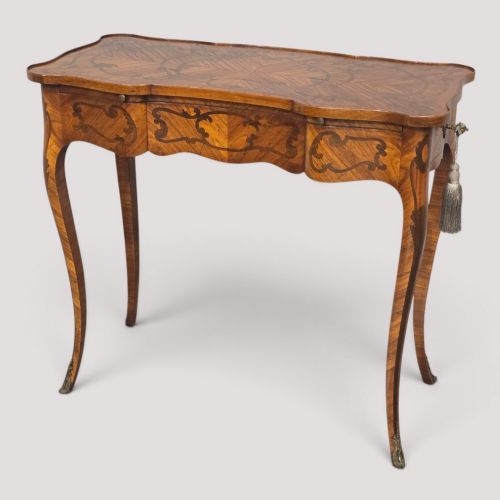
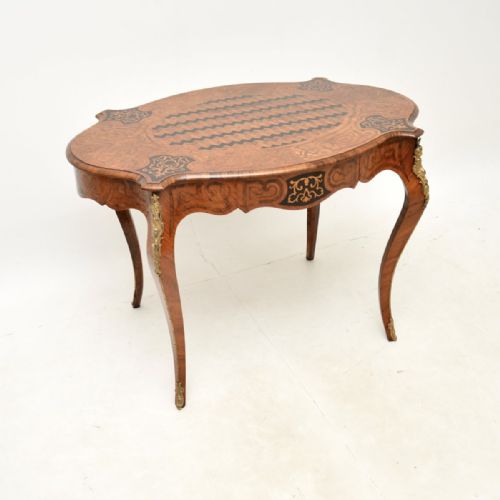
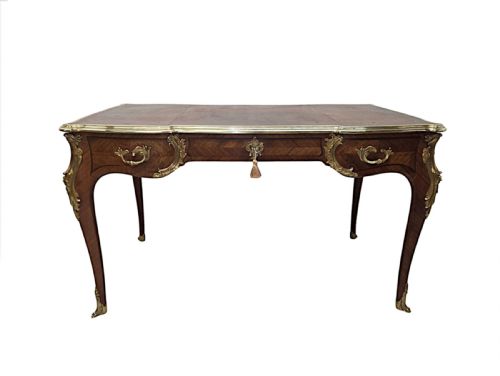
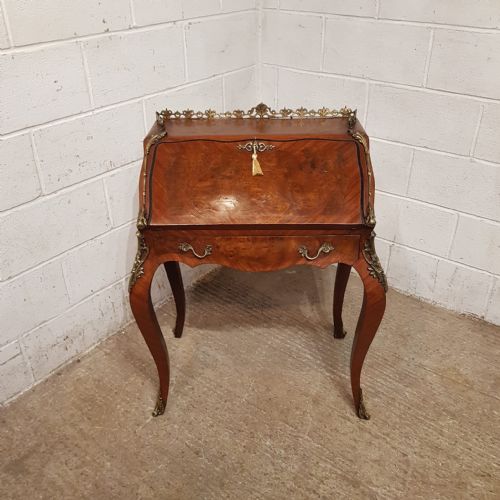
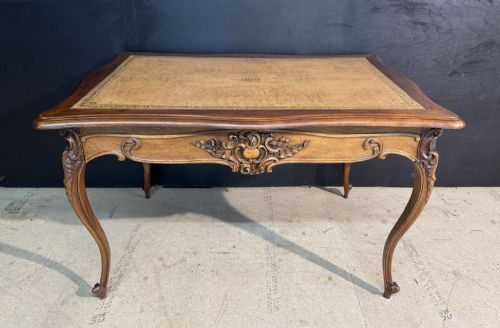
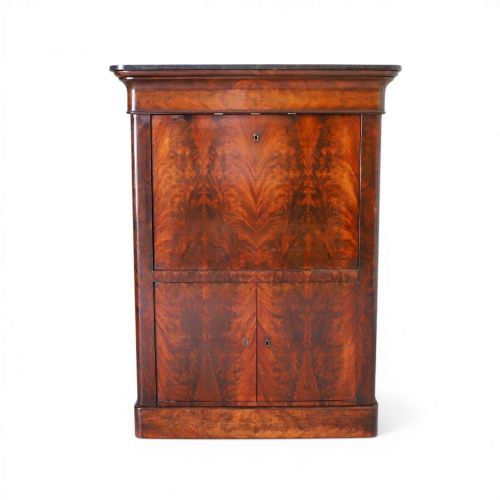
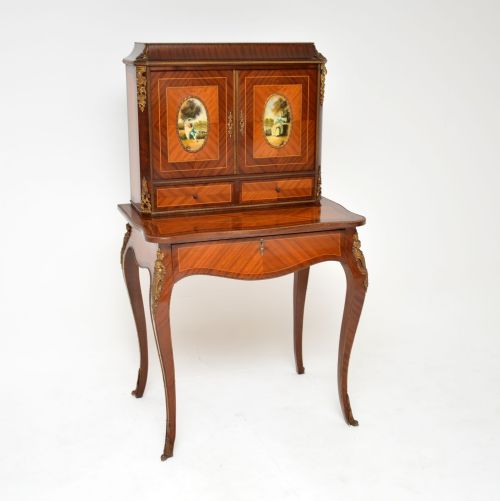
Vintage French Writing Bureau
A vintage french writing bureau brings elegance and practical surface space into a room through refined historical forms.
Vintage French Writing Bureau
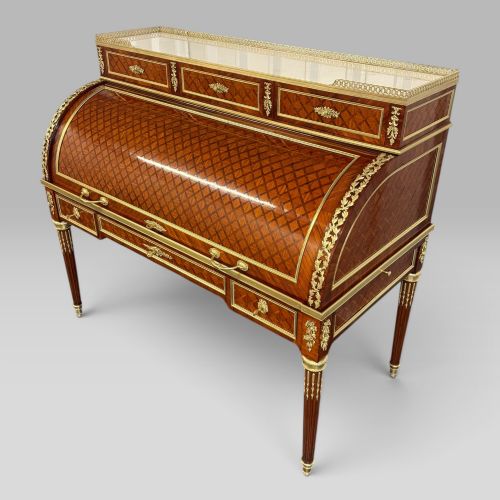
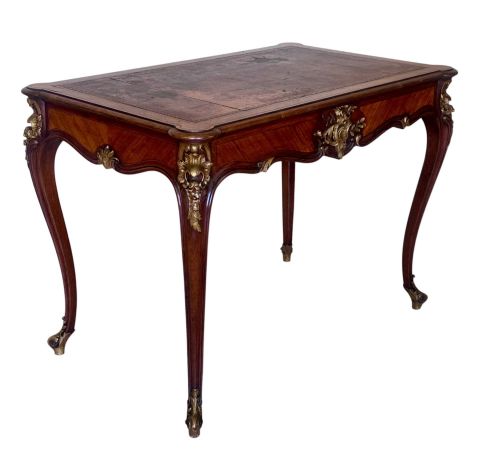
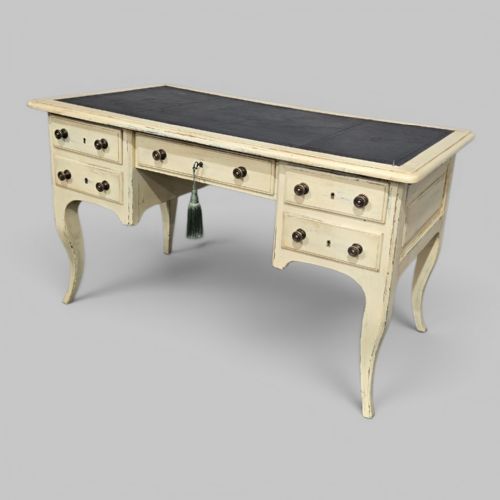
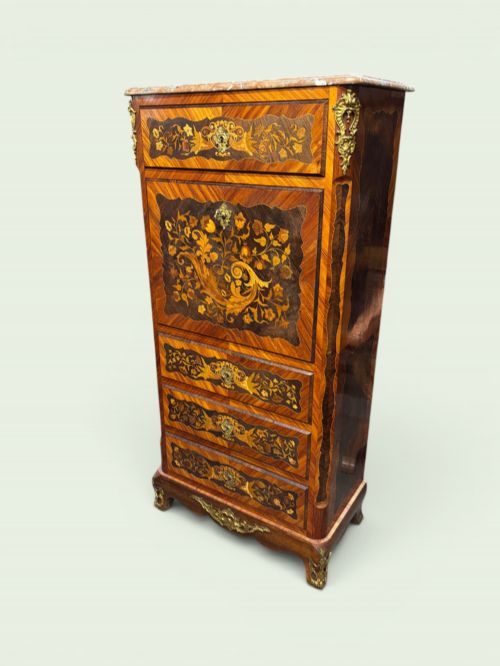
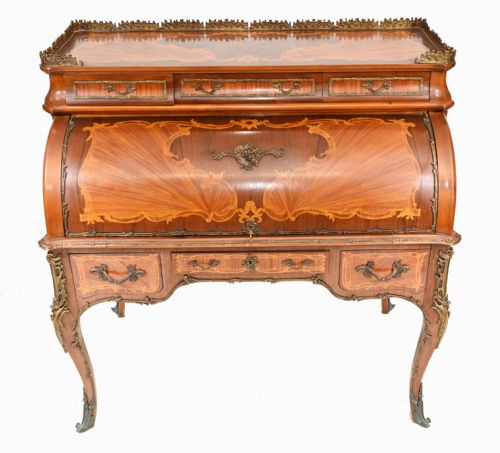
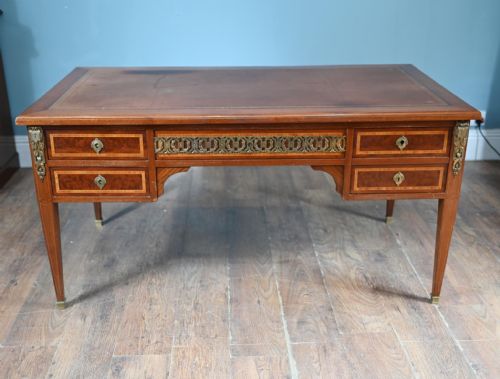
A vintage french writing bureau encompasses a variety of writing surfaces, writing tables, and secretaire cabinets originating from the nineteenth and early twentieth centuries. Pieces range from bureau plat desks and cylinder desks to upright escritoires fitted with drop fronts and secret drawers.
Buyers encounter numerous revival styles, notably Louis XV and Louis XVI, alongside Art Deco interpretations and French provincial designs. Woods such as kingwood, walnut, mahogany, and rosewood dominate the selections, often paired with decorative veneers.
The objects serve as functional workspaces and decorative furniture pieces, incorporating traditional kneehole formats, side tables, and library tables designed for domestic writing tasks.
Materials and construction
Cabinet makers utilised dense hardwoods including mahogany, walnut, kingwood, and tulipwood, frequently laid as intricate marquetry or parquetry patterns across the exterior surfaces. These wooden foundations support leather insert writing panels on the desk tops.
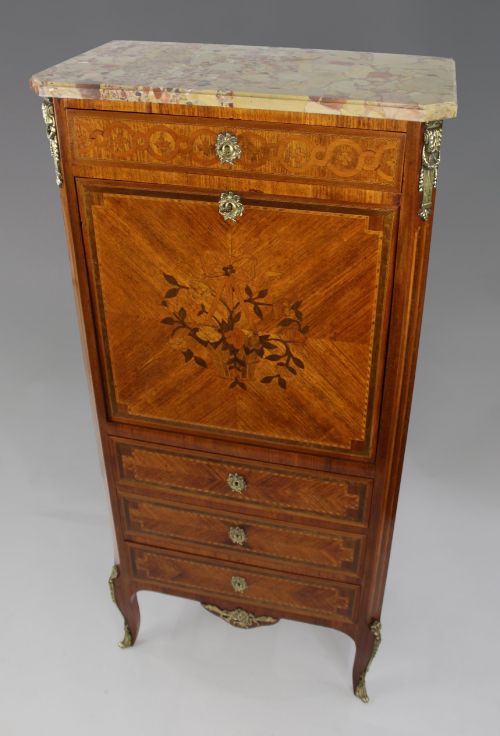
Gilt bronze and ormolu mounts punctuate the corners, drawer edges, and legs, while brass hardware secures internal mechanisms and locking drawers. Marble slabs occasionally top the upper surfaces of cabinet forms like the secrétaire à abattant.
Secret drawers tucked within upright cabinets remain ready to hide private notes away from prying eyes.
Design and execution
The standard of a vintage french writing bureau depends upon the precision of the parquetry inlay and the depth of the timber grain selected by the cabinet maker. Hand-chased ormolu mounts show sharper definition and heavier metal casting than simpler decorative applications.
Structural integrity relies on the retention of original leather writing inserts, functioning secret drawers, and stable joints across complex cylinder or drop-front mechanisms.
CH. Jeanselme & Co·Étienne Kohlmann
The Vintage French Writing Bureau Glossary
- Bureau plat
- A freestanding double-sided writing table with a flat top, typically fitted with drawers beneath the surface.
- Secrétaire à abattant
- An upright cabinet featuring a drop-down writing flap that conceals a series of small interior compartments and drawers.
- Ormolu
- Gilded bronze mounts applied to furniture edges and corners for decorative accent.
- Marquetry
- Decorative veneer work forming pictorial or geometric patterns using various coloured woods.
- Parquetry
- Geometric wood mosaic patterns applied to furniture surfaces, such as chessboard designs.
Vintage French Writing Bureau: Frequently Asked Questions
What is a secretaire a abattant?
A secretaire à abattant is an upright cabinet containing a hinged writing flap that pulls down to form a horizontal desk surface. When opened, the flap reveals internal compartments and secret drawers for storage.
Many examples feature marble tops and decorative marquetry across the main fall-front panel.
How are Art Deco desks different?
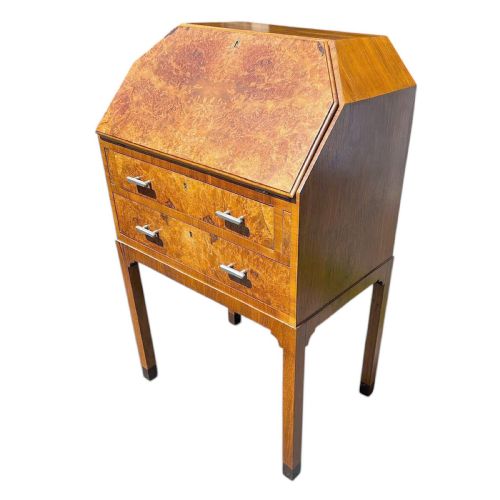
Art Deco desks shift away from historical revival ornamentation toward streamlined geometric forms and simpler wood grains. They reflect twentieth-century design preferences while maintaining functional writing compartments.
Materials in these later pieces often emphasise walnut veneers and minimalist metal hardware rather than ornate ormolu.
Where should I place a writing bureau?
A writing bureau functions effectively in a study, library, or living space as both a practical desk and a decorative focal point. Freestanding tables suit open floor placements, while upright cabinets fit comfortably against perimeter walls.
Consider natural light sources near windows to preserve the utility of the leather writing surface.