
Vintage French Table Clock
A vintage french table clock brings the mechanical precision of the nineteenth and twentieth centuries to a desk or mantelpiece.
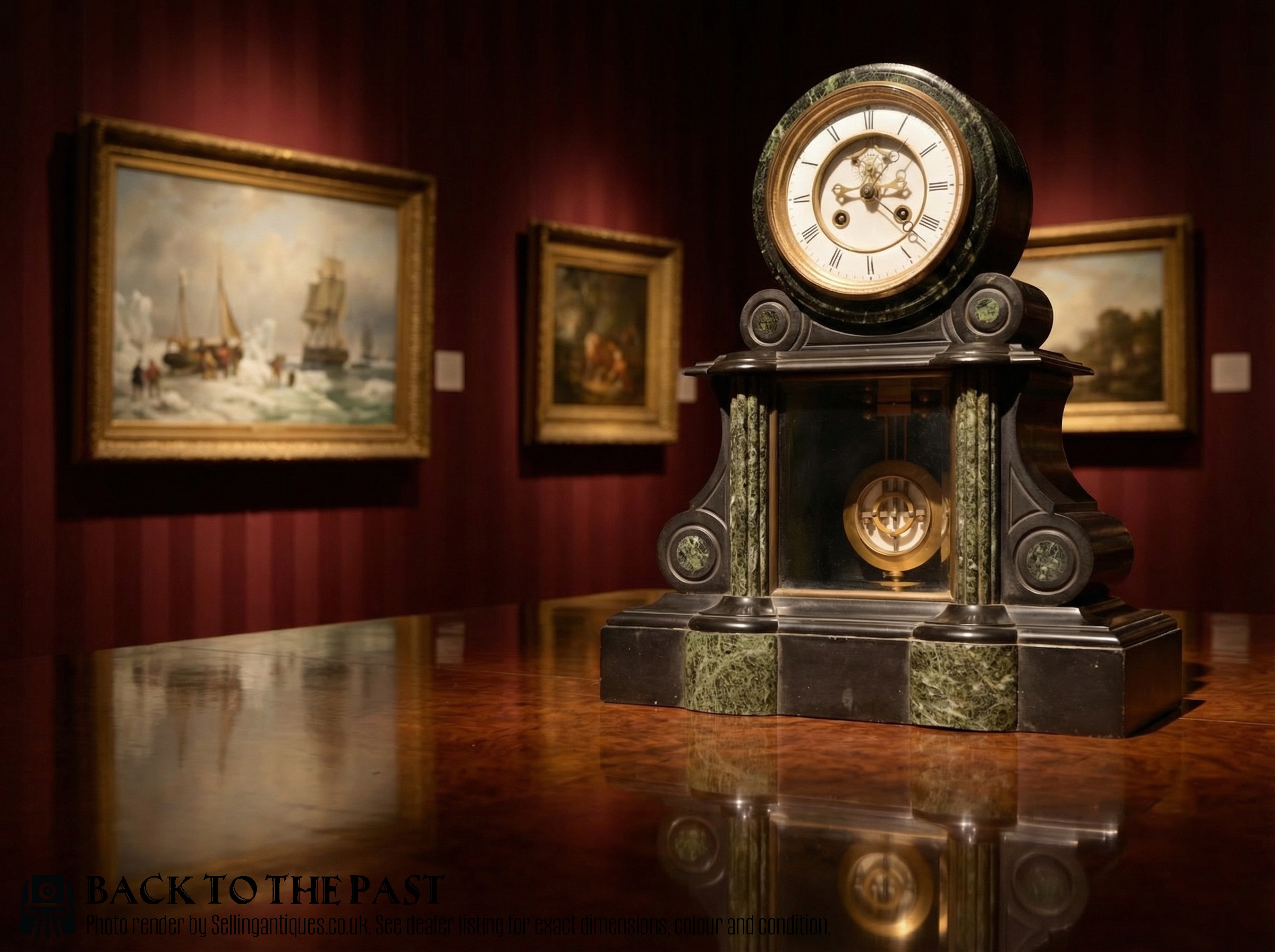
Vintage French Table Clock
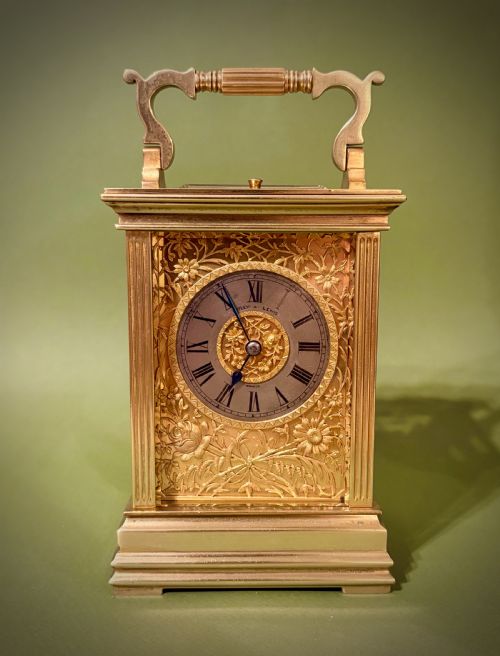
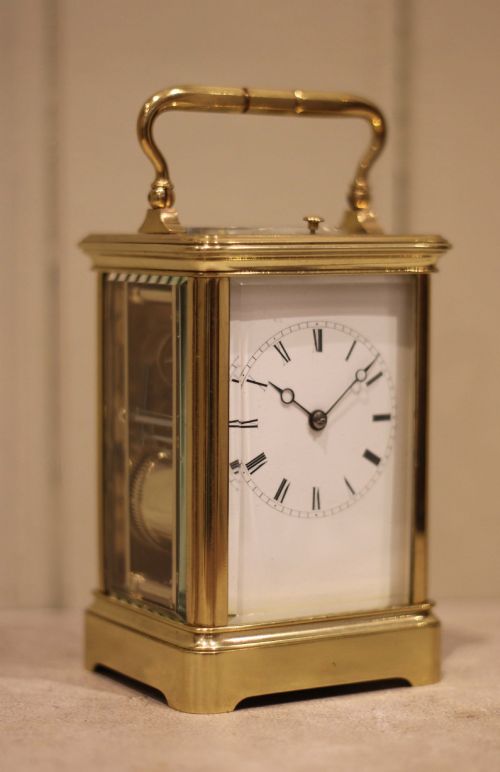
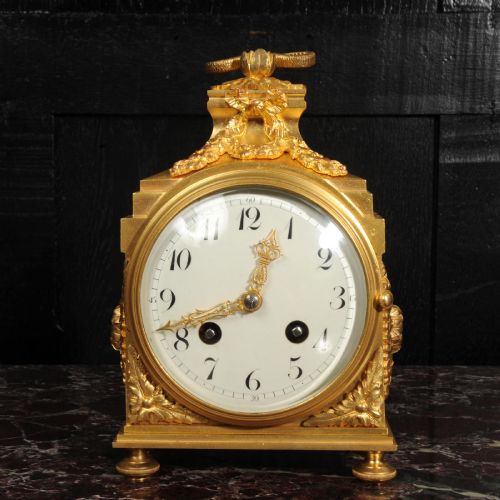
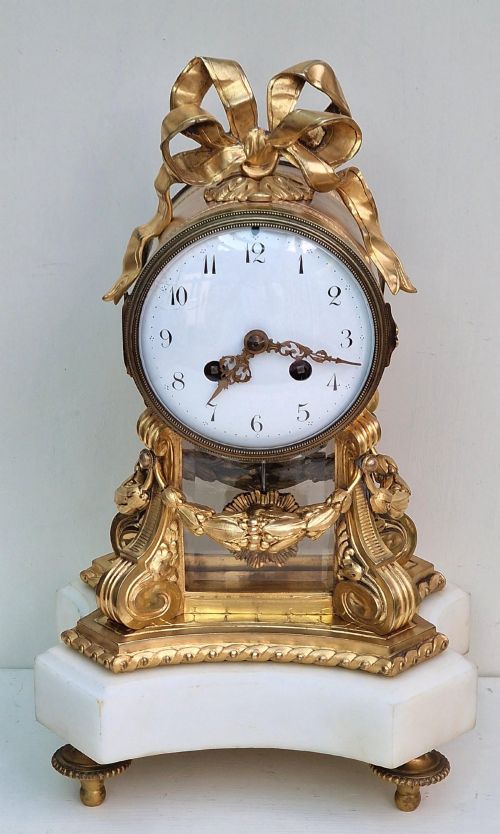
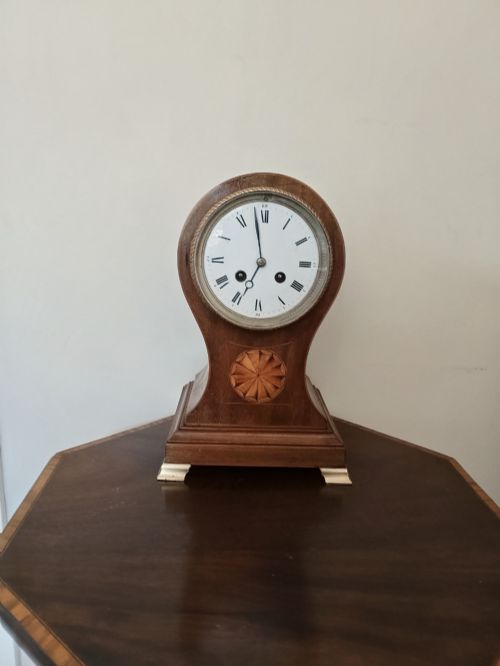
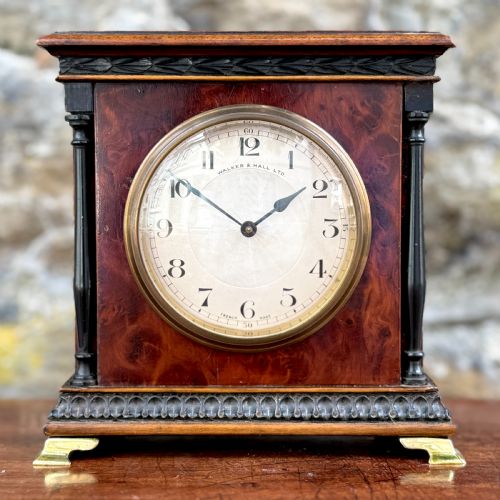
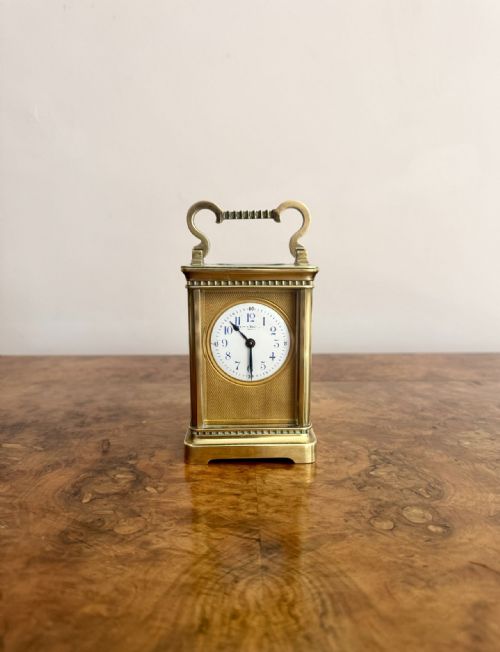
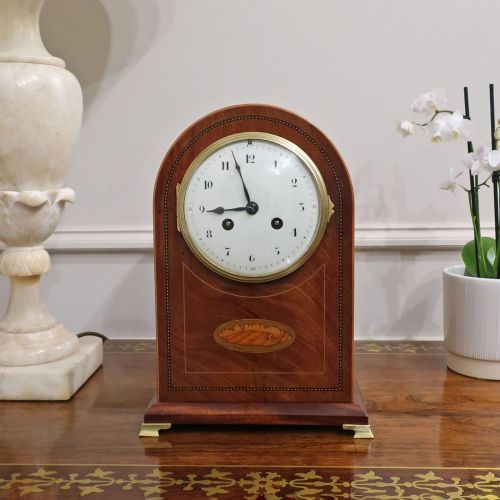
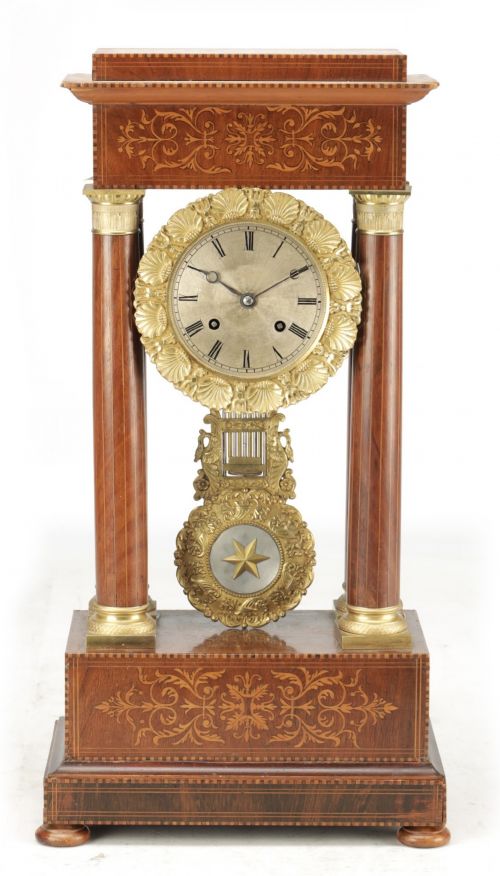
A vintage french table clock encompasses practical carriage clocks, decorative mantel clocks, and streamlined desk timepieces designed in France and Britain. These objects range from heavy brass travel pieces with white dials to ornate architectural cases in marble and mahogany.
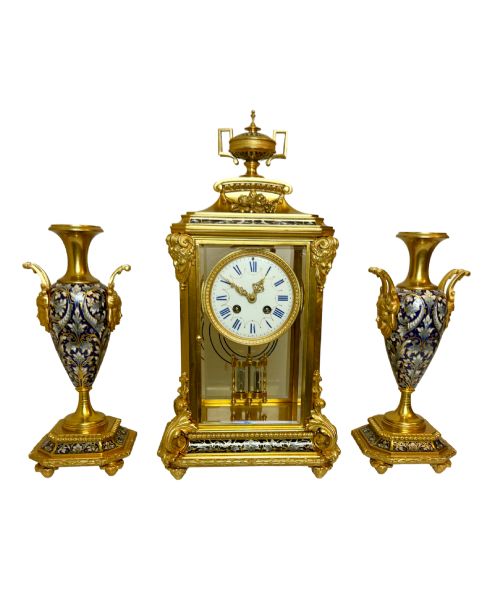
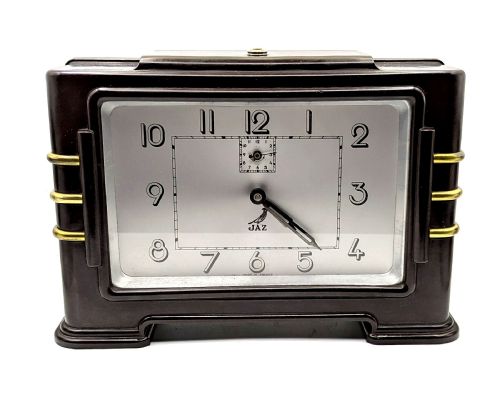
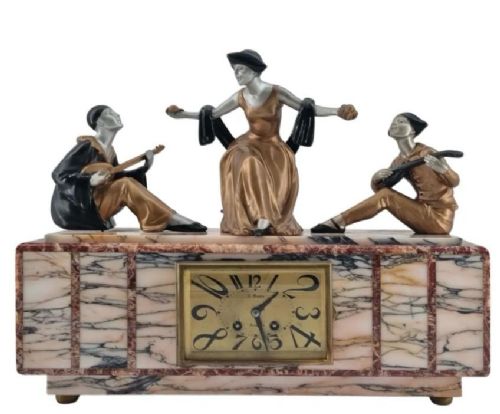
The pieces appearing on this page span the Victorian era, the Belle Epoque, and the Art Deco period, showcasing forms like the four-glass clock and the striking mantel clock. Buyers frequently encounter carriage clocks and figural mantel clocks featuring cast metal or ceramic elements.
Materials and Construction
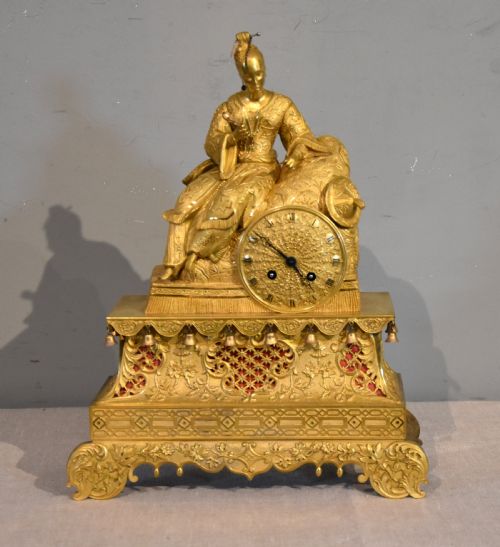
Clockmakers utilised heavy metals including brass, gilt bronze, and ormolu to form robust cases, frequently embellishing surfaces with champleve enamel or fine hand-engraving. Mahogany, walnut, and marble provide substantial structural frames for heavier mantel movements.
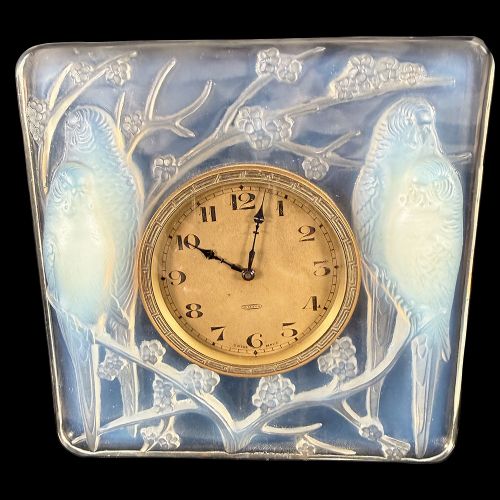
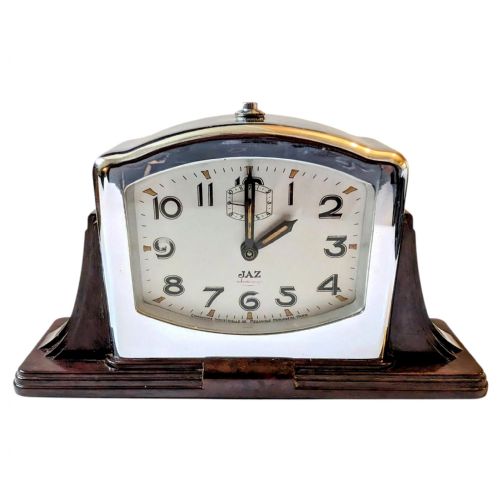
Dial construction combines painted metal or porcelain with glass crystals, while twentieth-century examples incorporate moulded opalescent glass or bakelite. Movements rely on brass gear trains, escapements, and coiled springs to drive striking and repeating mechanisms.
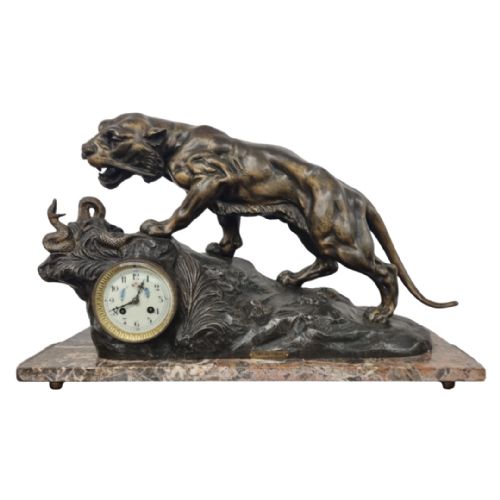
Some nineteenth-century French models share living space with cast brass serpents and tigers lurking on the mantel.
Evaluating Craftsmanship
Quality rests upon the crispness of the cast bronze or brass work, the depth of the case engraving, and the structural integrity of the timber or marble frame. Finely weighted hands, clear enamel dials, and robustly finished internal brass movements distinguish superior pieces from standard production items.
The fidelity of figurative models, such as carved animals or human figures in ormolu and bronze, separates ordinary clocks from exceptional examples. Original gilding and intact glass panels indicate a higher standard of preservation across these instruments.
R Varnier·Walker and Hall·R Lalique·Jaz·Sega·Maurice and Marcel Moulin Favre-Bulle·Antoine Redier of Paris·Latshea and Sons Edinburgh
The Vintage French Table Clock Glossary
- Carriage clock
- A portable spring-driven timepiece originally designed for travel, housed in a brass case with glass panels. These clocks often feature folding carrying handles on top.
- Ormolu
- Gilded bronze produced by applying a mixture of mercury and gold to a cast bronze object. This technique imparts a rich golden surface finish to nineteenth-century cases.
- Champleve enamel
- A decorative method where troughs are carved into a metal surface and filled with vitreous enamel powder before firing. The resulting panel displays colourful geometric or floral patterns.
- Clock garniture
- A set comprising a central clock accompanied by matching side ornaments, such as urns or candelabra. These matched ensembles are designed to display together on a mantelpiece.
- Striking mechanism
- An internal train of gears that causes the clock to ring out the hours or quarters on a bell or gong. Many nineteenth-century models combine this function with a repeating button.
Vintage French Table Clock: Frequently Asked Questions
What is a carriage clock?
A carriage clock is a portable spring-driven timepiece housed in a brass and glass case, featuring a handle on top for travel. Nineteenth-century travellers relied on these robust instruments to keep time on journeys.
Most examples sit on four small feet and enclose an eight-day movement visible through glass panels on the sides and top.
How do repeating clocks work?
A repeating clock includes an internal mechanism that chimes the last hour or quarter-hour when the user presses a button on the case. This allowed owners to check the time in the dark without lighting a candle.
Craftsmen integrated this feature into high-grade brass carriage clocks destined for wealthy patrons.
Where should I place a mantel clock?
Mantel clocks function best on stable horizontal surfaces such as fireplace mantels, sideboards, or heavy wooden desks. Their substantial weight, often derived from marble or bronze cases, requires a firm foundation.
Keep these mechanical instruments away from direct sunlight and damp environments to protect their metal finishes and wooden veneers.
How do I identify Art Deco clocks?
Art Deco clocks feature streamlined geometric forms, symmetric lines, and modern industrial materials like bakelite, chrome, and moulded glass. Makers embraced a departure from nineteenth-century florid ornament in favour of sleek profiles.
Examples from this era often incorporate stylised figural subjects or contrasting wood veneers.