


Vintage French Seascape Art
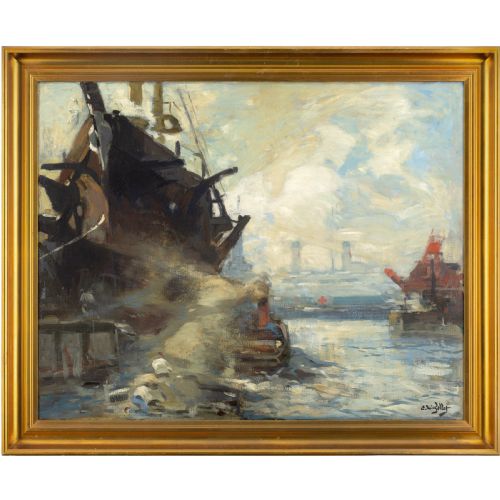
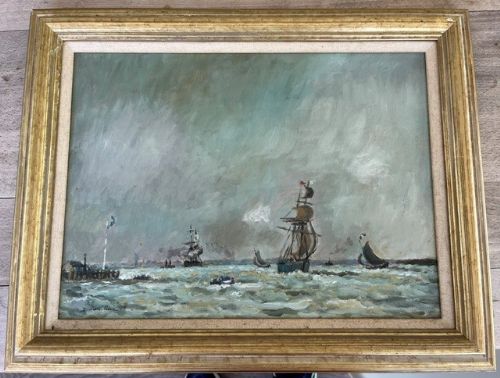
Vintage french seascape art captures coastal harbours, open waters and rocky shores through the distinct lens of continental painting.
Vintage French Seascape Art
Vintage french seascape art encompasses coastal scenes, busy harbours and open waters produced across the nineteenth and twentieth centuries. These works range from bright Mediterranean ports along the Côte d'Azur to rugged northern coastlines in Brittany and Normandy.
The pieces on this page appear primarily in oil paint applied to canvas, board or panel, alongside occasional watercolours. Forms span from traditional nineteenth-century maritime recording to mid-century post-impressionist and abstract interpretations of light and water.
Makers represented include named artists working across France, capturing local ports, fishing boats and coastal figures. Collectors encounter both detailed harbour topography and looser studies focusing entirely on the play of sun and sea.
Materials and methods
Artists relied primarily on oil paint applied to stretched canvas, wooden panels or thick boards to build rich textured surfaces. Impasto techniques often appear in marine works, where thick layers of paint build up waves, clouds and rocky cliffs to catch the ambient light.
Salt air may have long since faded from these coastal breezes, but the impasto waves remain perpetually choppy.
Factors of distinction
Quality rests in the confidence of the brushwork and the artist's handling of coastal light and atmosphere. Stronger works demonstrate a deliberate command of colour to render water and sky, avoiding flat or formulaic application.
Provenance and documentation elevate specific pieces, particularly when signatures, dates or specific harbour locations are clearly identified. The cohesion of the composition and the preservation of the original paint layer further define the standing of each artwork.
Eugène-Louis Gillot·Elisabeth Bardon·Louis Suire·Gustave Vidal·Jean-Baptiste Olive·Raymond Picque·William Lee Hankey·Roger de la Corbiere·Marie-Edouard Adam·Edward Henry Holder·Owen Bowen·Charles Euphrasie Kuwasseg·Yves Brayer·Henri Cadiou
The Vintage French Seascape Art Glossary
- Impasto
- Paint applied thickly to a canvas or board so that it stands out from the surface. This technique allows the artist to build physical texture into crashing waves or rocky shores.
- Post-Impressionism
- An art movement developing from impressionism that used symbolic colours and heavier forms. Painters in this style focused on emotional resonance rather than purely recording optical effects.
- Gouache
- An opaque water-based paint that dries to a matte finish. It often appears in works requiring solid blocks of coastal colour.
- Board
- A rigid wooden or fibrous support used instead of canvas. Artists frequently utilised board for smaller plein-air coastal studies painted directly on location.
Vintage French Seascape Art: Frequently Asked Questions
How do I date a french seascape?
Dating relies on stylistic clues, framing methods and signatures recorded on the work. Mid-century modernist pieces often show looser brushwork, whereas nineteenth-century canvases favour tighter topographical detail.
Examine the back of the canvas or board for old exhibition labels, stamps or inscriptions that frequently pinpoint a specific year or coastal town.
Where were these coastal scenes painted?
The works originate from diverse stretches of the French coastline, spanning the rocky cliffs of Normandy and Brittany to the sunlit waters of the Mediterranean. Southern ports such as Toulon, Cannes and Marseille appear frequently.
Artists also travelled beyond domestic borders while retaining French academic or modernist training.
How should I display an oil painting on board?
Oil paintings on board benefit from stable indoor environments away from direct sunlight and dramatic humidity shifts. A secure, well-fitted frame protects the edges of the wooden support from warping over time.
Dust the surface gently with a soft, dry brush without applying liquid cleaners directly to the paint.
What is the difference between canvas and panel works?
Canvas provides a flexible woven support that can be re-stretched if necessary, often utilised for larger compositions. Panels and boards offer a rigid surface favoured by artists painting outdoors.
Both supports carry historic oil paint successfully, though boards require careful monitoring for wood movement.