




Vintage French Screen Divider
These vintage french screen divider pieces partition rooms with painted scenes, carved giltwood, and folding panels.
Vintage French Screen Divider
A vintage french screen divider separates spaces within a room using folding panels made from wood, leather, or glass. Buyers seek these objects to partition interiors while introducing decorative painted scenes or carved frames into a room.
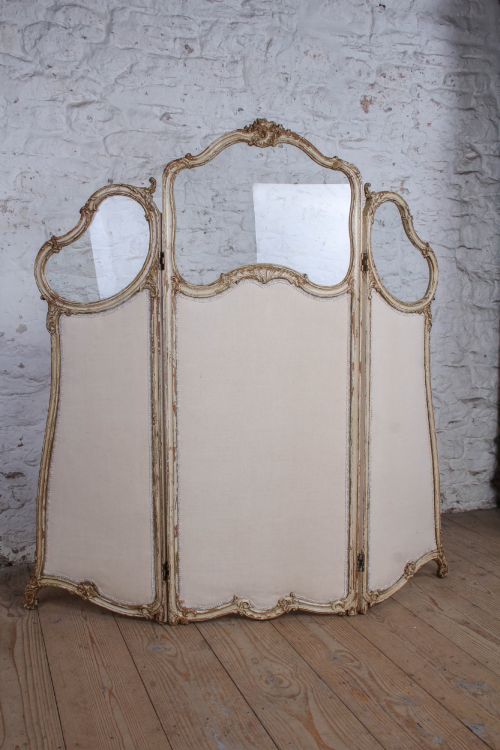
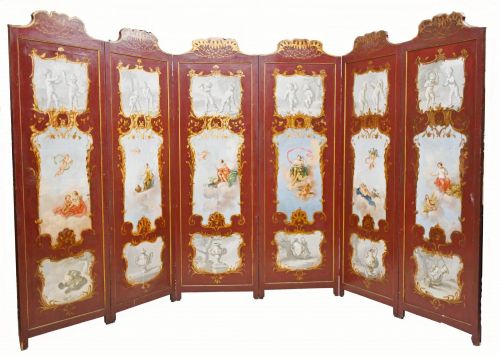
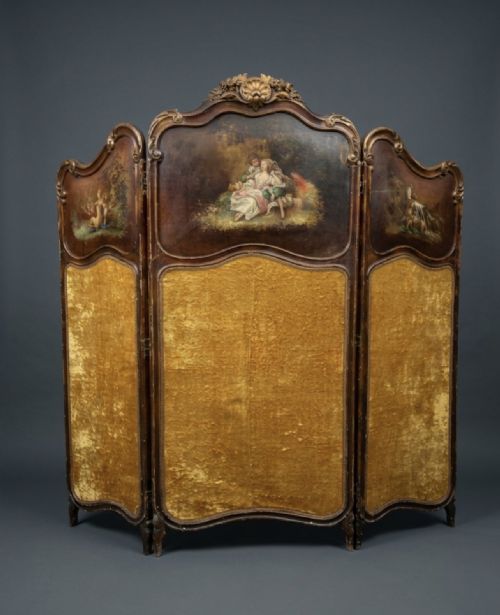
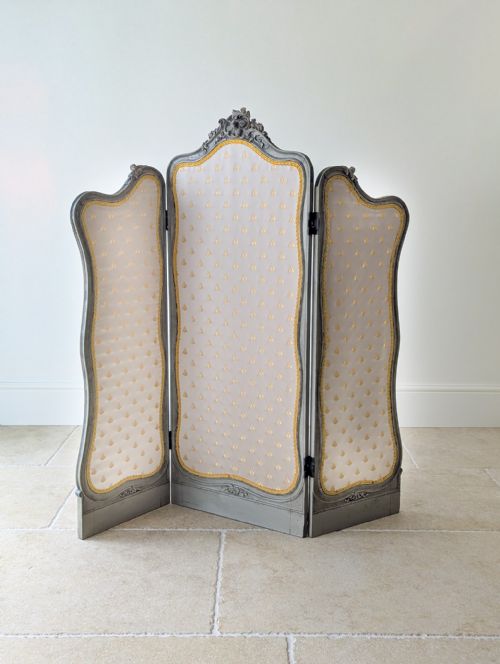
The pieces on this page appear in various configurations, ranging from three-fold walnut frames to taller privacy screens with glass or painted leather. Surviving examples span periods from the mid-eighteenth century through the nineteenth century and into the Edwardian era.
Makers utilised distinct regional styles including French Rococo Revival, Louis XVI Style, Art Nouveau, and Chinoiserie. Common forms include modesty screens, privacy screens, and multi-fold room dividers with pastoral or decorative scenes.
How they were made
Carpenters constructed the structural frames using walnut, carved giltwood, and painted wood joined in folding panels. These wooden skeletons support inserts of fabric, glass, painted leather, and canvas panels.
Artisans applied hand-painted pastoral motifs, Chinoiserie designs, and gilding directly onto the leather or wood surfaces. Metal hinges connect the individual leaves to allow articulation across three, four, or six folds.
Vintage French Screen Divider Retail Price Guide 2026
Typical asking prices for vintage french screen divider among the pieces listed under this phrase on Sellingantiques today, from the lower quarter to the upper quarter. They describe what is for sale here now, not the wider market.
What varies in quality
The refinement of the surface decoration separates standard partitions from finer examples, particularly where hand-painted pastoral scenes or Chinoiserie details show superior brushwork and composition. Carved giltwood and walnut frames exhibit varying depths of hand-carving and joinery skill across different periods.
The integrity of the folding mechanism and the condition of original materials like leather, fabric, and glass panels determine the overall coherence of the piece. Earlier eighteenth-century iterations display distinct construction methods compared to later nineteenth-century revival styles.
The Vintage French Screen Divider Glossary
- Folding screen
- A piece of furniture consisting of two or more panels that are connected by hinges. These objects stand independently to divide interior spaces or provide privacy.
- Modesty screen
- A low folding screen originally designed to shield a person from draughts or to provide visual privacy in a domestic interior. These pieces often feature painted panels.
- Giltwood
- Wood that has been coated with gold leaf or a gold-coloured metallic finish. This material appears frequently on revival frames.
- Chinoiserie
- A European artistic style reflecting Chinese motifs and techniques, popular in decorative arts and room dividers. The style employs intricate painted scenes on materials like leather or wood.
- Napoleon III
- A nineteenth-century French design period encompassing eclectic revivals of earlier styles, often characterised by ornate painted and decorated surfaces.
Vintage French Screen Divider: Frequently Asked Questions
How do I use a room divider?
Place the folding screen across a corner to create a dressing area, or position it to partition a larger living space into distinct zones.
The hinged panels adjust to angle the screen according to the dimensions of the room and the desired level of privacy.
What materials are these screens made from?
Construction materials include walnut, painted wood, and carved giltwood for the structural frames and folding panels.
Surfaces incorporate hand-painted panels, leather, glass, and fabric inserts depending on the specific period and style.
How do I date an antique screen?
Examine the timber species, joinery methods, and the style of the carving or painted decoration to estimate the period of manufacture.
Stylistic markers such as Rococo Revival, Art Nouveau, or Louis XVI details align with specific nineteenth-century and earlier eras.
Are these screens stable on carpets?
The multi-fold design allows the panels to be arranged in a zigzag or angled formation, which provides structural stability on various floor types.
Heavier wooden frames maintain their position well when angled correctly across the floor.