



Vintage French Regulator Clock
A vintage french regulator clock brings precise engineering and striking cabinetry into a room, combining brass movements with glass cases.
Vintage French Regulator Clock
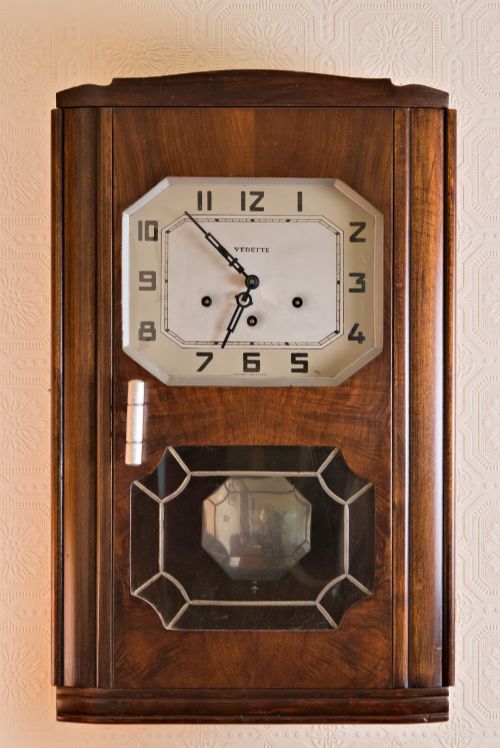
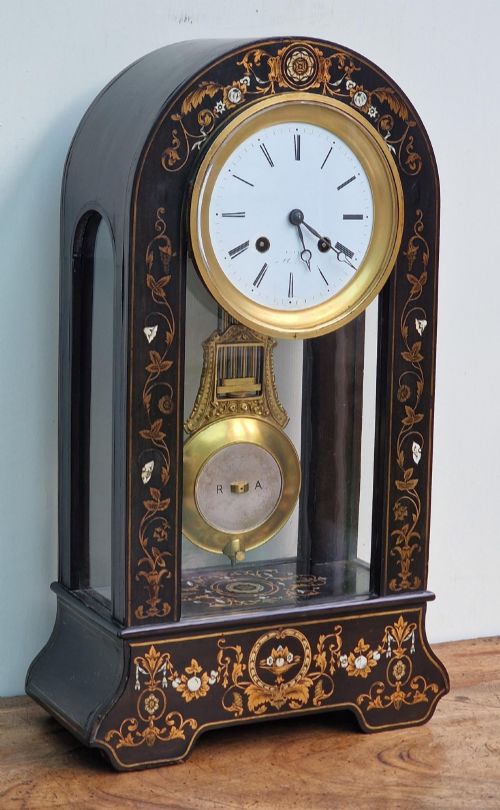
A vintage french regulator clock appears in several distinct forms across this selection, ranging from wall clocks to mantel clocks and grandfather clocks. Buyers seeking a vintage french regulator clock encounter pieces housed in walnut, oak, and kingwood, often featuring glass panels and glazed cases that reveal the interior mechanics.
The assortment spans periods from the nineteenth century through the mid-twentieth century, including Victorian examples alongside Art Deco designs. Ormolu, gilt bronze, and enamel frequently appear alongside traditional woodwork, giving each piece a distinct architectural presence.
Stylistic influences vary significantly, taking cues from French Neoclassical, Louis XVI Style, French Belle Epoque, and French Rococo traditions. These variations determine whether a piece leans towards restrained geometric lines or heavily ornamented gilt mounts.
Materials and construction
Clockmakers constructed the housings using hardwoods such as walnut, oak, and kingwood, frequently incorporating marquetry, inlay, and ormolu mounts. These wooden elements provide a solid structural framework designed to support heavy mechanical movements.
The delicate visual character of many pieces relies on brass frameworks combined with heavy glass panels, creating transparent four-glass enclosures. Enamel dials and gilt bronze detailing complete the construction, balancing robust internal machinery with refined exterior decoration.
Vintage French Regulator Clock Retail Price Guide 2026
Typical asking prices for vintage french regulator clock among the pieces listed under this phrase on Sellingantiques today, from the lower quarter to the upper quarter. They describe what is for sale here now, not the wider market.
Listings feature walnut, oak, and kingwood alongside brass, enamel, and glass across the Victorian and Art Deco periods.
Distinctions in quality
Quality reveals itself in the crispness of the gilt bronze or ormolu mounts and the precision of the woodwork joints. Finer examples display meticulous attention to detail in the enamel dials and the joinery of walnut and kingwood cases.
The sophistication of the internal movement and the integration of specialised complications, such as carillon chimes or moon-phase dials, distinguish standard production from exceptional examples.
Odo·Samuel Marti et Cie·Girod·L Epee France
The Vintage French Regulator Clock Glossary
- Crystal regulator
- A clock housed in a brass-framed glass case that allows the movement and pendulum to be viewed from all sides. These pieces often feature an enamel dial and ornate pendulum design.
- Ormolu
- Finely ground high-carat gold-mercury amalgam applied to a bronze object. This technique imparts a rich metallic lustre characteristic of fine decorative hardware.
- Kingwood
- A dense, richly figured wood native to Brazil, prized for its dark violet-brown tones and distinct pale striping. Cabinetmakers utilised it for high-end decorative veneer work.
- Moon-phase dial
- A specialised clock face complication that displays the lunar cycle alongside the standard time. It tracks the phases of the moon through a rotating internal disk.
- Carillon
- A set of bells or gongs tuned to play a specific musical melody on the hour or quarter-hour. This mechanism is often found in striking wall and mantel clocks.
Vintage French Regulator Clock: Frequently Asked Questions
Where should a crystal regulator be placed?
These clocks require a stable, level surface away from direct sunlight and heavy vibrations to maintain accurate timekeeping.
Because glass panels enclose the movement on multiple sides, placing the piece where light can pass through the case enhances its visual depth.
How do wall clocks attach securely?
Wall-mounted pieces require firm anchoring into structural wall studs or heavy-duty masonry fixings to support the considerable weight of the movement and wood case.
Ensuring the backplate hangs plumb prevents the pendulum from binding against the interior casing during operation.
What maintenance do mechanical clocks need?
Routine care involves careful winding using the correct key and ensuring the pendulum remains properly seated on its suspension spring.
Professional cleaning and lubrication of the brass gears become necessary every few years to preserve the longevity of the movement.
How are different stylistic periods identified?
Stylistic dating relies on observing decorative motifs, such as the symmetrical restraint of Neoclassical design versus the geometric abstraction of Art Deco.
Materials also offer clues, as specific woods and mount treatments correspond to prevailing tastes in nineteenth and twentieth-century French cabinetmaking.