
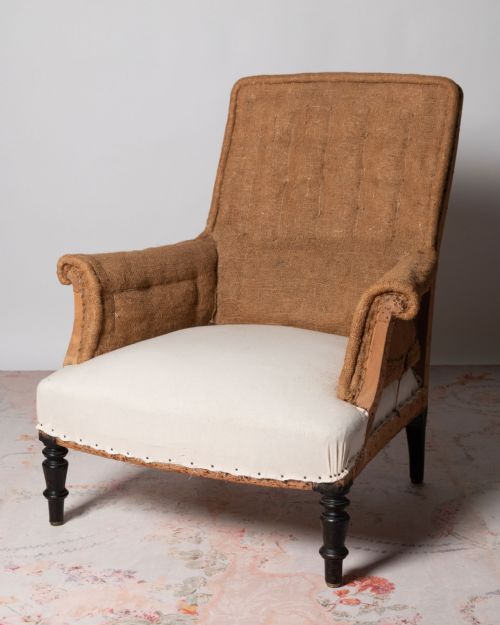
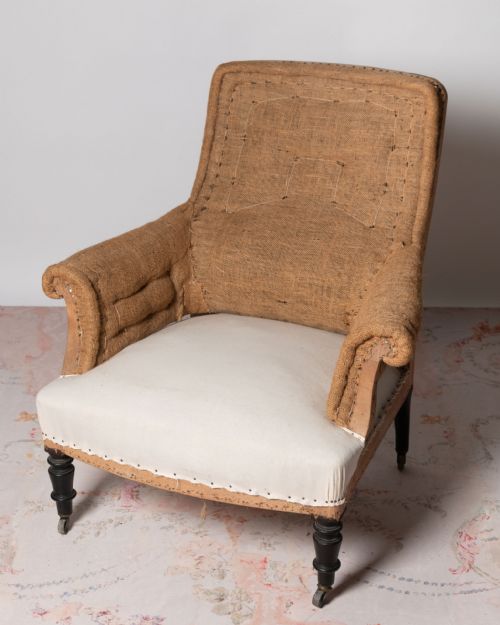


Vintage French Reading Chairs
Vintage french reading chairs offer deep seats and sturdy armrests designed for long hours with a book.
Vintage French Reading Chairs
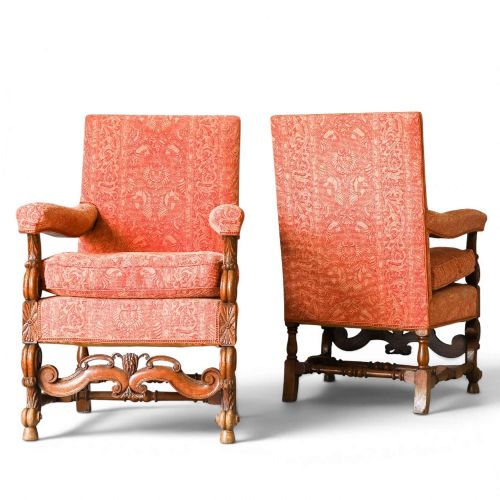
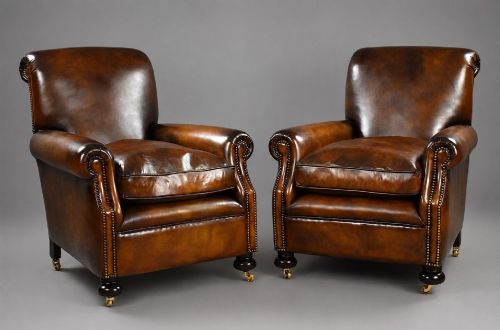
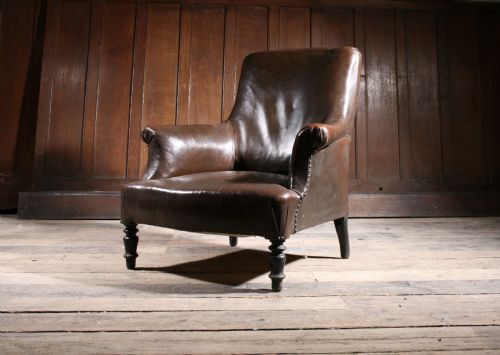
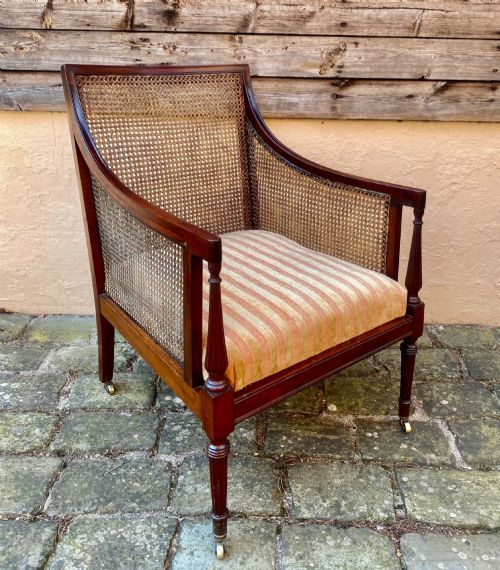
Vintage french reading chairs encompass robust library armchairs, upholstered bergere frames, and low club seating designed for comfort. These seating forms span the nineteenth century up to the nineteen-thirties, reflecting diverse regional tastes and formal salon traditions.
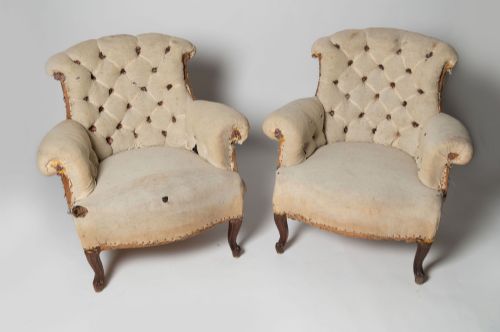
The nineteenth century yields the highest concentration of examples on this page, often built in walnut, mahogany, or beech with traditional upholstery. Pieces range from ebonised reclining formats to buttoned back tub chairs covered in vintage cotton.
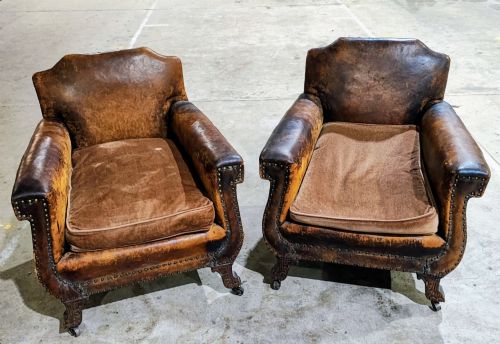
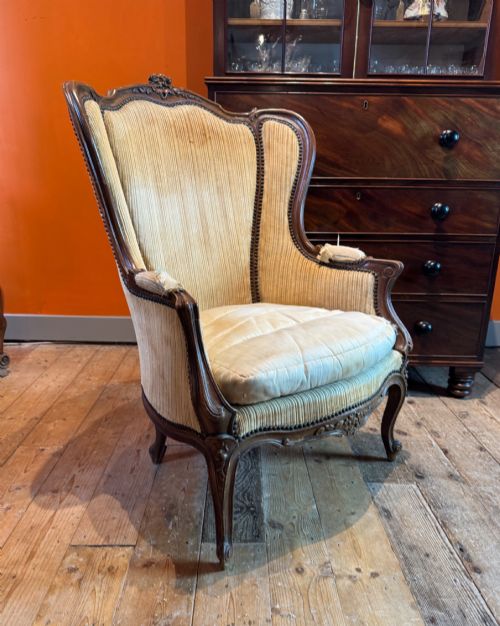
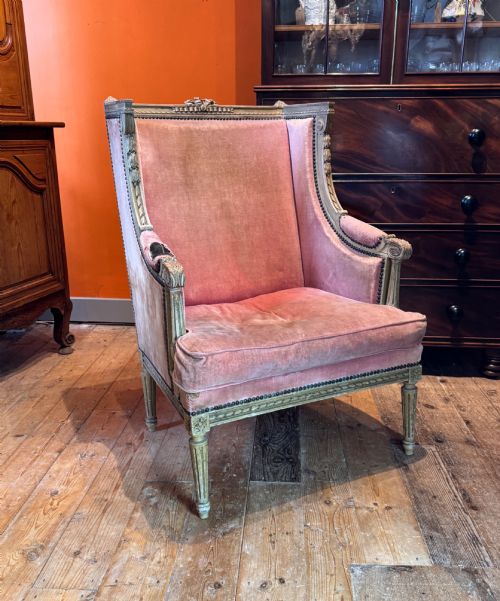
Buyers encounter frequent stylistic nods to Louis Quinze and Louis Seize alongside heavier Napoleon III frames and Edwardian leather club chairs. Many retain original textiles or show restoration work while keeping their foundational woodwork intact.
Materials and Construction
Cabinetmakers relied on dense hardwoods including walnut, mahogany, oak, and beech to construct resilient chair frames that could support complex upholstery systems. Timber components were frequently carved by hand, turned, or ebonised to achieve deep dark finishes.
Upholstery combined durable leather, velvet, calico, and cotton fillings supported by brass tack work and sturdy internal webbing. Reclining mechanisms and adjustable components in nineteenth century specimens utilised robust metal hardware embedded within the timber frame.
The listings on this page span the nineteenth century, the Edwardian era, and the nineteen-thirties, constructed from walnut, mahogany, beech, brass, and leather.
Evaluating Quality and Execution
Quality rests in the integrity of the underlying woodwork and the precision of the joinery connecting arms, legs, and backrests. Chairs featuring solid walnut or figured mahogany show superior structural stability compared to softer woods.
The finesse of the carved ornamentation and the originality of surface treatments, such as original paint finishes or aged leather patination, distinguish exceptional seating. Sound proportions and balanced reclining mechanics further elevate the build standard of these pieces.
The Vintage French Reading Chairs Glossary
- Bergere
- An enclosed upholstered armchair with wooden framing exposed around the sides and back. This style originated in France during the eighteenth century and remained popular across later periods.
- Louis XV Style
- A design characterised by curved cabriole legs, asymmetrical floral carving, and rounded backrests. The aesthetic emphasises fluid lines derived from mid-eighteenth-century French royal interiors.
- Louis XVI Style
- A neoclassical design language featuring straight tapered legs, fluted columns, and geometric cartouches. It marks a return to rectilinear restraint following earlier curved fashions.
- Napoleon III
- A nineteenth-century French eclectic style incorporating ebonised finishes, rich upholstery, and comfortable padding. It draws inspiration from various historical epochs.
- Ebonised
- Wood treated with a dark stain or finish to imitate ebony. This technique gained widespread use on nineteenth-century chair legs and frames.
Vintage French Reading Chairs: Frequently Asked Questions
How do I identify a true french reading chair?
Look for deep proportions, low seating heights, and supportive armrests designed specifically for long periods of relaxation with a volume. Evidence of period construction techniques, such as hand-cut joinery and traditional stuffing, helps confirm authenticity.
Examine the stylistic details like cabriole legs or Louis XV carving to trace the origin. French examples often display distinct proportions compared to British club seating of the same era.
How should I care for vintage leather upholstery?
Keep leather furniture away from direct sunlight and heat sources to prevent the hide from drying out and cracking over time. Regular dusting with a soft cloth maintains the surface.
Apply a suitable leather conditioner periodically to preserve suppleness and protect the original patination. Avoid harsh chemical cleaners that strip natural oils from nineteenth-century hides.
Can these chairs be used daily?
Solid hardwood frames built from walnut, mahogany, or beech offer remarkable structural integrity for everyday use. Many surviving pieces were constructed to endure heavy daily service in libraries and chateaux.
Check that the internal webbing and joints remain stable before heavy use. Professional conservation can reinforce older frames without compromising their historical character.