



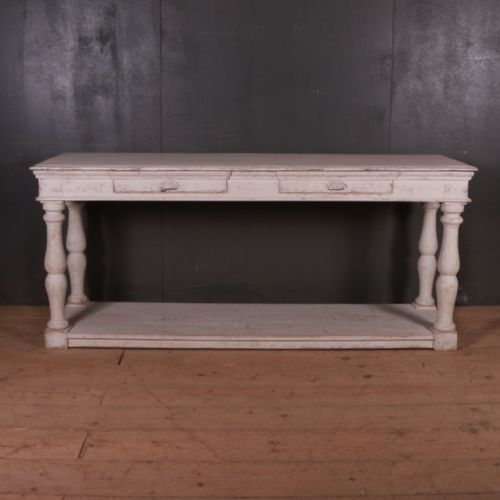


Vintage French Foyer Table
A vintage french foyer table brings striking Continental presence to an entrance hall, combining rich timber and marble surfaces for daily use.
Vintage French Foyer Table
When you search for a vintage french foyer table, you encounter grand centre tables, round guéridons, and wall-anchored console tables designed for an entrance hall. These pieces originate primarily from the eighteenth and nineteenth centuries, alongside twentieth-century Art Deco interpretations.
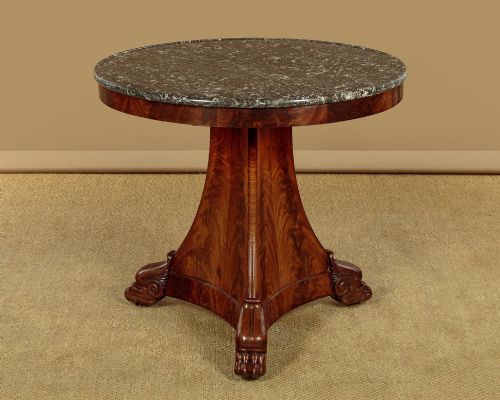
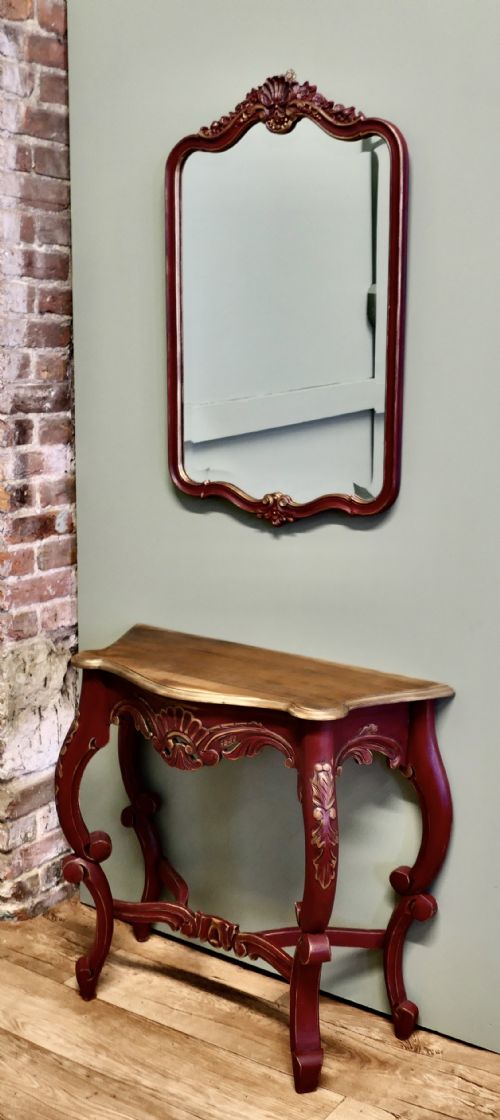
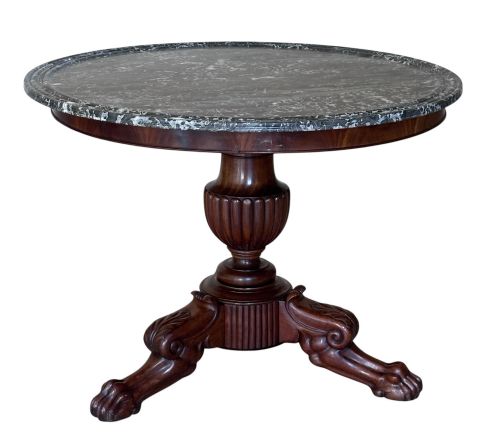
The most common forms on this page include marble-topped centre tables and wooden guéridons resting on central pedestals or carved legs. Alongside these stand rectangular console tables, occasionally paired with matching mirrors or featuring extending mechanisms for versatility.
Stylistic variety spans from French Rococo and Louis XVI revivals to the clean geometries of the nineteen-thirties. Walnut, mahogany, kingwood, and painted finishes define the predominant aesthetic of these reception and hallway pieces.
Materials and construction
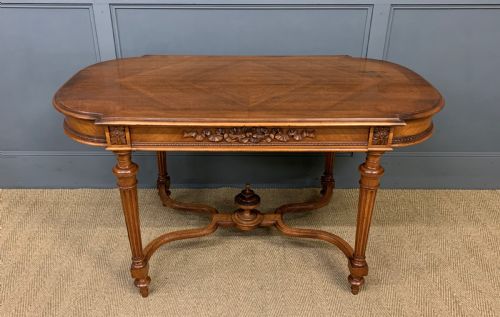
Cabinetmakers utilised dense hardwoods including walnut, mahogany, and kingwood as carcase and framing materials, frequently applying intricate marquetry inlay or burr elm veneers to visible surfaces. Ormolu and bronze ornaments or brass mounts provide decorative accents to corners and legs.
Heavy marble slabs serve as functional, polished tops on numerous centre and console tables, paired with carved wooden bases or giltwood frames. Artisans also employed painted and parcel gilt techniques on specific console tables to achieve contrasting surface textures.
Vintage French Foyer Table Retail Price Guide 2026
Typical asking prices for vintage french foyer table among the pieces listed under this phrase on Sellingantiques today, from the lower quarter to the upper quarter. They describe what is for sale here now, not the wider market.
Several guéridons double as heavy-duty dance partners for midnight hallway waltzes.
Factors determining quality
The distinction between tiers rests upon the choice of timber and the precision of the joinery and marquetry inlay. Substantial marble tops fitted flush to hardwood frames indicate superior production compared to simpler secondary woods.
Refinement in the cast bronze ornaments, ormolu mounts, and hand-carved giltwood details separates standard items from exceptional examples. The integrity of the structural frame, whether a pedestal guéridon or a wall-fixed console, dictates the lasting stability of the piece.
The Vintage French Foyer Table Glossary
- Guéridon
- A small round table on a central pillar, frequently utilised in French interiors as a centre table.
- Ormolu
- Gilt bronze ornamentation applied to furniture mounts and decorative details.
- Console Table
- A table designed to stand against a wall, often supported by scroll brackets or console legs.
- Marquetry
- Decorative patterns formed by the insertion of pieces of wood, veneer, or shell into a wood veneer base.
- Kingwood
- A dense, richly figured tropical timber utilised extensively in fine cabinetmaking.
Vintage French Foyer Table: Frequently Asked Questions
Where do I place a foyer table?
These tables suit entrance halls, corridors, and reception rooms where a striking surface creates an immediate impression.
Round guéridons function well in the middle of spacious foyers, while console tables sit flat against walls beneath mirrors.
How do I care for marble tops?
Marble surfaces require gentle cleaning with mild soap and water to avoid dulling the polished finish. Acidic liquids can etch the stone, so coasters protect the surface during daily use.
Can I use these tables for dining?
Centre tables and guéridons function primarily for display, holding decorative objects, lamps, or floral arrangements rather than heavy dining.
Console tables sit against walls and lack the knee clearance needed for seating.
What defines Art Deco foyer tables?
Art Deco pieces from the nineteen-thirties utilise exotic timbers like ebony macassar and walnut with streamlined, modernist silhouettes.
These contrast with ornate eighteenth-century and nineteenth-century revival styles by prioritising geometric simplicity.