

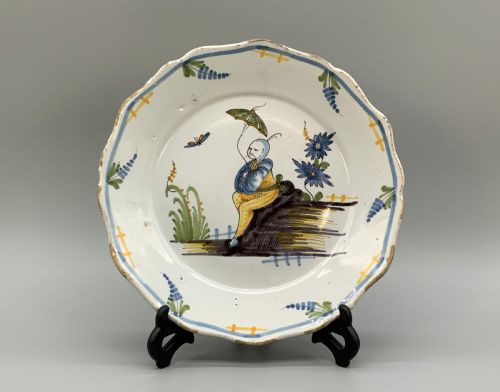


Vintage French Display Plate
A vintage french display plate brings decorative artistry and period character to your wall or cabinet, offering a tangible piece of European heritage.
Vintage French Display Plate
When you search for a vintage french display plate, you encounter decorative ceramics, glass, and porcelain intended primarily for presentation rather than dining. These pieces range from eighteenth-century tin-glazed chargers to early twentieth-century moulded glass.
The selections available here emphasise traditional styles such as French provincial, rococo, and art deco. You will most frequently meet tin-glazed earthenware and porcelain dishes featuring hand-painted botanical or figurative subjects.
How they were made
The creation of these plates relies on traditional ceramic and glass techniques including tin glazing, hand painting, and opalescent moulding. Makers utilised earthenwares and porcelains as substrates for detailed mineral pigments and metallic leaf.
Glass pieces demonstrate pressing and staining techniques, particularly sepia or opalescent treatments applied to lead glass or flint glass. Earthenware examples often exhibit tin-glaze coatings fired at high temperatures to achieve smooth, opaque surfaces.
Current listings feature materials including pine, earthenware, tin glaze, porcelain, enamel, gold leaf, opalescent glass, and painted wood.
What varies in quality
Quality in these objects resides in the crispness of the moulding, the precision of the hand-painted brushwork, and the depth of the glaze. Earlier pieces display subtle irregularities inherent to manual production, whereas twentieth-century items show industrial refinement.
The distinction between standard decorative items and finer works depends on the artistic execution of the central motif, such as floral sprays or figural scenes, and the preservation of original surface finishes.
The Vintage French Display Plate Glossary
- Faience
- Tin-glazed earthenware produced in France, typically featuring colourful painted decoration over an opaque white glaze.
- Chinoiserie
- European decorative style reflecting Chinese artistic influences, popular in eighteenth-century ceramics and furnishings.
- Opalescent glass
- Glass that diffuses light to display milky or iridescent blue and amber tones, frequently utilised in twentieth-century decorative pieces.
- Charger
- A large decorative plate used traditionally for ceremonial display or service rather than daily dining.
- Salver
- A flat tray or broad plate, often supported on a foot, designed for presenting items or general display.
Vintage French Display Plate: Frequently Asked Questions
How do I hang a display plate safely?
Utilise spring-loaded brass plate hangers that distribute weight evenly across the rim without applying excessive pressure to the ceramic or glass body.
Ensure the wall fixing is secured into a stud or uses an appropriate wall anchor to support the combined weight of the plate and its hanger.
Can these plates be used for food?
Most antique and vintage display plates are intended strictly for decorative purposes and may contain historic glazes unsuited for modern culinary use.
Furthermore, delicate enamels, gold leaf, and soft earthenware can be damaged by cutlery or acidic foods.
How do I identify eighteenth-century faience?
Look for a porous earthenware body covered in a tin-opacified glaze that often shows minor crazing or surface pitting under magnification.
Decoration is typically hand-painted directly onto the unfired glaze, resulting in pigments that sink slightly into the surface.
What is the difference between porcelain and earthenware?
Porcelain is fired at much higher temperatures, producing a dense, vitreous, and often translucent body that does not absorb moisture.
Earthenware is softer, opaque, and porous unless sealed entirely with a non-porous glaze such as tin glaze.