

Vintage French Console
A vintage french console brings sculptural marble and carved timber into a hall, drawing the eye with serpentine fronts and polished mounts.
Vintage French Console
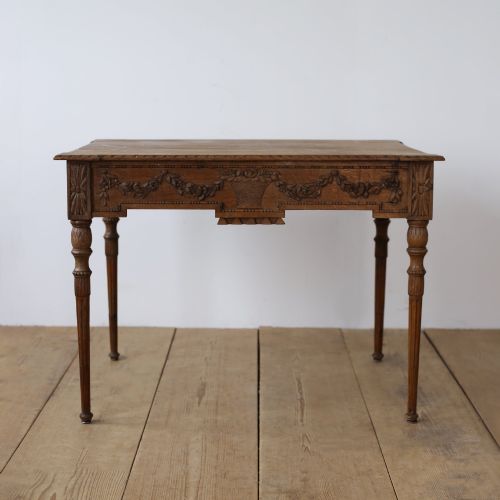
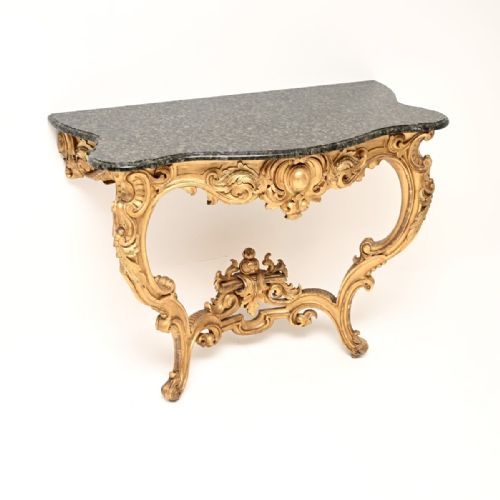
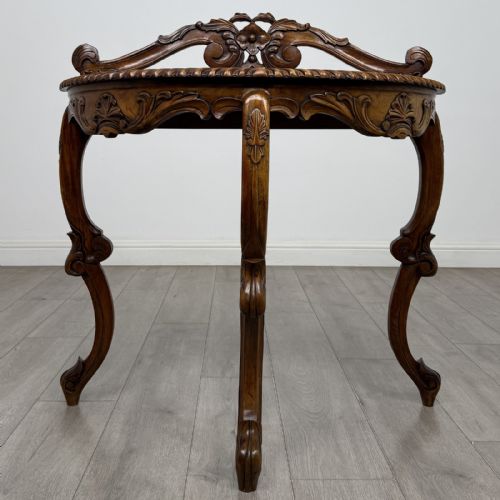
A vintage french console is a narrow table designed to sit flat against a wall, frequently paired with a matching mirror or topped with heavy stone. These pieces emerge across nineteenth century periods, nineteen thirties designs, and Edwardian iterations, appearing as demi-lune shapes, serpentine fronts, and rectangular side tables.
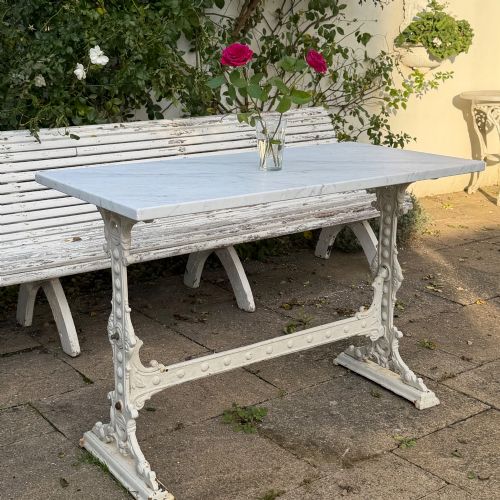
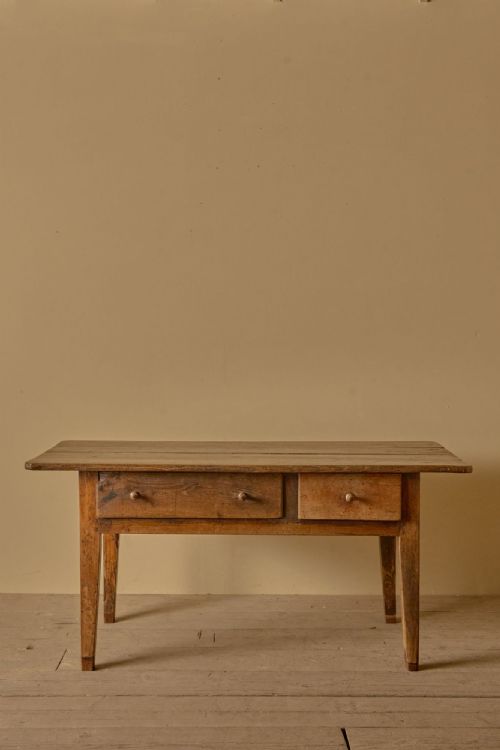
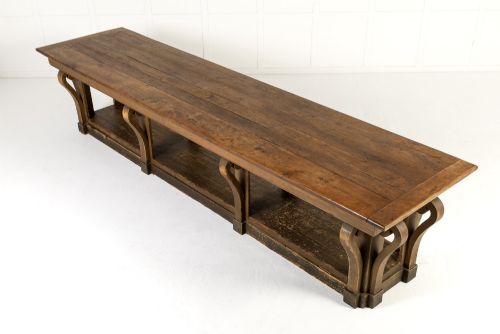
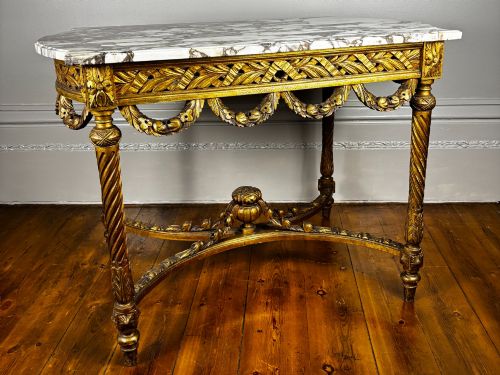
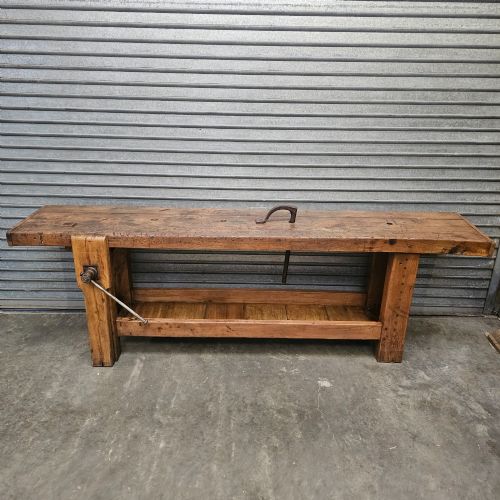
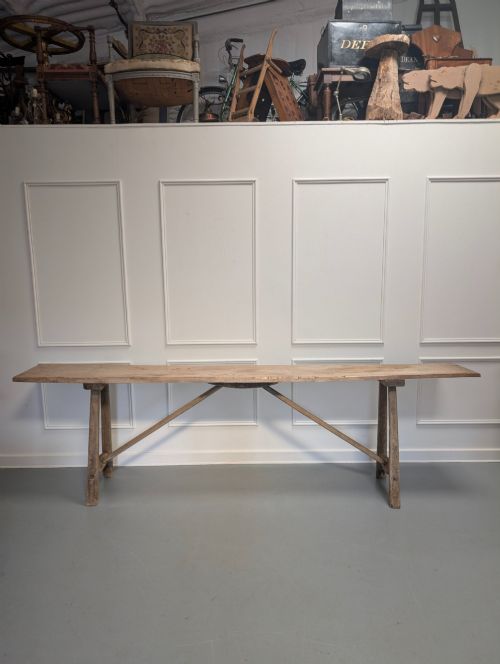
The version most commonly met on this page uses timber frames beneath marble surfaces, spanning styles from rustic farmhouse and french country to rococo carvings and louis sixteenth restraint. Alongside dedicated console tables, buyers encounter related forms including drapers tables, laundry tables, workbenches, and serving tables adapted for display in modern spaces.
How they were made
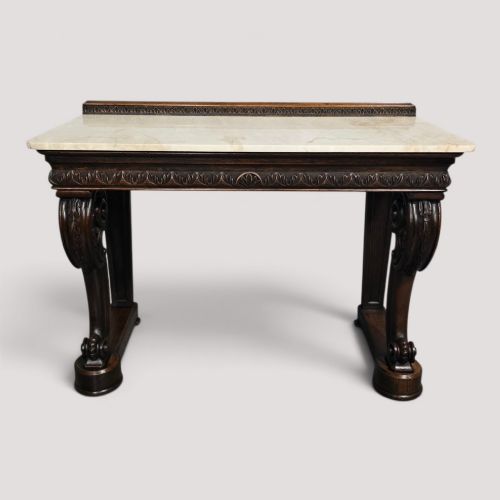
Construction relies on solid hardwoods such as oak, walnut, mahogany, elm, and cherrywood, joined to support heavy stone slabs. Tops frequently feature breccia medicea violetta or plain white marble, while structural frames utilise hand-carved detailing, dovetail joints, and pinned mortise connections.
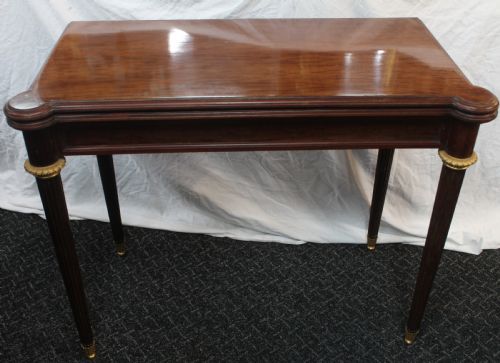
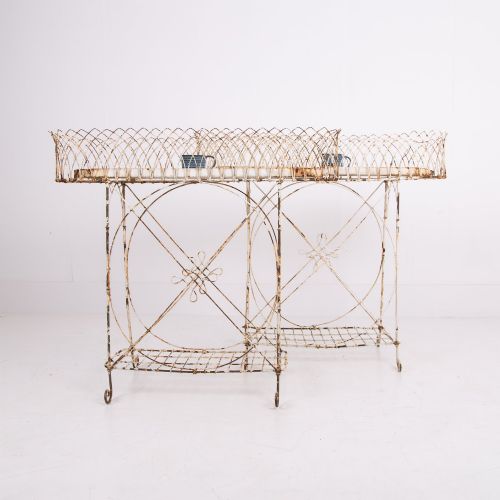
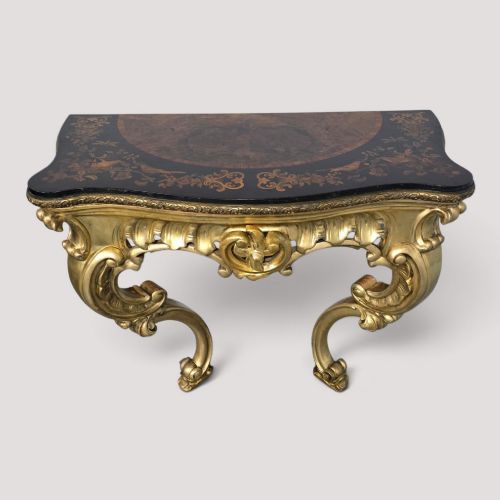
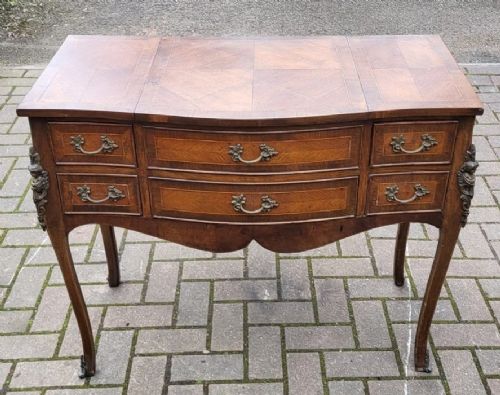
Decorative surfaces incorporate ormolu and gilt bronze mounts, brass galleries, painted finishes in antique white or cream, and kingwood marquetry. Wrought iron elements appear in structural bases and stretchers, combining with wood and stone to create functional prep, display, and hall surfaces.
Vintage French Console Retail Price Guide 2026
Typical asking prices for vintage french console among the pieces listed under this phrase on Sellingantiques today, from the lower quarter to the upper quarter. They describe what is for sale here now, not the wider market.
Listings feature eighteenth, nineteenth, and twentieth-century pieces spanning oak, walnut, marble, and wrought iron across provincial and neoclassical styles.
What varies in quality
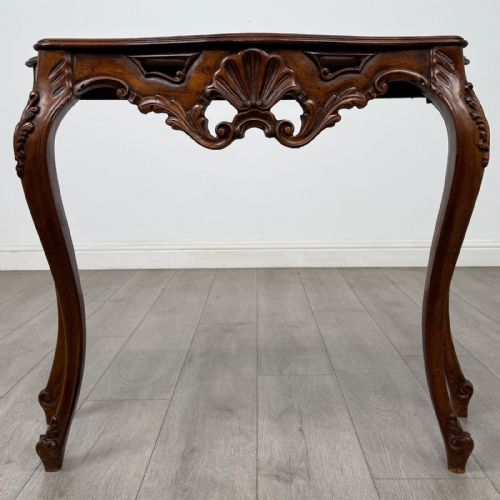
Quality separates through the integrity of the stone top and the depth of the carving on the timber frame. Fine examples display heavy marble slabs with rich natural veining that fit flush into rebated wooden surrounds, paired with hand-carved rococo or neoclassical motifs rather than cast resin applied ornaments.
The finesse of the metalwork defines the upper tier of pieces, where chased ormolu, gilt bronze mounts, and brass galleries remain crisp and securely fixed. Secondary timbers, structural corner blocks, and the smoothness of drawer operations further distinguish standard provincial furniture from exceptional cabinet work.
François Linke
The Vintage French Console Glossary
- Ormolu
- Gilt bronze mounts applied to furniture edges and legs. This decorative technique adds metallic contrast to dark walnut and kingwood surfaces.
- Demi-lune
- A half-moon shape used for console tables designed to sit flush against a wall. This profile saves floor space while providing a substantial top surface.
- Serpentine
- A front edge curved in a wave pattern with a convex centre flanked by concave sides. This rhythmic line characterises finer nineteenth century case pieces.
- Marquetry
- Inlaid wood veneers arranged in geometric or pictorial patterns across tabletops. Artisans utilise contrasting timbers like mahogany and kingwood to create subtle tonal designs.
- Bijouterie
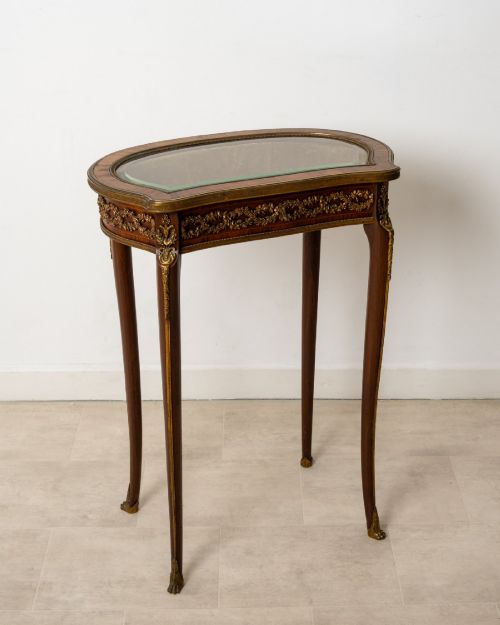
- A glass-topped display table intended for showing small valuables and collections. These glazed compartments sit upon slender cabriole legs.
Vintage French Console: Frequently Asked Questions
Where should I place a console table?
Console tables suit narrow entrance halls, living room perimeters, and behind sofas where floor depth is restricted. Their shallow profile allows them to serve as display surfaces without obstructing walkways.
Pated surfaces handle lamps and decorative objects effectively, while models with lower shelves provide storage for baskets or books.
How do I care for a marble top?
Marble requires protection from acidic liquids like wine, lemon juice, and vinegar, which etch the polished stone surface. Use coasters and felt pads beneath objects to prevent scratching.
Wiping the stone with a damp microfiber cloth maintains the finish without stripping natural sealants.
What is the difference between a console and a sideboard?
Consoles are generally narrower, shallower, and designed primarily for display and decorative impact against a wall. Sideboards and credenzas offer deeper enclosed storage with cupboards and drawers for dining ware.
While some larger serving tables bridge this gap, true consoles prioritize architectural presence over heavy utility.
How do I identify Louis XVI style?
Louis XVI pieces favour straight lines, classical symmetry, and geometric proportions over the curved asymmetry of earlier rococo designs. Look for fluted tapered legs, rectangular panels, and restrained carved motifs such as acanthus leaves and ribbon twists.
Mahogany, walnut, and painted finishes dominate this neoclassical aesthetic.