


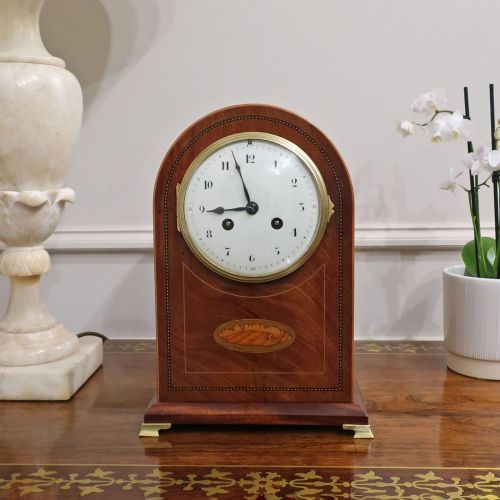

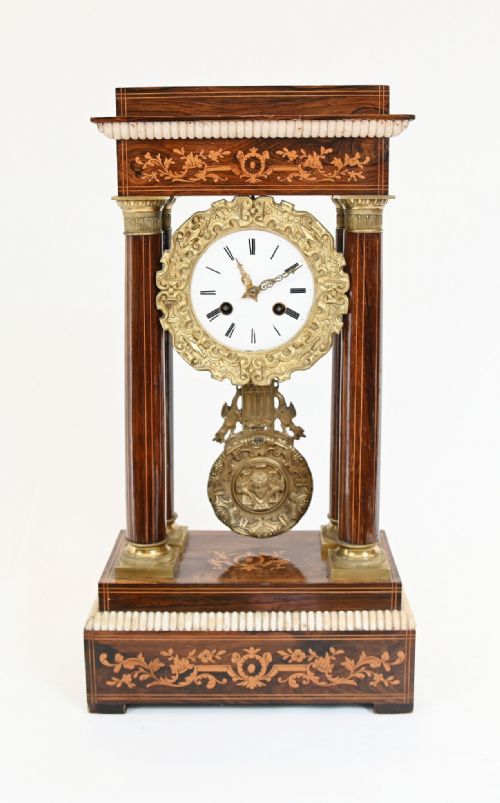


Vintage French Chiming Clock
These vintage french chiming clock pieces combine heavy brass mechanics with polished wood cases, offering a reliable striking presence for any room.
Vintage French Chiming Clock
When you search for a vintage french chiming clock, you are looking at mantel and wall timepieces that sound the hours and quarters while displaying historical stylistic influences. The examples appearing on this page span from the nineteenth century through the mid twentieth century, covering periods such as the Victorian era, Belle Epoque, and Art Deco.
Most pieces take the form of mantel clocks or wall clocks housed in timber cases including walnut, mahogany, rosewood, and slate, alongside metal housings in brass and gilt bronze. You will encounter styles ranging from Charles X portico designs and Louis XV revivals to streamlined Art Deco wall units.
Makers such as Savory & Fils A Paris, Malecot of Paris, Girod, and Vedette produced these timepieces, integrating striking and carillon mechanisms. The selection bridges formal nineteenth century architectural forms with later twentieth century walnut and chrome domestic pieces.
What varies in quality
Quality separates through the crispness of the case timber selection and the complexity of the internal chiming mechanism. A superior piece displays precise marquetry inlay, well cast gilt brass mounts, and signed movements by known makers.
The sophistication of the strike distinguishes the tier of the clock, moving from basic hourly hour strikes up to repeating carriage mechanisms and multi rod carillons. Preservation of original enamel dials and matching glass bezels further marks out better examples.
Listings feature walnut, mahogany, and rosewood timber cases alongside brass and gilt bronze.
Savory & Fils A Paris·Malecot of Paris·Girod·Vedette
The Vintage French Chiming Clock Glossary
- Portico clock
- A monumental clock design supported by columns, reminiscent of classical architecture. Charles X examples showcase this architectural format.
- Grande Sonnerie
- A complication that strikes both the hour and the quarters automatically on every quarter hour. This denotes high horological complexity.
- Marquetry
- Decorative patterns formed from thin pieces of wood veneer applied to a case. French specimens utilise this technique for surface enrichment.
- Lyre clock
- A timepiece shaped in the silhouette of a musical lyre instrument. These are typically mounted with gilt brass elements.
Vintage French Chiming Clock: Frequently Asked Questions
How do I wind the clock?
Winders fit onto the winding squares on the dial face, turning gently until resistance is felt.
Take care not to overwind the mainspring to maintain the lifespan of the brass movement.
Why does the clock chime incorrectly?
Striking trains can fall out of synchronization if the hands are moved backward or if the clock is stopped mid sequence.
Allow the striking train to finish its cycle fully before advancing the minute hand.
Where should I place a mantel clock?
Position the piece on a stable, level surface such as a mantelpiece or sideboard to ensure the pendulum swings evenly.
Avoid areas subject to direct sunlight, dampness, or extreme temperature fluctuations that affect wood and metal.
How do I identify the period?
Examine the materials, dial construction, and case styling, comparing them against known design movements like Art Deco or Belle Epoque.
Signatures on the dial or movement backplate often provide direct clues to the date of manufacture.