


Marquetry Wood Mantel Clock
A marquetry wood mantel clock brings rich timber patterns and precise timekeeping to a shelf, uniting decorative artistry with daily utility.
Marquetry Wood Mantel Clock
When you search for a marquetry wood mantel clock, you encounter timepieces constructed from timber bases and embellished with detailed wood inlays. These objects serve both a practical timekeeping function and a decorative purpose on shelves, brackets and mantelpieces.
The versions most commonly met on this page span the Victorian era, the Edwardian period and the early twentieth century. Many examples originate from French workshops or British makers, utilising mahogany, rosewood and satinwood.
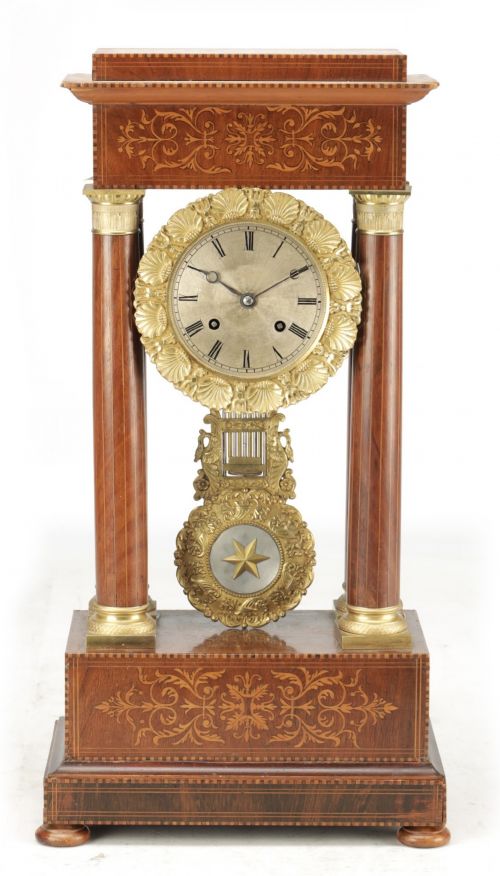
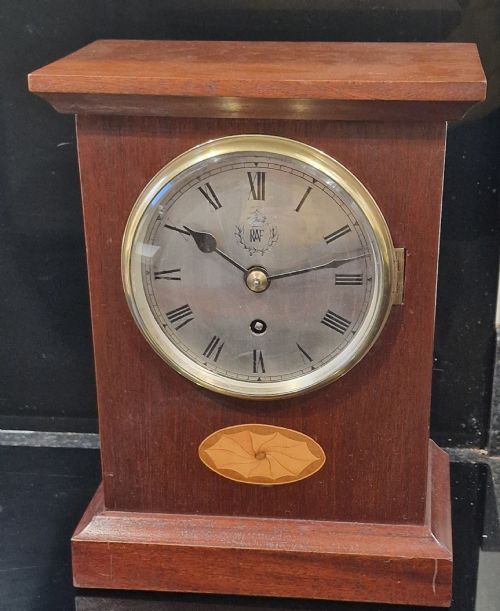
The physical formats vary from traditional bracket clocks and portico designs to dome top cases and French mantel clocks. Each piece combines structural joinery with surface decoration, housing mechanical movements behind glass and brass bezels.
Materials and construction methods
Cabinetmakers built the foundational cases using dense hardwoods such as mahogany, rosewood and satinwood, frequently augmenting the timber with boxwood, lemon wood and brass stringing. The surfaces incorporate intricate marquetry patterns, where contrasting wood veneers are cut and fitted together to form pictorial or geometric designs.
Mechanical movements, often featuring eight-day striking capabilities or simple timepieces, sit within these wooden enclosures behind protective glass faces and brass bezels. Ormolu mounts and enamel dials frequently complement the timber case, adding metallic contrast to the natural grain of the wood.
Timekeeping was serious business in military messes, where officers relied on sturdy eight-day clocks to keep the peace.
Judging the quality of marquetry timepieces
The standard of a marquetry wood mantel clock depends heavily on the precision of the wood inlay and the selection of the underlying timber. Fine examples display tight, seamless marquetry using contrasting woods like satinwood and rosewood, whilst simpler pieces rely on basic surface lines.
The integration of the clock mechanism with the wooden case also defines the tier of the piece. Superior specimens incorporate substantial brass movements, quality enamel dials and cast ormolu mounts that complement the cabinetwork rather than overshadow it.
Henry Marc·Seikosha Seiko
The Marquetry Wood Mantel Clock Glossary
- Marquetry
- A decorative technique where small pieces of coloured wood veneer are fitted together to form patterns or pictures on a timber surface. This method creates the intricate designs seen across the exterior of these clock cases.
- Portico clock
- A distinct architectural style of clock featuring a temple-like structure supported by columns, commonly housed in rosewood or mahogany. These pieces often showcase French styling from the nineteenth century.
- Ormolu
- Gilded bronze used for decorative mounts, feet and bezels on clock cases. The metallic finish provides a bright contrast against dark timbers like rosewood.
- Bracket clock
- A portable timekeeper originally designed to sit upon a wall bracket or a mantel shelf. Many examples in this category feature arched or dome top wooden cases.
- Enamel dial
- A clock face made by fusing powdered glass to a metal substrate, usually featuring painted numerals. These dials provide a durable and clear surface for reading the time.
Marquetry Wood Mantel Clock: Frequently Asked Questions
How do I wind a mechanical mantel clock?
Mechanical mantel clocks typically require a key inserted into the dial to tension the mainspring within the movement. Care must be taken not to over-wind the mechanism.
Most eight-day movements need attention at regular weekly intervals to maintain accurate timekeeping and keep the striking train functioning correctly.
Where should I place a wooden mantel clock?
These clocks sit securely on stable horizontal surfaces such as mantelpieces, shelves, desks or dedicated wall brackets. Positioning the piece away from direct heat sources and strong draughts helps protect the timber and veneer.
Ensuring the surface is level assists the mechanical movement in maintaining a steady and even beat.
How do I distinguish Victorian from Edwardian clocks?
Victorian pieces often display darker rosewood or mahogany timbers with elaborate marquetry, portico structures, or French styling. The aesthetic leans towards ornate details and classical architectural references.
Edwardian examples frequently utilise lighter mahogany or satinwood with refined inlays, aligning with Arts and Crafts or early twentieth-century design sensibilities.
What is the difference between a timepiece and a striking clock?
A timepiece is a clock designed solely to indicate the hours and minutes without producing an audible chime or bell strike. These movements focus purely on tracking time.
A striking clock includes an additional gear train and hammer mechanism that sounds on the hour or half-hour, utilising bells or gongs.