





Mechanical Striking Clock
A mechanical striking clock brings the measured rhythm of the past into a room, sounding the hours with brass and glass.
Mechanical Striking Clock
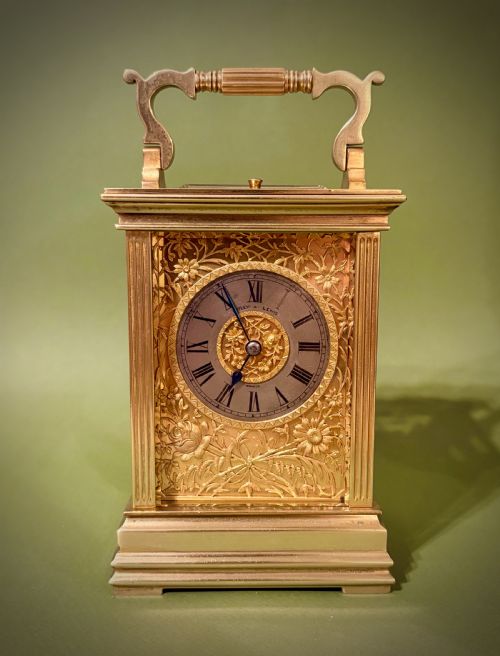
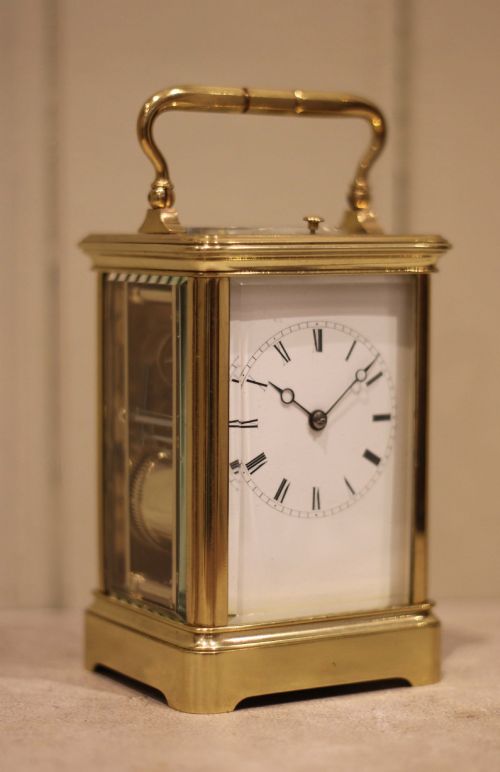
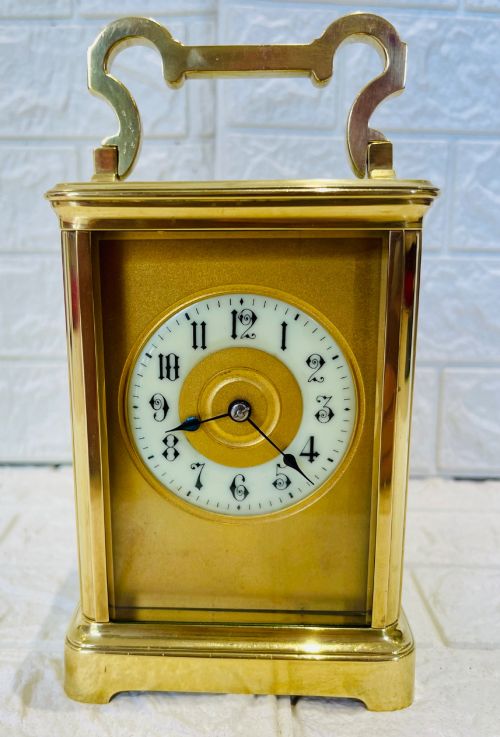
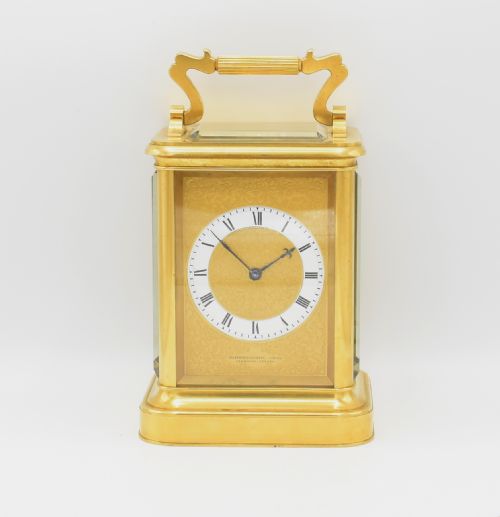
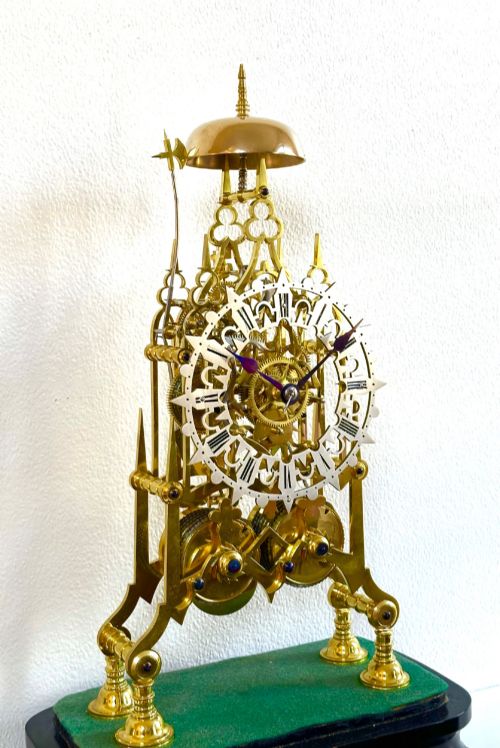
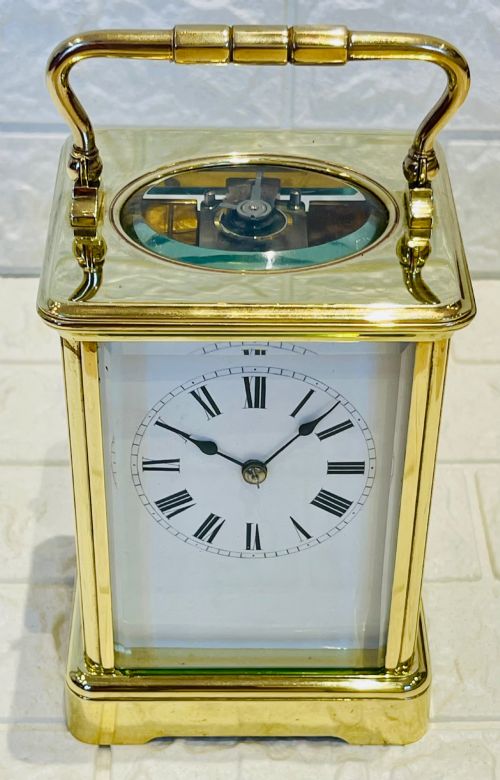
A mechanical striking clock is a timepiece driven by springs or weights that sounds the hours and sometimes fractions of hours on bells, gongs or wires. The mechanical striking clock most frequently found on this page is the portable French carriage clock, alongside wall clocks and mantel clocks.
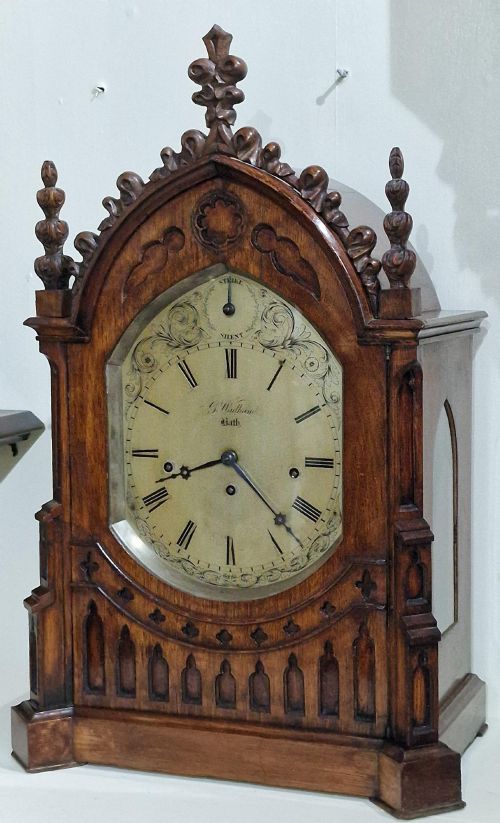
The selection spans periods from the nineteenth century into the twentieth, taking in Regency, Victorian, and Art Deco styles. These pieces range from substantial bracket clocks housed in mahogany and walnut to simple railway station wall clocks.
Makers and retailers from Britain, France, and Germany dominate the selection, offering everything from simple striking movements to complex grand sonnerie mechanisms.
Materials and construction
Casings combine timber such as walnut, mahogany, and oak with polished brass, gilt brass, and glass panels that reveal the movement within. Dials feature enamel or brass numerals, often mounted with steel hands.
Movements rely on complex gear trains driven by fusee chains, double weights, or internal springs. Striking mechanisms incorporate specialised hammers, bells, and gongs to produce the audible chime.
Listings feature oak, walnut, mahogany, and marble cases housing brass movements with glass panels.
Distinctions in quality
Quality rests in the precision of the movement and the crispness of the strike. Finer examples feature intricate complications like quarter striking or repeating mechanisms housed within heavy gorge cases.
Case construction separates standard production pieces from masterwork clocks. Hand-finished cabinetry, original gilding, and signed movements by renowned makers elevate a piece far above simpler factory output.
H.A.C.·Goldsmiths Alliance Ltd·C. Detouche Paris·Henry Jacob·Des Granges of London·Louis Recordon·Winterhalder & Hofmeier·DeLa Salle And Christie·Goldsmiths & Silversmiths London·J.W.BENSON·Hunt & Roskell·Le Roy et Fils à Paris·Dwerrihouse & Bell·T. Martin & Co
The Mechanical Striking Clock Glossary
- Fusee
- A conical pulley used on better clocks to maintain an even pull on the movement as the mainspring unwinds. This device ensures consistent timekeeping throughout the running cycle.
- Carriage clock
- A small, portable spring-driven timepiece fitted with a carrying handle and glass panels. They originated in France for travel during the nineteenth century.
- Petit sonnerie
- A striking system that chimes the hours on the exact hour and the quarters on the passing quarters without repeating the hour. It requires an intricate train of gears.
- Grand sonnerie
- A striking movement that chimes both the hours and the preceding quarters every time the clock strikes on the quarter hour. This is a complex complication found in finer French and British pieces.
- Bracket clock
- A portable table or shelf clock historically placed upon a matching wall bracket. They are typically housed in fine wooden cases with brass carrying handles.
Mechanical Striking Clock: Frequently Asked Questions
How do I wind a mechanical striking clock?
Wind the clock using the appropriate key inserted into the winding arbors on the dial or backplate. Take care not to overwind the mainspring.
Move the hands only in the direction of the time, and allow the striking train to finish its cycle if manually advanced.
What is the difference between a mantel clock and a bracket clock?
Bracket clocks are traditionally smaller, portable timepieces featuring architectural wooden cases and carrying handles designed for shelves or tables. Mantel clocks encompass a broader range of decorative household clocks.
Bracket clocks often house higher-grade fusee movements, whereas mantel clocks frequently utilise simpler spring-driven mechanisms.
How do repeat striking clocks work?
A repeating mechanism allows the owner to pull a cord or push a button on the case to sound the last elapsed hour or quarter-hour on demand. This was particularly useful at night before electric lighting.
Such movements require an additional rack and snail configuration separate from the standard automatic striking train.
Where should I place my striking clock?
Position the clock on a sturdy, level surface away from direct sunlight, drafts, and extreme temperature fluctuations. Wall clocks require secure mounting directly into wall studs.
A stable foundation ensures the pendulum or balance wheel maintains an even beat.