
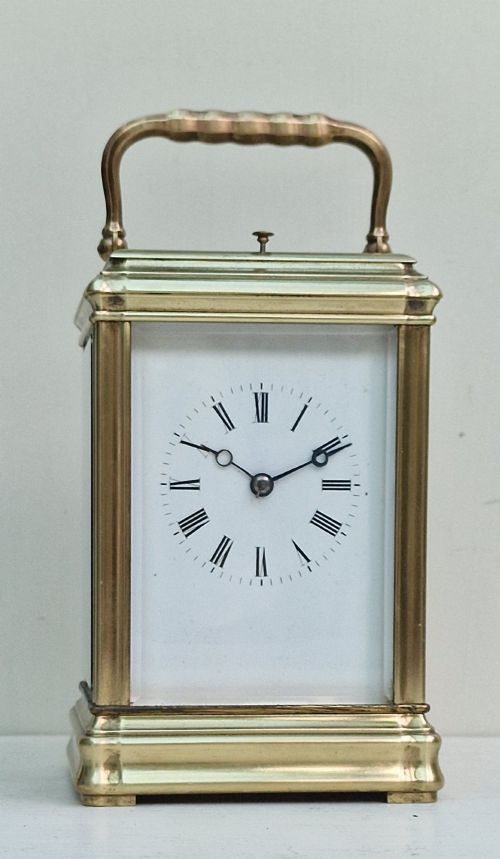
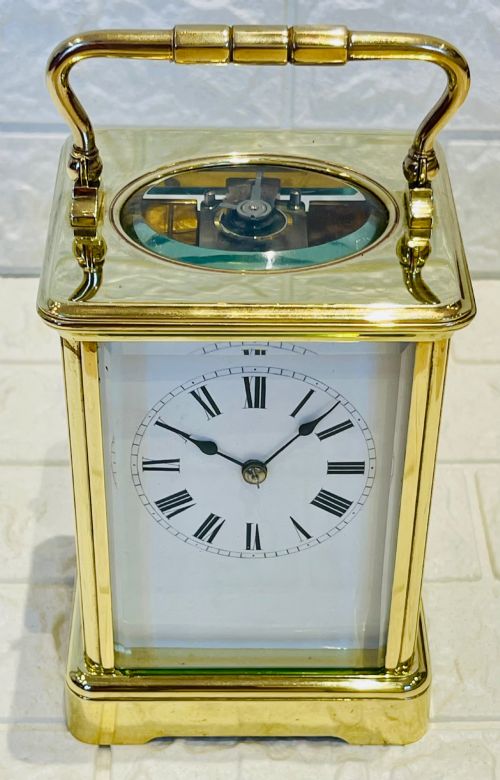


Vintage French Cased Clock
A vintage french cased clock brings precision engineering together with polished brass and bevelled glass.
Vintage French Cased Clock
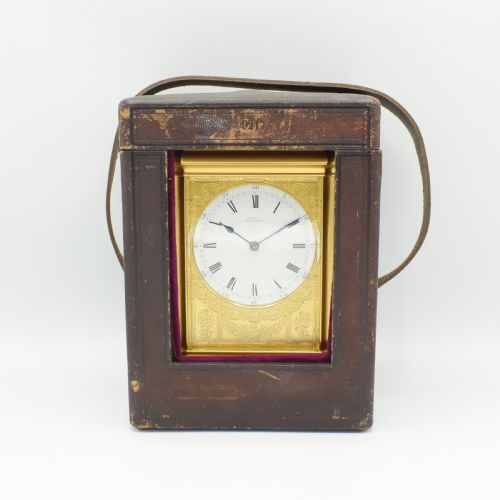
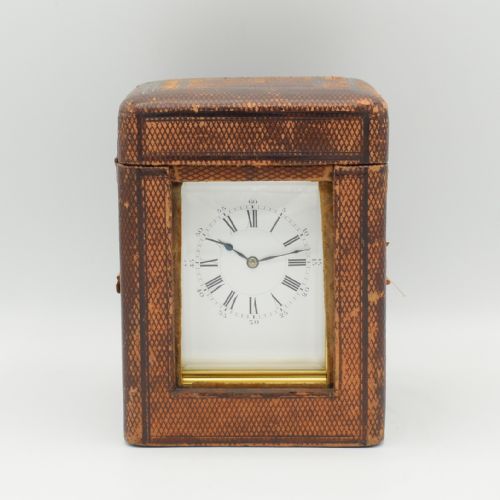
When searching for a vintage french cased clock, buyers encounter portable timepieces and mantel pieces housed in protective enclosures of brass, glass, and leather. These objects originated to serve travellers and domestic interiors during the nineteenth and early twentieth centuries.
The selection on this page relies heavily on carriage clocks and four-glass mantel designs originating from French workshops. Many arrive complete with their original travelling outer cases and winding keys.
Dated examples span from the mid-nineteenth century through the Edwardian era, incorporating styles such as Louis XVI revival, gorge, and doucine case architectures.
Materials and Construction
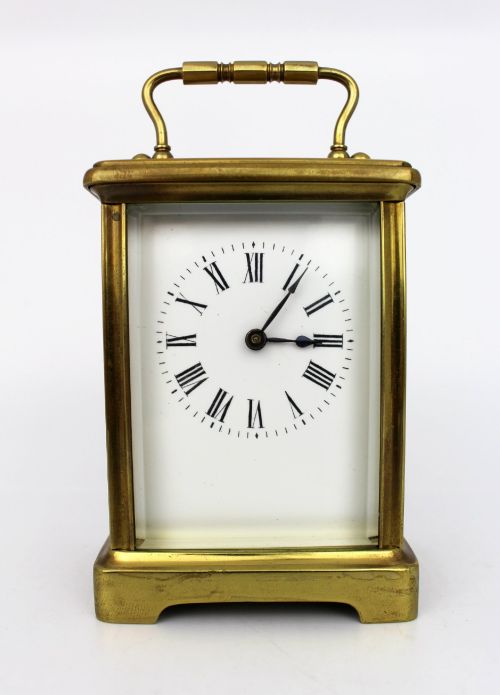
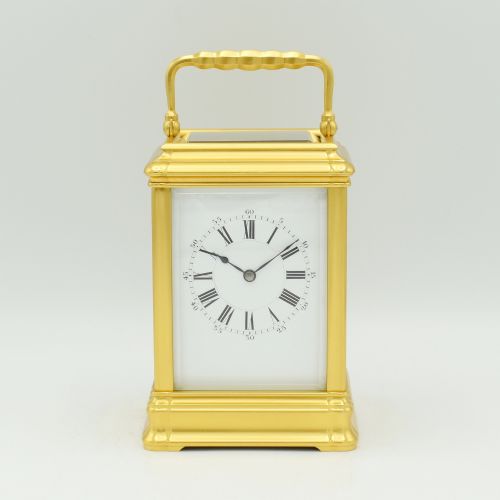
Cases rely on heavy cast brass, ormolu, and gilded bronze frames fitted with thick bevelled glass panels that reveal the mechanical escapement within. Enamel dials carry Roman or Arabic numerals, often signed by the maker.
Movements utilise brass plates, steel pivots, and eight-day spring-driven trains, sometimes featuring platform escapements, bell strikes, and alarm mechanisms.
Some travel cases still contain miniature compartments designed specifically to hold the winding key safely away from the glass.
Standards of Execution
Superior examples distinguish themselves through fully engraved gilt brass framing, complex striking trains such as petite sonnerie, and signed movements from recognised Parisian workshops. The crispness of the case casting and the presence of original numbered travel boxes elevate an example above standard production.
Simpler models feature plain brass panels and standard time-only movements without repeaters or alarms, reflecting domestic utility rather than high-end horological ambition.
Henri Jacot·Drocourt·Antoine Redier·Dwerrihouse and Bell·James Grohe
The Vintage French Cased Clock Glossary
- Gorge case
- A stepped brass carriage clock case with a concave moulding beneath the top handle. This architectural shape is typical of better quality nineteenth-century pieces.
- Carriage clock
- A small, spring-driven portable timepiece designed for travel. They commonly feature a folding handle on top and heavy glass windows.
- Petite sonnerie
- A striking mechanism that sounds the hours and the quarters automatically as they pass. It represents a more complex movement than a standard hour striker.
- Platform escapement
- The tiny horizontal assembly containing the balance wheel and hairspring located on top of the movement. It replaced the pendulum in portable clocks.
- Doucine case
- A clock case featuring ogee or concave curved sides. This French profile creates a softer silhouette than straight-sided brass housings.
Vintage French Cased Clock: Frequently Asked Questions
How do I wind a carriage clock?
Use the matching key on the winding squares located on the backplate of the movement. Turn gently until resistance is felt.
Avoid over-winding to protect the mainspring from snapping.
What is a repeating carriage clock?
A repeater strikes the last hour and quarter-hour when a button or pendant on the case is depressed. This allowed the time to be checked in darkness.
Mechanisms of this type require careful handling during operation.
Are travel cases original to the clocks?
Many nineteenth-century pieces retain their fitted leather or morocco-covered outer boxes lined with velvet or silk. These protected the gilt brass frames during transit.
Survival of the original box adds significantly to the historical completeness of the piece.
What is a four-glass clock?
A mantel clock housed within a brass frame holding four glass panels that expose the entire mechanism and pendulum. They became popular in France during the nineteenth century.
Their open construction allows light to pass through the clock from multiple angles.