


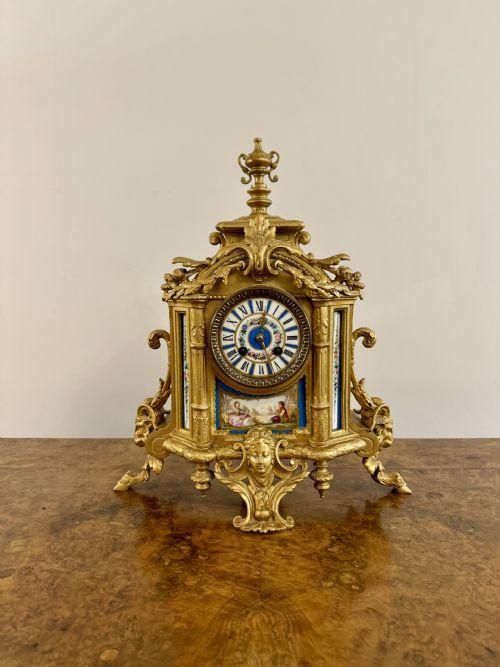


Ornate Bronze Table Clock
An ornate bronze table clock brings nineteenth-century French precision and sculptural weight to a mantelpiece, combining gilt metal and porcelain dials in heavy revivalist styles.
Ornate Bronze Table Clock
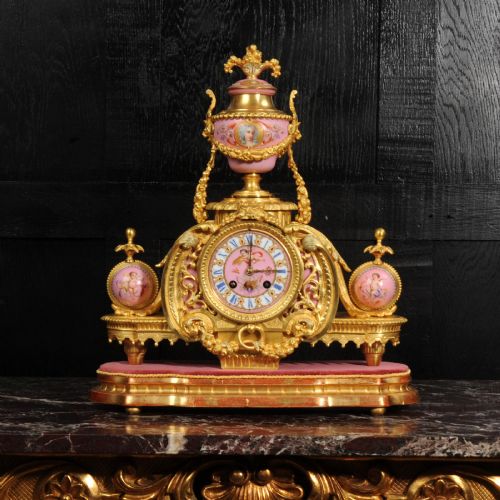
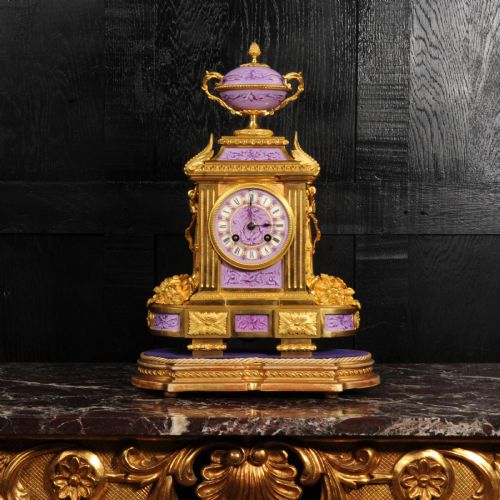
An ornate bronze table clock is primarily a nineteenth-century French mantel timepiece, often found in styles such as French Rococo Revival and Louis XVI Revival dating from the eighteen-fifties to the turn of the twentieth century. These pieces function as both timekeepers and decorative centrepieces, frequently appearing alongside matching garniture sets.
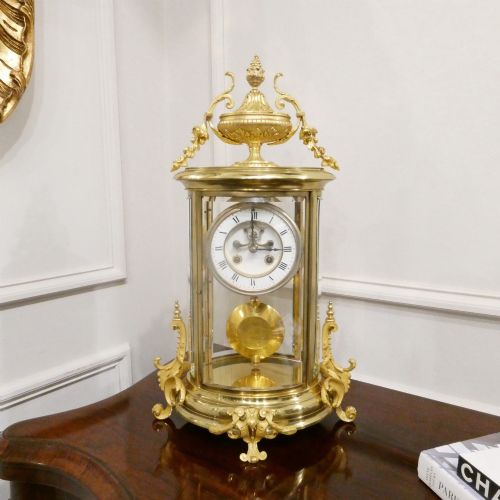
The objects on this page span several decades of Victorian production, including four glass mantel clocks, portico timepieces, and heavy gilt bronze cases mounted with porcelain plaques. Most examples originate from French workshops and makers of the period rather than domestic English production.
How they were made
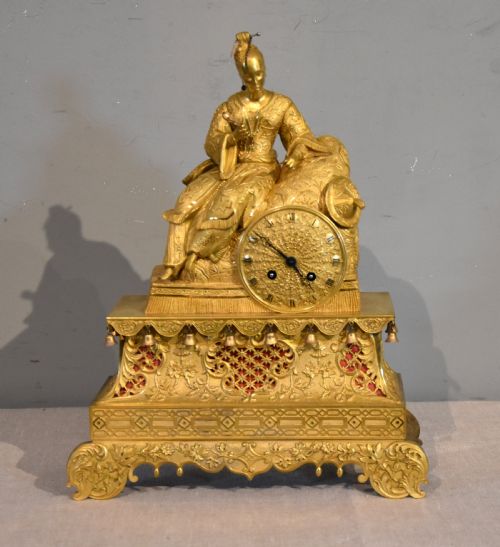
Maker workshops cast cases in bronze, brass, and ormolu, applying fire gilding or chemical patination to the metal surfaces before assembling detailed Rococo and neoclassical scrollwork. Many incorporates glazed panels, marble bases, and hand-painted Sèvres-style porcelain dials or urn inserts.
Movements inside these cases rely on mechanical brass gear trains, often driven by springs with eight-day striking capabilities produced by volume makers like Samuel Marti and Japy Frères. Champlevé enamel work and inset glass panels complete the structural composition of the more elaborate examples.
The listings on this page span periods from eighteen-fifty to nineteen-twenty, featuring materials like champlevé enamel, ormolu, and marble.
What varies in quality
The distinction between standard domestic timepieces and top-tier pieces rests on the crispness of the bronze casting and the depth of the mercury gilding or ormolu. Finer examples display deeply chased scrollwork where the tool marks of the artisan remain sharp, whereas lesser models rely on softer, smoother casting with shallower detail.
The integration of materials also defines the hierarchy, particularly the quality of the porcelain plaques, the weight of the marble plinths, and whether the movement bears the signature of a notable maker like Achille Brocot or Samuel Marti.
Achille Brocot·Samuel Marti·Japy Freres·William Payne
The Ornate Bronze Table Clock Glossary
- Ormolu
- A gilded bronze technique utilising finely ground gold amalgam applied to a cast brass or bronze base. This process creates a warm, durable metallic finish characteristic of mid-nineteenth-century French furniture and clock cases.
- Garniture
- A set of decorative matching objects, usually a central clock flanked by two matching vases, urns or candelabra. These sets were designed to sit symmetrically on a mantelpiece or console table.
- Champlevé
- An enamelling technique where troughs or cells are hollowed out of the metal surface and filled with vitreous enamel paste before firing. The resulting design shows colourful glass-like patterns flush with the metal bands.
- Portico timepiece
- A tall, architectural clock case shaped like a classical temple with four supporting columns. They often house a suspended pendulum visible through the central opening.
- Boulle
- A marquetry technique using cut brass and tortoiseshell inlay applied to wooden or metal carcases. It takes its name from André-Charles Boulle and appears on revival mantel clocks.
Ornate Bronze Table Clock: Frequently Asked Questions
How do I wind the clock?
Most mechanical models use a square-ended key inserted into small winding holes on the porcelain or enamel dial. Turn the key gently until you feel resistance, taking care not to over-wind the internal springs.
Ensure you keep the original key or source an identical replacement to avoid damaging the winding arbors. Setting the time should be done by moving the minute hand forward rather than backward.
What is a clock garniture?
A clock garniture is a matched decorative set consisting of a central mantel clock flanked by two matching side pieces such as urns or candelabra. These sets were designed to create a balanced display across a fireplace mantle.
The pieces share identical materials, motifs, and patination, typically combining gilt bronze with marble or porcelain inserts.
How do I identify the period?
You can determine the period by examining the architectural style, decorative motifs, and maker stamps on the backplate of the movement. Pieces displaying heavy rococo scrolls often date to the eighteen-eighties, while cleaner neoclassical lines usually point to Louis XVI revival designs.
Maker marks and census numbers stamped onto the brass plates help narrow down the decade of manufacture.
Where should I place it?
These heavy brass and marble structures require a stable, level surface such as a sturdy mantelpiece, sideboard, or console table. Avoid placing them in areas subject to dampness or direct sunlight, which can fade painted porcelain dials and enamel.
Because many are tall four-glass models, ensure the furniture is wide enough to support the entire base without overhang.