

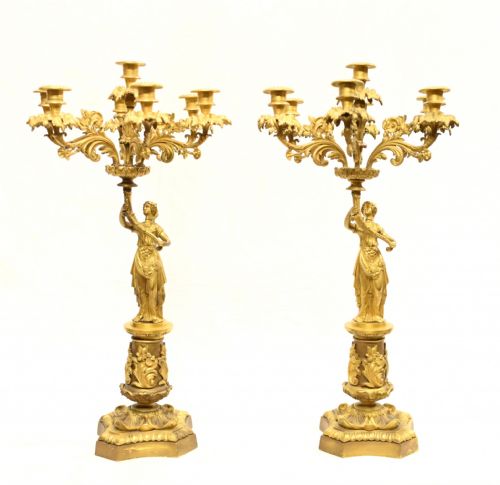

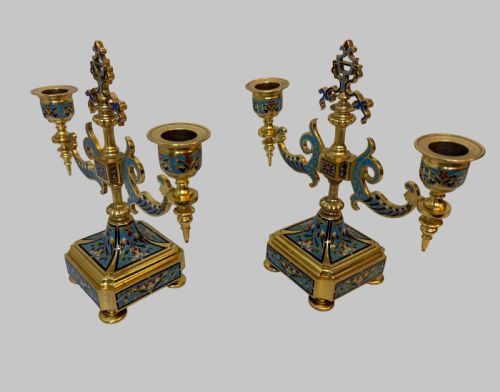


Vintage French Candle Stands
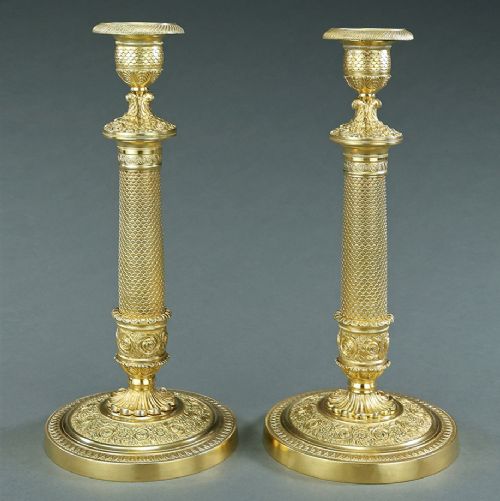
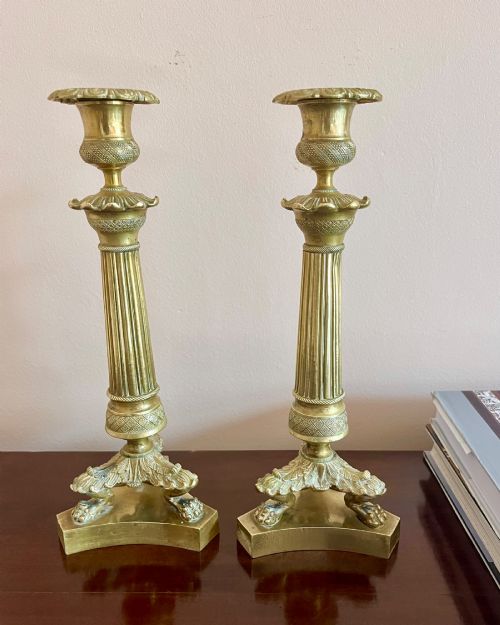
These vintage french candle stands bring sculptural metalwork and carved timber into a room, offering warm illumination through classic forms.
Vintage French Candle Stands
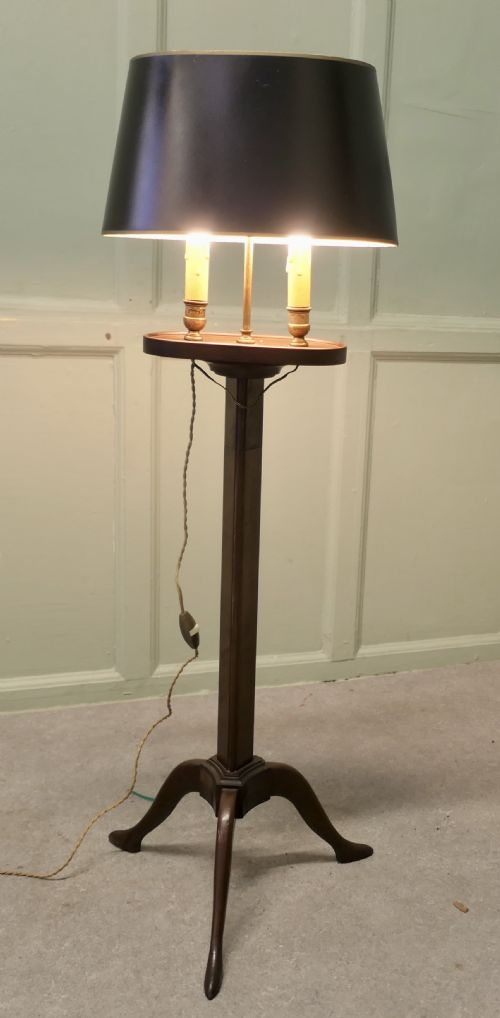
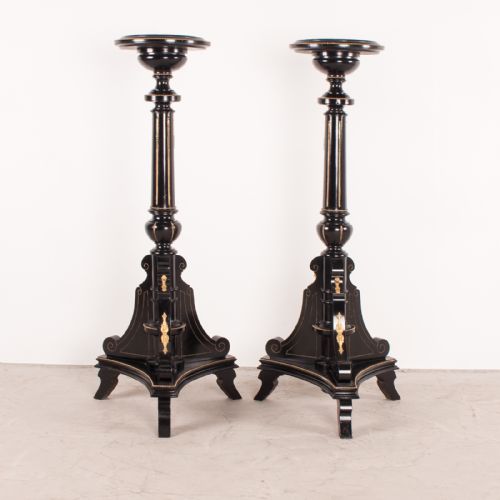
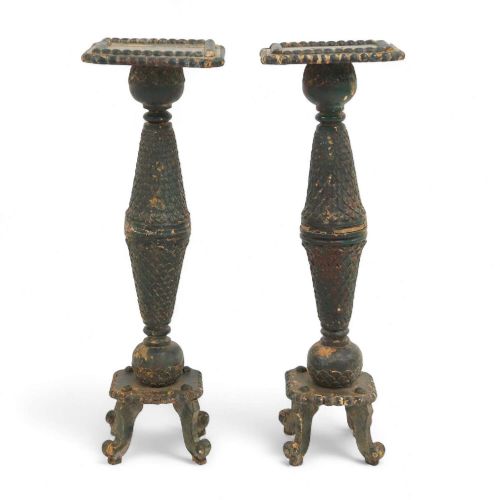
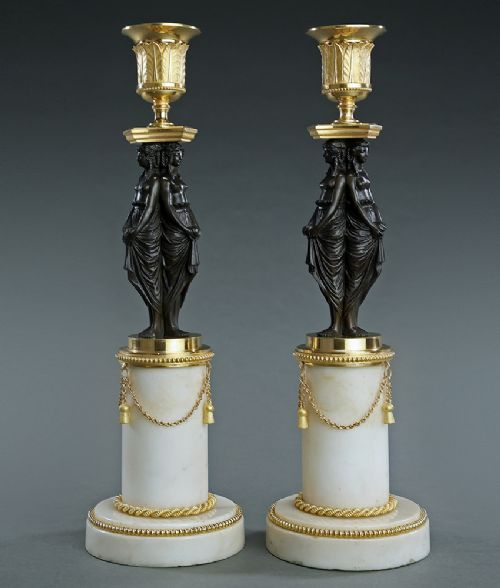
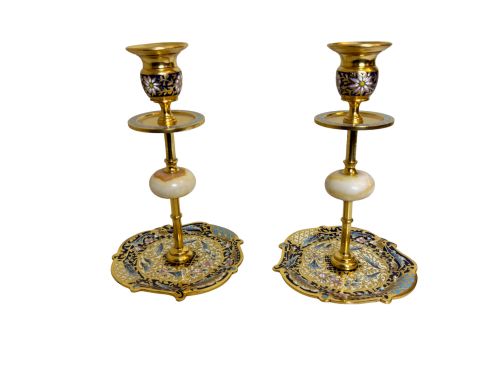
Buyers encounter various configurations ranging from compact brass and gilt bronze sticks to grand floor-standing wooden torchères and adjustable bouillotte lamps. Forms include figural supports incorporating caryatids, cherubs, and porcelain elements, reflecting classic continental interior design.
Origins vary across established nineteenth-century production and regional workshops, utilising traditional styling associated with French chateau and neoclassical aesthetics. Many pieces incorporate specialised mounts, marble bases, and multi-branch structures intended for formal reception rooms.
Materials and Construction
Metalwork dominates the construction of these pieces, utilising cast brass, gilt bronze, ormolu, and pewter, often combined with champlevé enamel or crystal details. Artisans shaped these metals through casting and chasing techniques to achieve intricate ornamentation.
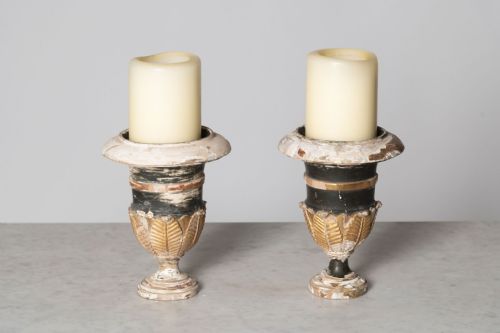
Timber is equally prominent, featuring carved wood, ebonised finishes, giltwood, mahogany, and treen, alongside painted surfaces and gesso decorations. Some stands incorporate natural stone elements such as marble, onyx, and porphyry for stability and decorative contrast.
Pairs of porcelain birds perch inside ormolu candelabra branches, bringing avian charm directly to the dining table.
Evaluating the Pieces
The integrity of surface finishes dictates overall character, whether through the preservation of original gilding, patination on brass, or untouched historic paint and green finishes on timber. Finer pairings exhibit matched components, harmonious proportions, and authentic material combinations like marble or porphyry bases.
Rene Lalique·Abel Landry·Alexandre Clerget
The Vintage French Candle Stands Glossary
- Ormolu
- Gilded bronze, where finely ground high-carat gold is applied to a bronze base using a mercury amalgamation process or later electroplating. This technique creates a rich, durable golden surface characteristic of luxury decorative objects.
- Torchère
- A tall ornamental stand or candlestick designed to hold a light source at an elevated level. These pieces typically feature slender wooden or metal shafts supported by tripod or weighted bases.
- Champlevé
- An enamelling technique where troughs or cells are hollowed out of a metal surface and filled with vitreous enamel powder before firing. The resulting design shows vibrant colour set flush within metal outlines.
- Bouillotte
- A type of adjustable table lamp featuring a central shaft, often equipped with a shade and twin candle arms. The design originates from nineteenth-century card playing traditions.
- Pricket
- A sharp metal spike set on a drip pan or base to secure large candles. This medieval form persists in later decorative lighting items.
Vintage French Candle Stands: Frequently Asked Questions
How do I identify a torchère?
A torchère stands out by its exceptional height, functioning as a freestanding column or pedestal meant to elevate a light source from the floor. They frequently appear in carved wood, gilt gesso, or ebonised finishes.
These taller stands often incorporate slender shafts supported by heavy round or tripod bases, separating them from standard tabletop candle holders.
Are these candle stands electrified?
Many surviving examples retain their original configuration for wax candles, while others have been adapted over time to house electrical fittings. Listings typically indicate whether a piece functions with traditional candles or has been converted into a lamp base.
Buyers should examine the description to determine if original mounting hardware remains intact or if wiring has been integrated through the central stem.
Where should I place a floor torchère?
Floor torchères suit corners, entrance halls, or flanking positions beside large pieces of furniture where vertical height enhances the room's proportions. Their elevated design draws the eye upward and fills empty wall space effectively.
Because of their height, they require stable placement away from high-traffic walkways to prevent accidental tipping.