






Vintage Frameless Mirror
A vintage frameless mirror offers clean lines and striking geometry, capturing the unmistakable modernist elegance of the early twentieth century.
Vintage Frameless Mirror
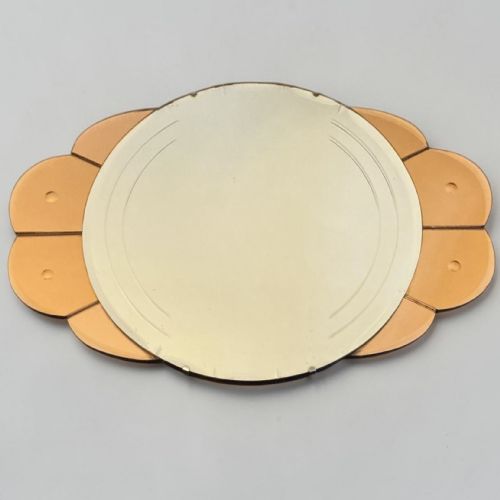
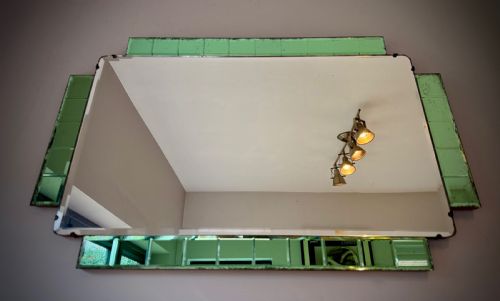
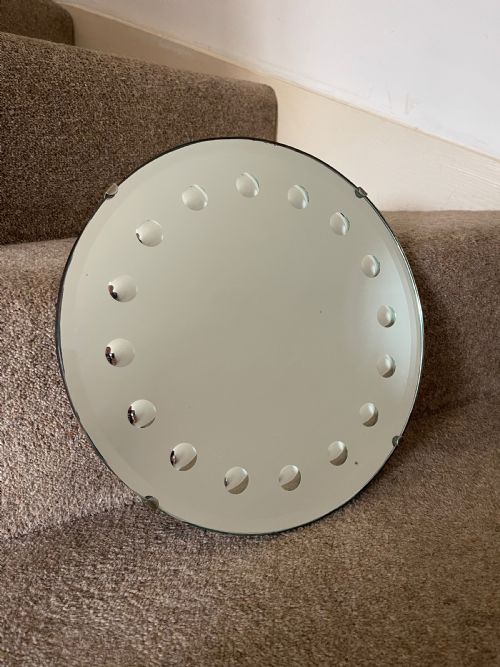
When you search for a vintage frameless mirror, you encounter wall mirrors, overmantel mirrors, and vanity mirrors dating from the Victorian era through the nineteen-thirties. The majority of these pieces originate from the Art Deco period, showcasing circular, octagonal, diamond, and rectangular forms designed without traditional wooden or metal frames.
The selection ranges from small easel vanity stands to very large wall hangings, incorporating specialised glass elements such as peach coloured glass, emerald green glass panels, and embossed or etched details. Many of these mirrors rely entirely on bevelled edges and stacked glass layers to create visual depth and structure rather than relying on an outer border.
How they were made
Makers constructed these mirrors using silvered glass, peach glass, and mirrored glass mounted onto backing materials of wood or metal, often utilising original metal fittings and easel backs. The glass plates frequently feature hand-bevelled perimeters to catch the light, alongside acid etching or embossed motifs that define the surface decoration.
Many examples combine multiple tones of glass, such as two-tone or contrasting white and peach panels, assembled mechanically to achieve geometric clarity. The absence of a conventional frame placed absolute precision on the cutting, Bevelling, and edge-finishing of the glass itself.
Listings feature items spanning from the Victorian period through the nineteen-thirties, utilising glass, wood, metal, and chrome.
What varies in quality
Scale and proportion also set finer examples apart, particularly in large overmantel mirrors and diamond wall formats where maintaining structural stability without a heavy outer frame required superior manufacturing skill.
The Vintage Frameless Mirror Glossary
- Bevelled glass
- Glass with an angled edge cut and polished to a specific acute angle. This technique creates a prismatic border that refracts light.
- Overmantel mirror
- A large mirror designed to hang specifically above a fireplace mantel. These pieces often dominate a room and reflect light across the entire space.
- Peach glass
- Tinted mirror glass exhibiting a warm pinkish-orange hue. It gained widespread popularity during the Art Deco era for decorative wall pieces.
- Easel vanity mirror
- A small table-top mirror supported by a hinged rear leg stand. These items were typically used on dressing tables for personal grooming.
- Silvered glass
- Glass coated on the rear surface with a reflective metallic compound. This chemical application creates the mirror reflection.
Vintage Frameless Mirror: Frequently Asked Questions
What rooms suit a frameless Art Deco mirror?
The geometric designs and reflective surfaces integrate well into hallways, living rooms, and bedrooms. Circular and octagonal formats work effectively above smaller pieces of furniture.
Larger overmantel mirrors serve as focal points in reception rooms, while smaller easel vanity mirrors suit dressing areas and tabletops.
How can I date a vintage mirror?
Dating relies on examining the materials, edge work, and backing structures. Pieces from the nineteen-thirties frequently display characteristic peach glass panels and distinct geometric shapes associated with Art Deco design.
Earlier Victorian examples, such as those from the eighteen-seventies, often feature traditional bevelled edges paired with heavier timber or metal support fittings.
Are peach glass mirrors harder to maintain?
Peach glass mirrors require the same careful handling as standard silvered glass pieces. Regular dusting with a soft cloth preserves the tinted reflective surface without scratching the delicate glass.
Avoid using harsh chemical cleaners that might damage the original silvering on the reverse or affect the vintage metal fittings.