





Vintage Fox Hunting Prints
Vintage fox hunting prints capture the thunder of hooves and the flash of scarlet coats across nineteenth and twentieth-century fields.
Vintage Fox Hunting Prints
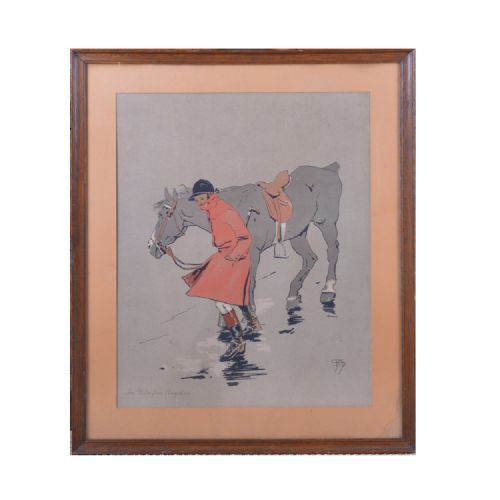
Vintage fox hunting prints represent a distinct category of British sporting art, capturing the energetic pursuits of the field through framed prints, engravings, and watercolours. Collectors searching for vintage fox hunting prints will encounter works spanning the nineteenth and early twentieth centuries, reflecting the high-water mark of equestrian illustration.
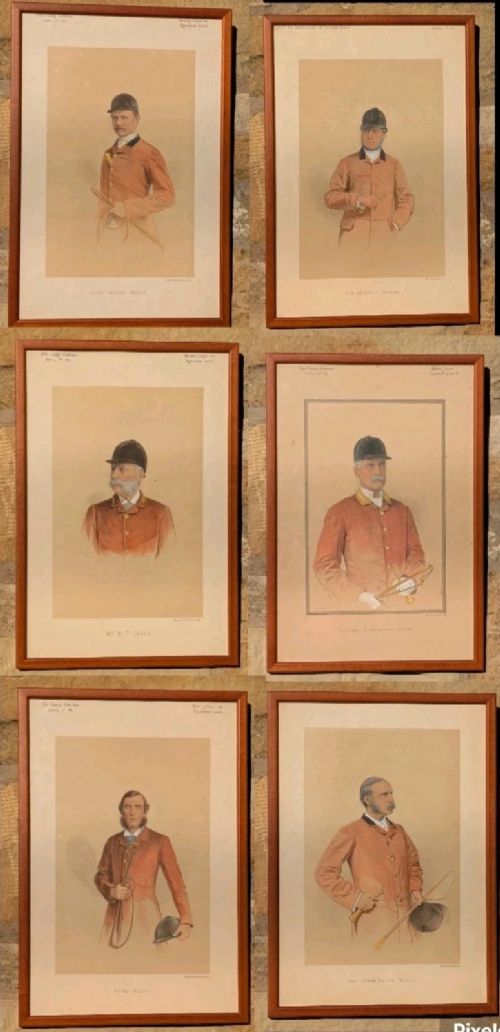
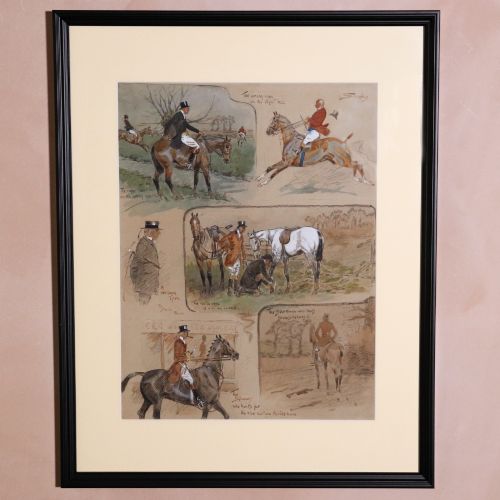
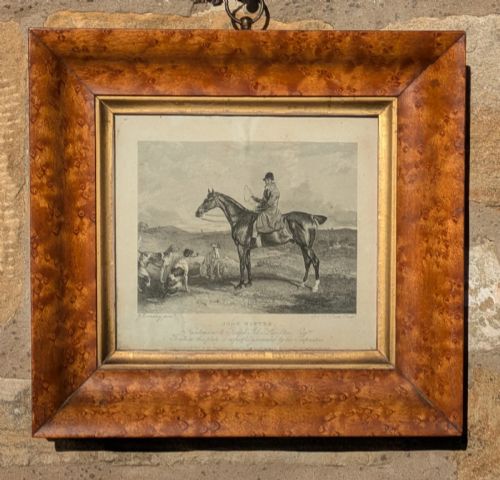
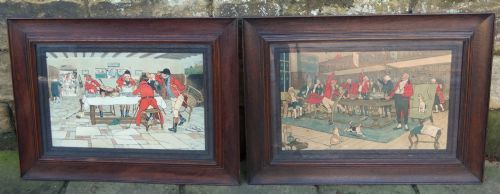
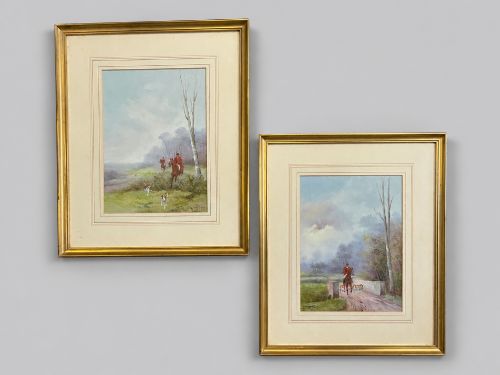
The material record on this page shows pieces ranging from the Victorian and Edwardian eras, including hand-coloured engravings, steel engravings, and chromolithographs. Many of these works arrive framed in oak, timber, or birds-eye maple, often retaining their original glass protection.
Materials and production methods
Makers produced these works on paper using traditional printmaking techniques such as steel engraving, aquatint, and lithography, frequently applying watercolours by hand to finished impressions. Printers inked copper or steel plates to transfer fine linear details before artists added tonal washes.
Framing materials reflect period workshop practices, employing native hardwoods like oak and distinctive timbers such as birds-eye maple to house the works. Glazing protected the delicate paper surfaces and watercolours from atmospheric moisture and soot in period interiors.
Vintage Fox Hunting Prints Retail Price Guide 2026
Typical asking prices for vintage fox hunting prints among the pieces listed under this phrase on Sellingantiques today, from the lower quarter to the upper quarter. They describe what is for sale here now, not the wider market.
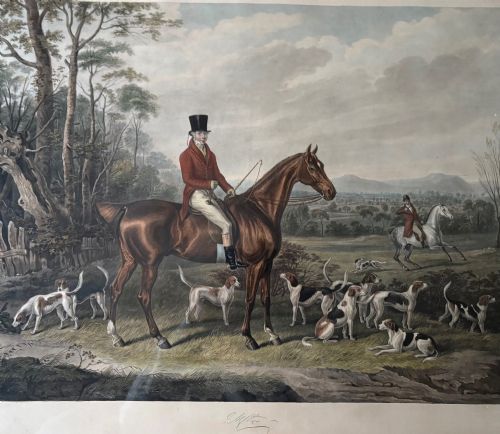
Several prints preserve the spirited likenesses of renowned huntsmen alongside equally expressive portraits of hounds and horses caught mid-leap.
Factors of distinction and quality
The distinction between standard decorative plates and superior works lies in the strength of the impression and the precision of the hand-colouring. Master printmakers achieved crisp lines that remained sharp through an edition, while skilled colourists applied subtle washes that enhanced rather than obscured the underlying engraving.
Association with celebrated sporting artists and identifiable publishers elevates specific pieces above anonymous works of the period. Complete sets and original watercolours command greater interest than isolated book plates, particularly when retained in their period frames with original glass.
Charles Johnson Payne Snaffles·Cecil Charles Windsor Aldin·Frank Algernon Stewart·Francis Calcroft Turner·Charles Hunt
The Vintage Fox Hunting Prints Glossary
- Aquatint
- A printmaking technique that produces tonal areas resembling watercolour washes through acid etching on a copper plate. This method allowed publishers to replicate soft shaded backgrounds behind engraved figures.
- Chromolithograph
- A colour lithographic print produced from multiple stones, each applying a different ink to build up a rich palette. This process became widespread in the nineteenth century for reproducing sporting paintings.
- Steel engraving
- An intaglio printmaking process using steel plates instead of copper to allow large print runs without plate wear. It yields exceptionally fine, precise lines suited to detailed equestrian scenes.
- Hand-coloured
- A print finished with watercolour or gouache applied by brush after the printing process. This technique added realism to monochrome engravings of scarlet coats and green pastures.
Vintage Fox Hunting Prints: Frequently Asked Questions
How do I date vintage fox hunting prints?
Dating relies on stylistic evidence, paper characteristics, and the working periods of the artists and publishers recorded in the margins or publication lines.
Printers often inscribed publication dates directly beneath the image, while the framing materials and paper stock provide further chronological markers for nineteenth and early twentieth-century works.
Are original watercolours different from prints?
Original watercolours are unique hand-painted works created directly by the artist on paper, whereas prints are mechanical or plate-based reproductions derived from an initial design.
While both appear within sporting art collections, watercolours represent singular artistic creations rather than editions produced from engraved plates.
How should I frame and hang these works?
These pieces require conservation-grade mounting behind UV-filtering glass to protect the paper and watercolour pigments from light damage and humidity.
Displaying them away from direct sunlight preserves the hand-applied pigments and prevents the historic paper supports from becoming brittle over time.
What subjects appear in these hunting scenes?
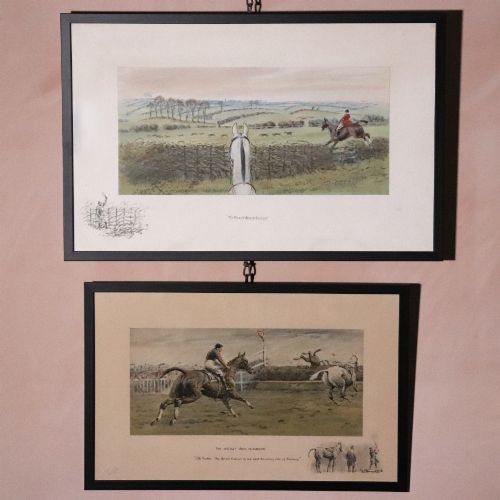
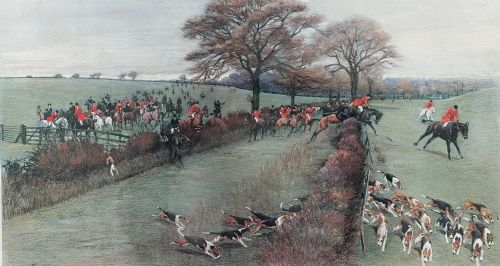
The compositions typically depict mounted huntsmen, packs of hounds in pursuit, and dramatic landscape obstacles encountered during the chase across rural Britain.
Artists also recorded individual portraits of notable huntsmen, sequential narratives of a day's sport, and humorous vignettes of riders negotiating difficult fences.