



Vintage Forest Landscape
These vintage forest landscape works capture woodlands and trees through paintings, drawings, and textiles spanning centuries.
Vintage Forest Landscape
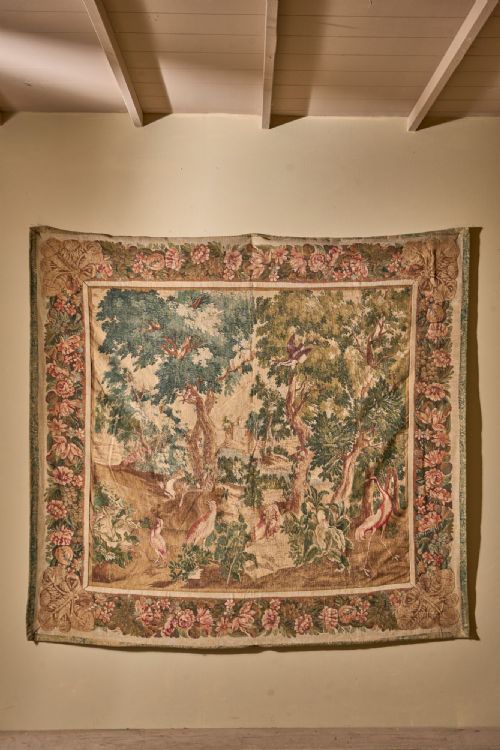
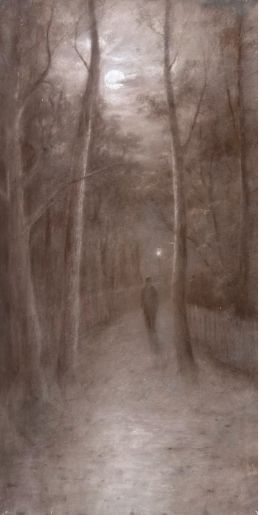
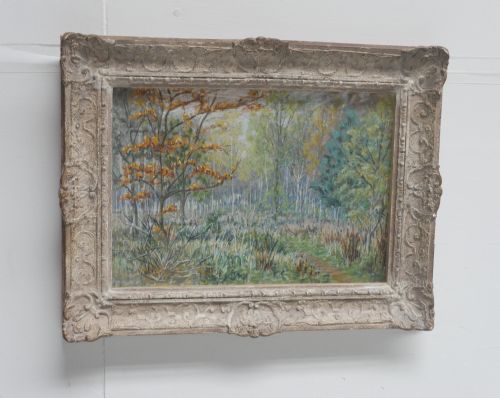
When you search for vintage forest landscape, you encounter a diverse selection of artworks and textiles focusing on trees, woodlands, and rural nature scenes. The selection comprises oil paintings, watercolours, charcoal drawings, collotype prints, and large wall tapestries.
The pieces originate from various periods including the nineteenth century, Edwardian era, and mid-twentieth century. Works span British, French, Flemish, and Danish artistic traditions, capturing woodland scenes from quiet winter trees to luminous summer forests.
How they were made
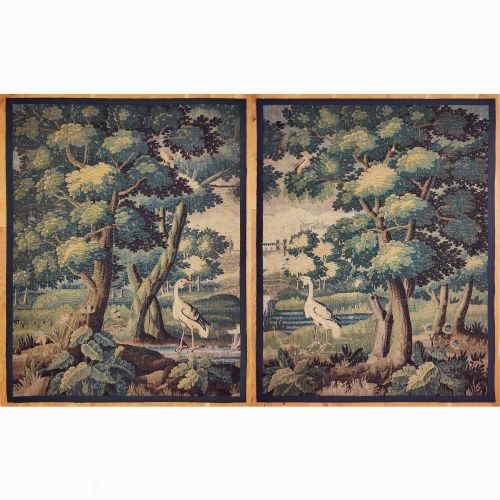
Artists utilised oil paint on canvas, watercolour on paper, pastel, charcoal, and ink to render woodland environments. Tapestries and panels were woven from wool and silk, incorporating complex verdure designs that depict dense foliage and forest wildlife.
Support materials range from stretched canvas and heavy paper to timber frames and mounted textile panels. Pigments and threads combine to create varied textures, from the subtle washes of watercolour to the thick impasto of impressionist oil paintings.
Materials documented in these listings include canvas, wood, paper, oil paint, wool, silk, and watercolour across multiple centuries.
What varies in quality
The strength of a vintage forest landscape lies in the artist's handling of light, shadow, and atmosphere within the woodland setting. Superior works demonstrate confident brushwork, depth of perspective, and a harmonious palette that captures the specific mood of the season.
Material preservation dictates longevity, with well-maintained canvases, stable pigments, and intact textile weaves retaining their original visual impact. The sophistication of the composition and the distinct hand of the maker elevate individual pieces above standard decorative items.
William H Myers·Thomas W Lascelles·Thomas Bromley Blacklock·James Proudfoot·Rowland Henry Hill·Ernest Higgins Rigg·Hans Kappel Øvre
The Vintage Forest Landscape Glossary
- Verdure
- A type of tapestry or painting featuring lush green foliage, trees, and plants as the primary subject matter. These pieces frequently include animals or figures within a wooded landscape.
- Collotype
- A planigraphic printing process that uses hardened gelatin coated on glass or metal plates to produce detailed photographic reproductions. It renders subtle tonal gradations without visible dot screens.
- Impressionism
- An art movement characterised by relatively small, thin, yet visible brush strokes and an open composition. Emphasis rests on accurate depiction of light in its changing qualities.
- Tonalism
- An artistic style where artists paint landscapes with an overall tone of coloured atmosphere or mist. Dark, muted hues predominate in these moody, atmospheric woodland views.
Vintage Forest Landscape: Frequently Asked Questions
What periods do these landscapes cover?
The available works span from the seventeenth century through the nineteenth century and into the mid-twentieth century. Pieces reflect various historical aesthetics, including Victorian, Edwardian, and mid-century modern movements.
Earlier examples often comprise woven textile panels, while later centuries are dominated by oil paintings and watercolours on paper or canvas.
How should I care for a textile tapestry?
Wall tapestries woven from wool and silk require protection from direct sunlight to prevent fading of the natural fibres and dyes. Gentle dusting with a soft brush helps maintain the surface without damaging the weave.
Keeping the textile in a stable environment away from excess moisture ensures the fabric stays preserved over time.
What materials were used for these artworks?
Makers utilised a variety of mediums, including oil paint, watercolour, charcoal, pastel, and ink on supports such as canvas, wood, and paper. Woven wall tapestries utilised wool and silk yarns to construct detailed woodland scenes.
Prints such as collotypes also appear, offering alternative methods of capturing forest imagery.
Where were these woodland scenes created?
The pieces originate from multiple European countries, including Britain, France, Flanders, and Denmark. Regional artistic influences shape the style of each work, from French Aubusson tapestries to British impressionist paintings.
Specific locations recorded in the works include Yorkshire, Boscombe, and French landscapes.