

Vintage Folding Games Table
A vintage folding games table offers ingenious mechanisms and rich timbers, transforming from a modest side piece into a surface for play.
Vintage Folding Games Table
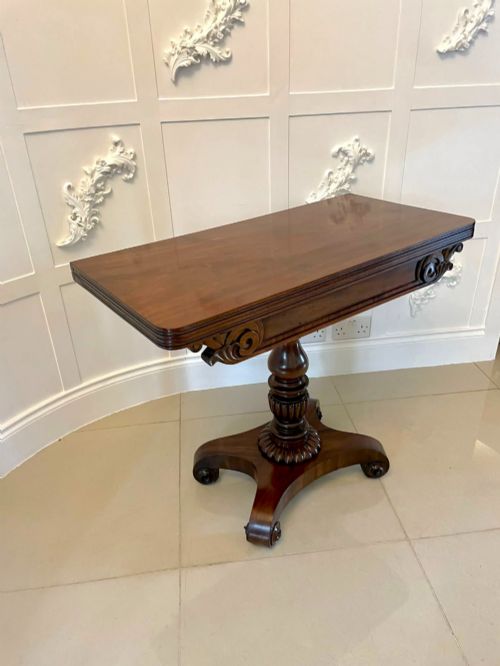
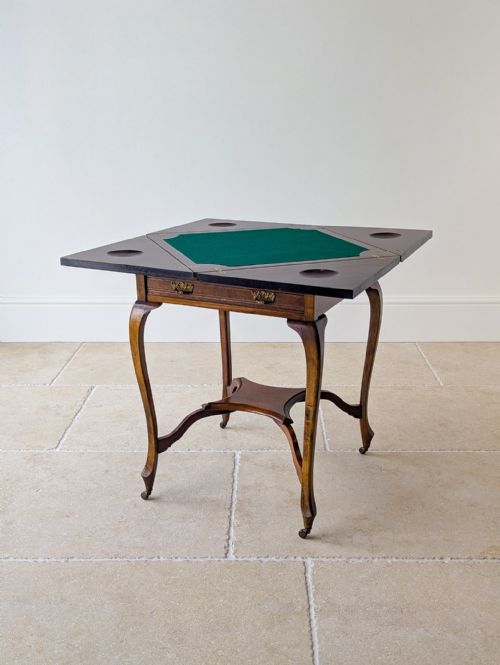
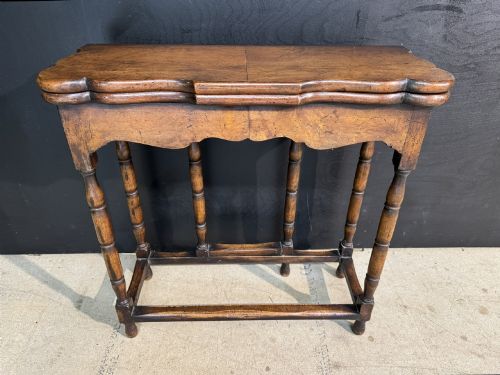
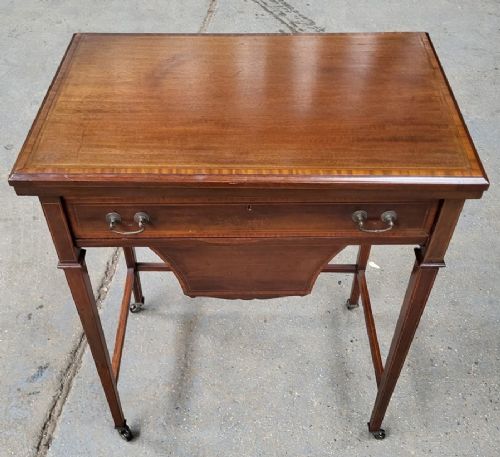
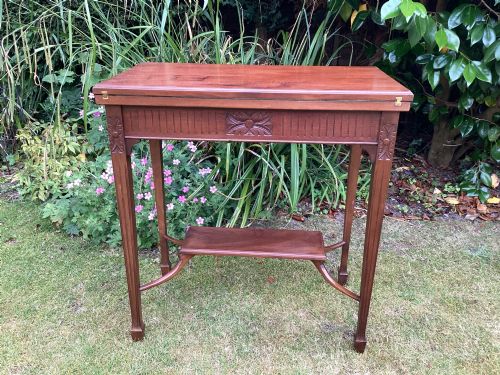
A vintage folding games table spans several centuries of design, with pieces originating from the eighteenth, nineteenth, and twentieth centuries. Buyers seeking a vintage folding games table will frequently encounter Edwardian envelope designs alongside Victorian and Georgian fold-over examples.
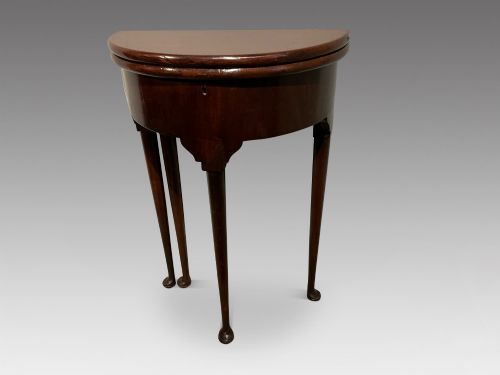
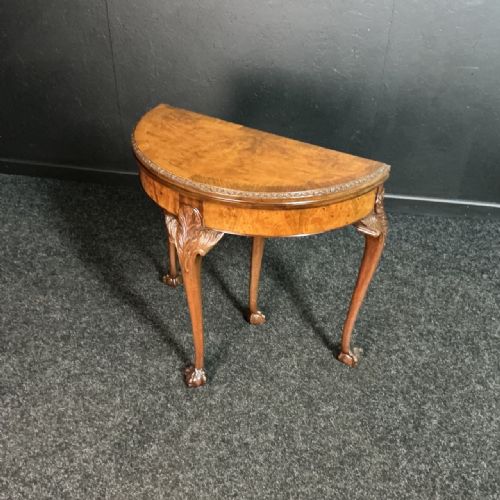
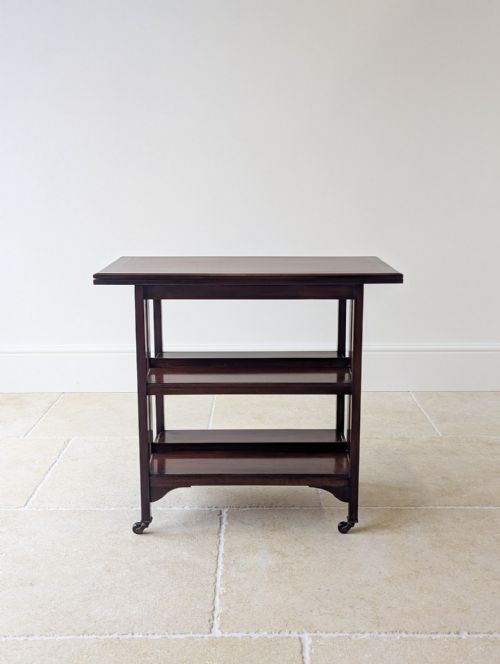
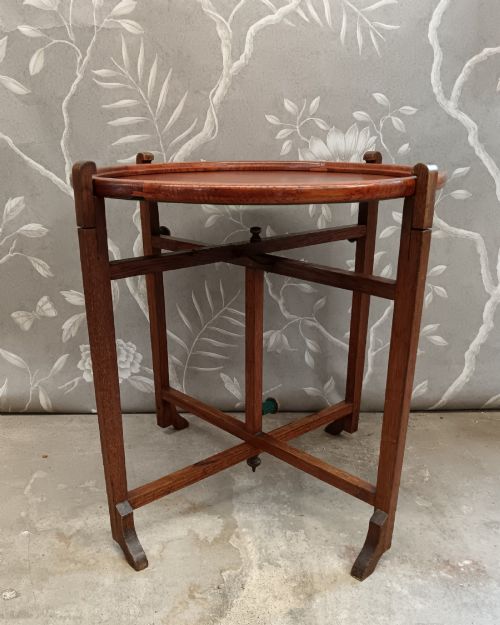
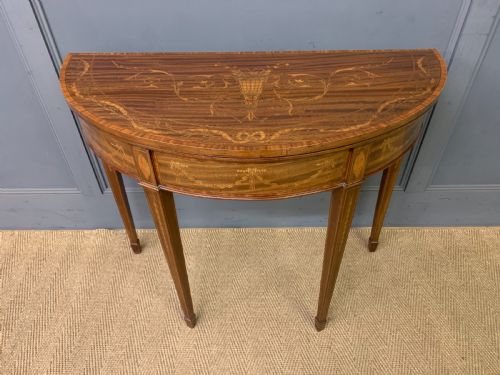
Makers produced these versatile objects in forms such as demi-lune tables, tea tables, and occasional consoles that conceal specialised playing surfaces. The inventory shows diverse interpretations, including Queen Anne style walnut pieces, Sheraton revival tables, and compact multi-functional models equipped with fitted interiors or bookshelf bases.
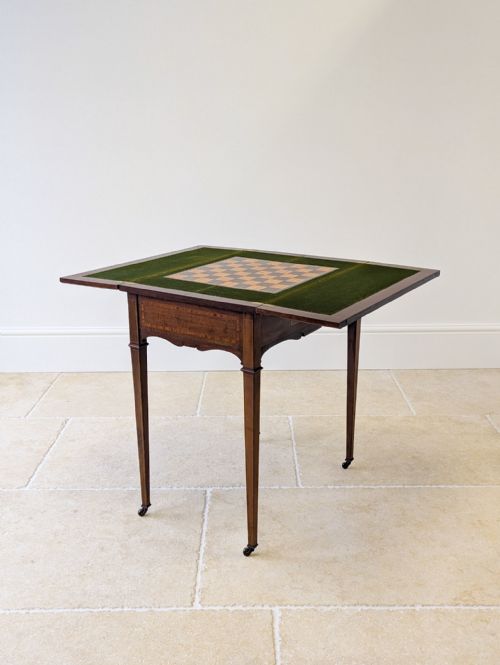
Origins range across British periods from George II styles to Art Deco metamorphic creations, alongside continental influences like French walnut and Louis XV manner pieces. Each variant serves a dual purpose, functioning as a decorative side furniture piece before opening to reveal baize-lined playing spaces or chess boards.
Materials and Construction
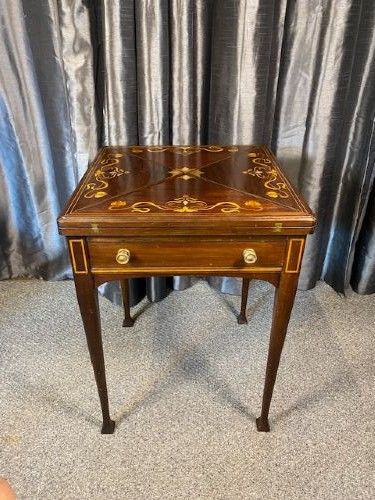
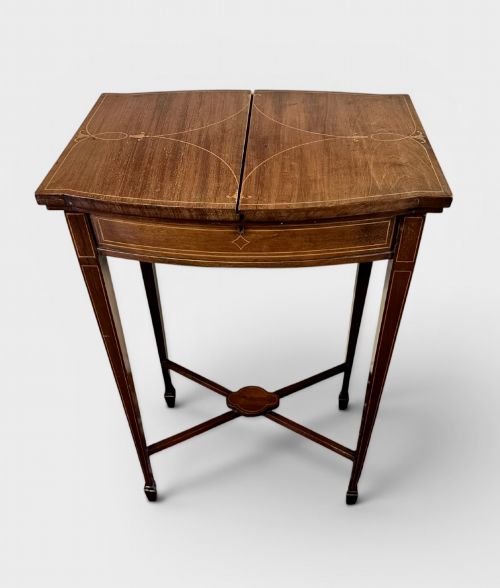
Craftsmen utilised dense timbers such as mahogany, walnut, burr walnut, and satinwood to construct the primary frames and table tops. These rich woods often featured cross-banding, boxwood stringing, or brass inlay to accentuate the geometric folding mechanisms and envelope corners.
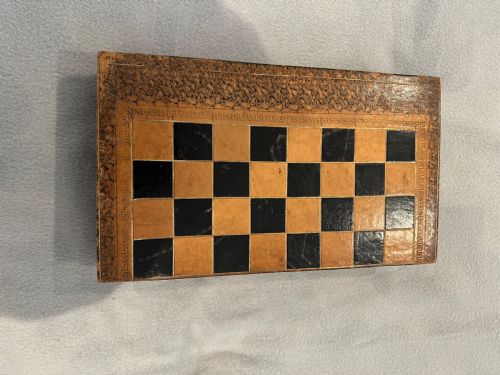
Surfaces intended for play required specialised inserts, most notably green or coloured baize, alongside leather bindings found on specific board formats. Structural joinery and pivoting leaves allowed heavy fold-over or trifold tops to operate smoothly without compromising stability during use.
Listings feature mahogany, walnut, and satinwood most frequently among the primary timbers used for folding games tables.
Evaluating Craftsmanship
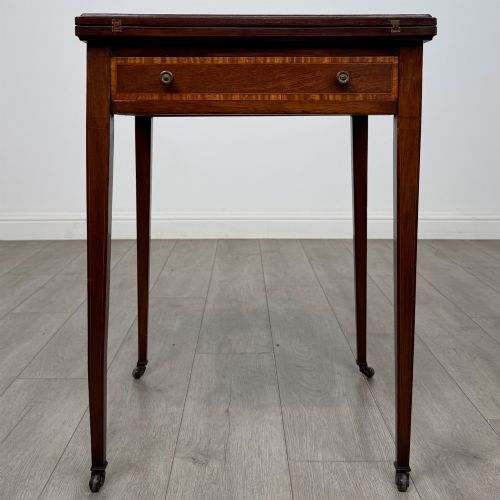
The distinction between standard examples and the finest pieces lies in the selection of figured timber veneers and the precision of the inlay work. Superior items display meticulous attention to detail in cross-banded borders, brass mounts, and the seamless integration of folding leaves.
Mechanical ingenuity also separates the ranges, where superior tables operate smoothly through complex pivot, envelope, or metamorphic actions. The crispness of carved details, such as cabriole legs in the Queen Anne or Chippendale styles, further defines the upper tier of quality.
Epstein and Co·Howard and Son's
The Vintage Folding Games Table Glossary
- Envelope card table
- A square table with four triangular flaps that swivel and fold over one another to resemble an envelope before opening into a diamond shape.
- Baize
- A coarse woolen fabric, typically green, used to line the playing surfaces of card and games tables.
- Demi-lune
- A half-moon shape characteristic of console and card tables designed to sit flush against a wall when closed.
- Metamorphic
- Describing furniture that transforms its form or function through clever mechanical design, shifting from a console to a complete table.
- Trifold
- A table top constructed with three hinged sections that unfold to create a larger playing or serving area.
Vintage Folding Games Table: Frequently Asked Questions
How do envelope tables work?
Envelope tables operate through four triangular flaps that pivot on diagonal hinges to fold neatly over the centre. When opened, these leaves rotate outward to form a square playing surface.
Beneath these moving leaves, makers often incorporated small storage compartments or wells designed to hold playing cards and counters.
Where were games tables placed?
Historically, these tables stood against drawing room or parlour walls as decorative side or console furniture when closed. They only moved to the centre of the room when guests gathered for cards or board games.
This space-saving adaptability made them essential furnishings in period homes where rooms served multiple daily functions.
What games were played on them?
Surviving tables accommodate traditional pastimes such as whist, bridge, chess, and backgammon through specialised inlays or reversible tops. Some incorporate baize surfaces specifically designed to cushion dice and prevent playing pieces from sliding.
More versatile models combined tea and card functions, allowing the surface to serve social gatherings before evening entertainment began.
How do I distinguish Edwardian from Georgian tables?
Georgian examples typically feature solid mahogany timbers, heavy carved cabriole legs, and simple fold-over tops with understated proportions. Edwardian interpretations often draw on earlier revivals like Sheraton or Hepplewhite, introducing lighter satinwood, intricate boxwood inlay, and envelope mechanisms.
Examining the internal secondary woods and the style of the leg supports helps clarify the manufacturing period.