
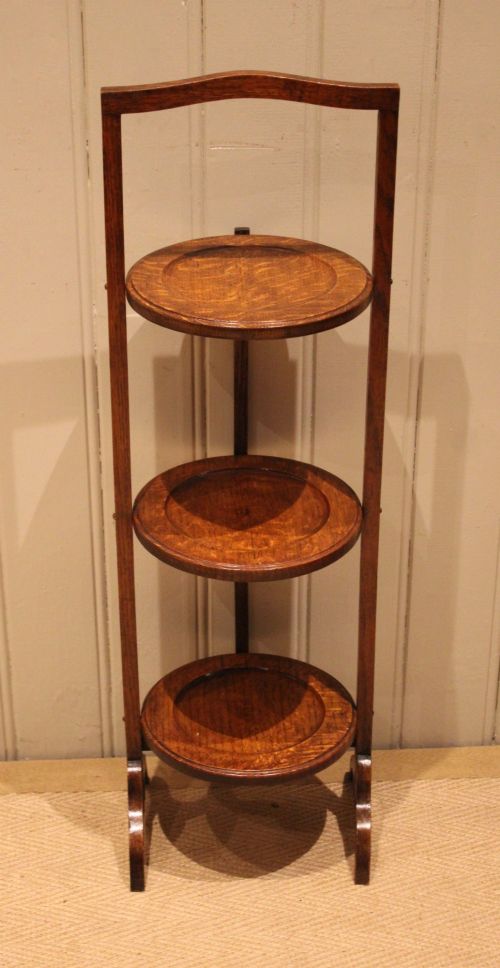
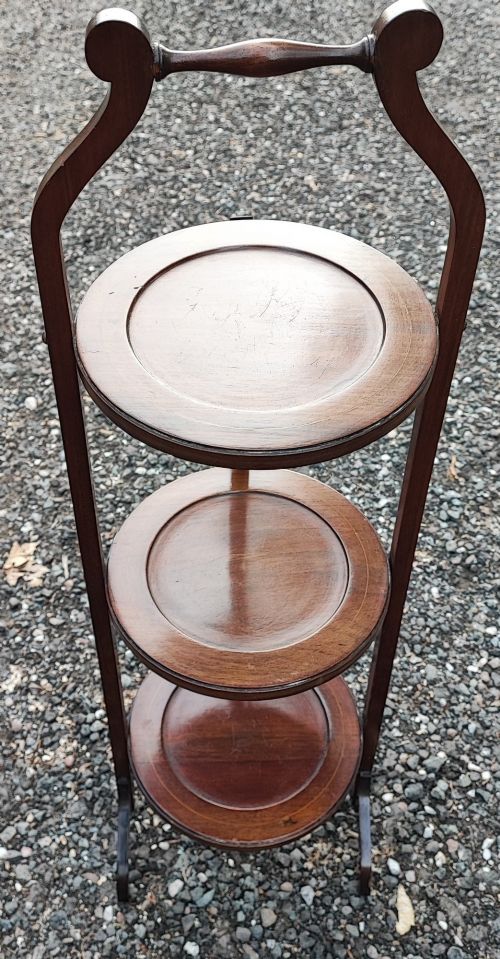


Vintage Folding Dumb Waiter
These vintage folding dumb waiter items offer clever tiered display and serving surfaces.
Vintage Folding Dumb Waiter
When you search for a vintage folding dumb waiter, you are looking at practical tiered stands designed for serving or display. The pieces on this page span the Edwardian period, nineteen hundred, nineteen ten, nineteen twenty, and the Regency era.
The forms you are most likely to meet here include cake stands, side tables, buffet server stands, and dumb waiters. These objects typically feature two or three tiers with folding shelves that collapse for easy storage.
How they were made
Makers utilised solid timbers and veneers such as mahogany, oak, rosewood, and satinwood to construct these tiered structures. Brass hardware often supports the folding mechanisms and hinges.
Selected examples incorporate delicate boxwood and satinwood inlay to ornament the surfaces. Certain stands also include felt elements on the tiers.
These clever folding stands let you instantly pack away your tea party when unexpected guests bring their own gossip.
What varies in quality
Quality rests on the selection of cabinet timbers and the crispness of any inlaid decoration. Pieces executed in figured mahogany or rosewood display superior visual depth compared to simpler oak versions.
The engineering of the folding mechanism dictates daily utility. Smooth operation of the tiered shelves and sturdy joints distinguish the finer examples from standard production.
The Vintage Folding Dumb Waiter Glossary
- Dumb waiter
- A tiered stand or movable piece of furniture used for holding food, drinks, or cake without the need for an attendant servant. These tiered structures save space in entertaining rooms.
- Tiered stand
- An article featuring multiple horizontal surfaces arranged vertically above one another. This design maximises display area within a compact footprint.
- Sheraton Revival
- A late nineteenth and early twentieth century design style inspired by the neoclassical furniture of Thomas Sheraton. It frequently employs satinwood inlay and refined mahogany frames.
- Inlay
- A technique where contrasting woods such as boxwood or satinwood are inserted into recesses within the primary timber surface to create decorative patterns.
Vintage Folding Dumb Waiter: Frequently Asked Questions
How do you fold a dumb waiter?
The tiered shelves operate on hinged or pivoting wooden struts that allow the horizontal levels to swing inwards or collapse flat. This folding action enables the stand to be tucked away against a wall when not in use.
Care must be taken when operating older brass hinges and wooden joints. Gently guide the tiers to avoid straining the original fixings.
What were cake stands used for?
These tiered stands served afternoon tea and cakes in Edwardian and period drawing rooms. The multiple levels allowed hosts to present various sweet and savoury dishes without crowding the main tea table.
Today they function equally well for displaying plants, books, or decorative objects. Their vertical layout makes them practical in smaller living spaces.
How do I identify Edwardian furniture?
Edwardian pieces date from the reign of King Edward the Seventh and often revive earlier eighteenth century styles like Sheraton. They tend to feature lighter timbers, satinwood inlay, and slender proportions.
Construction methods from this era combine traditional hand joinery with early machine production. Inspecting the timber species and secondary woods helps confirm the period.
Is mahogany durable for side tables?
Mahogany is a dense hardwood valued by cabinet makers for its stability and resistance to warping. It provides a strong structural foundation for tiered tables and folding stands.
Regular polishing helps maintain the rich grain and deep colour of the wood. The durability of mahogany ensures these antique pieces withstand daily use.