
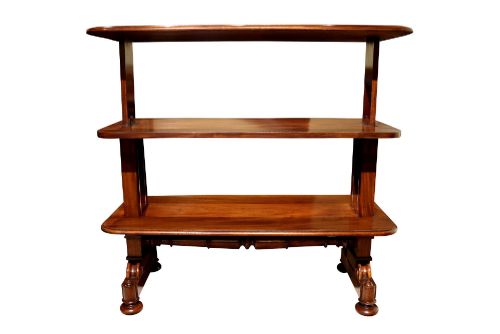
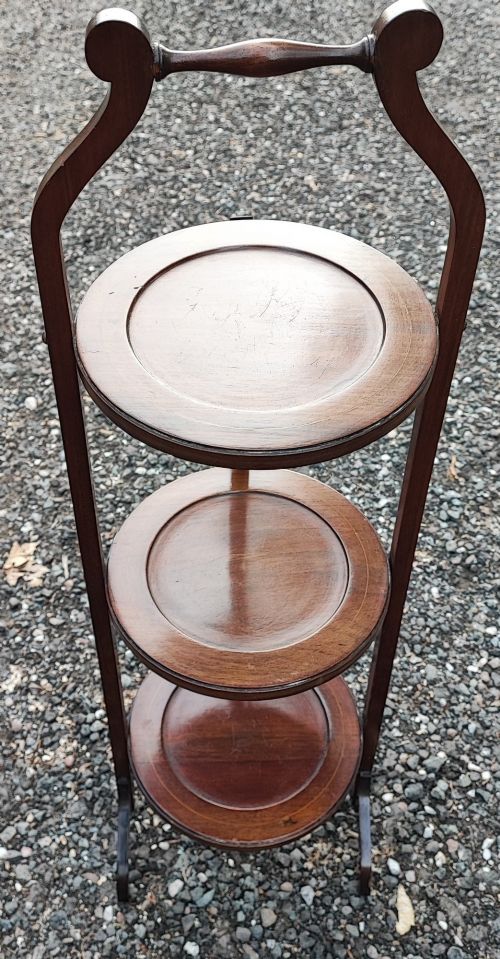
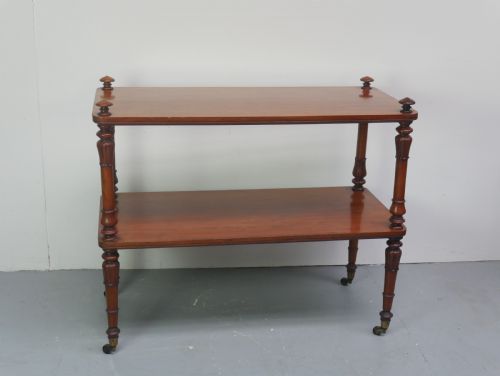


Edwardian Mahogany Dumb Waiter
Edwardian mahogany dumb waiter pieces are tiered serving stands and occasional tables designed for practical hospitality, offering layered surfaces in rich timber.
Edwardian Mahogany Dumb Waiter
When you search for an edwardian mahogany dumb waiter, you are looking at multi-tiered stands, cake stands, etageres, and revolving servers used to hold food, drinks, and tea. The Edwardian period supplies the core of these pieces, alongside Victorian, Georgian, and later variations.
The version you are most likely to meet on this page is a multi-tier cake stand or two-tier table, often featuring folding mechanisms or inlaid surfaces. These items reflect the domestic entertaining needs of their era, providing functional vertical storage in dining rooms and parlours.
The selection extends beyond standard dumb waiters to encompass occasional tables, buffets, and lazy susans sharing the same primary material and period aesthetic. Each format serves the fundamental purpose of presenting dishes or beverages across graduated tiers.
Materials and Construction
Construction relies heavily on mahogany, paired frequently with contrasting elements of satinwood, boxwood, and brass hardware. Cabinetmakers utilised these timbers to build sturdy frames capable of supporting multiple tiers without losing structural balance.
Decorative detail often includes satinwood inlay and Sheraton Revival motifs, applied to enrich the plain surfaces of the wood. Folding mechanisms, ceramic components, and marble tops appear in specific designs, adding mechanical ingenuity or durable serving surfaces to the tiered framework.
The listings span multiple eras from George III and Victorian up through Edwardian and 1920s interpretations.
Assessing Quality and Craftsmanship
Quality reveals itself in the precision of the joinery and the selection of the timber figures, where finer grain and crisper inlay distinguish superior examples. The stability of the tiers, whether fixed, revolving, or folding, indicates the care taken during initial construction.
Subtlety in proportion and the integration of decorative elements like boxwood stringing separate standard utility pieces from more ambitious workshop productions. The handling of brass fittings and the smoothness of any rotating or folding action further define the upper tier of the range.
The Edwardian Mahogany Dumb Waiter Glossary
- Dumb waiter
- A tiered stand or movable piece of furniture designed to hold food, tableware, or drinks without the need for constant servant attendance. These items appeared in various formats including revolving and folding designs.
- Etagere
- A piece of furniture consisting of a set of open shelves for displaying small objects or serving items. They share the multi-tiered characteristic common to many dumb waiters and cake stands.
- Inlay
- A technique of inserting pieces of contrasting wood, such as satinwood or boxwood, into depressions in the mahogany base to form decorative patterns. This ornamentation is typical of Sheraton Revival and Edwardian pieces.
- Lazy susan
- A revolving tray or tabletop placed on a stand to allow easy access to food and condiments. Examples in the record combine this function with mahogany construction and tiered arrangements.
- Sheraton Revival
- A late nineteenth and early twentieth century style inspired by the furniture designs of Thomas Sheraton. Pieces in this style often incorporate delicate mahogany framing and classical inlay motifs.
Edwardian Mahogany Dumb Waiter: Frequently Asked Questions
What is an edwardian mahogany dumb waiter used for?
These pieces served primarily to hold dishes, tea sets, and drinks during meals or social gatherings, saving space on the main dining table.
They allowed hosts to keep refreshments close at hand in drawing rooms and dining rooms without requiring constant attendance from staff.
How do I identify an edwardian piece?
Edwardian items typically display lighter framing, refined satinwood inlay, and a focus on domestic utility such as afternoon tea service.
They often appear as three-tier cake stands or folding tables rather than the heavier, revolving mechanisms found in earlier Victorian designs.
Are these stands stable?
Most multi-tier pieces are built with a central column or sturdy tripod and triform bases designed to distribute weight evenly across the shelves.
Folding and revolving versions rely on hinges or pivots that require careful handling to maintain balance when loaded.
How do I care for mahogany furniture?
Mahogany benefits from occasional dusting with a soft cloth and protection from direct sunlight and extreme humidity changes to preserve the timber.
Avoiding excessive moisture on the wood and inlaid surfaces keeps the finish and decorative details intact over time.